It has been observed that for too long, cultural and structural barriers have limited women’s access to the digital ecosystem particularly in the Noerhern region of Nigeria.
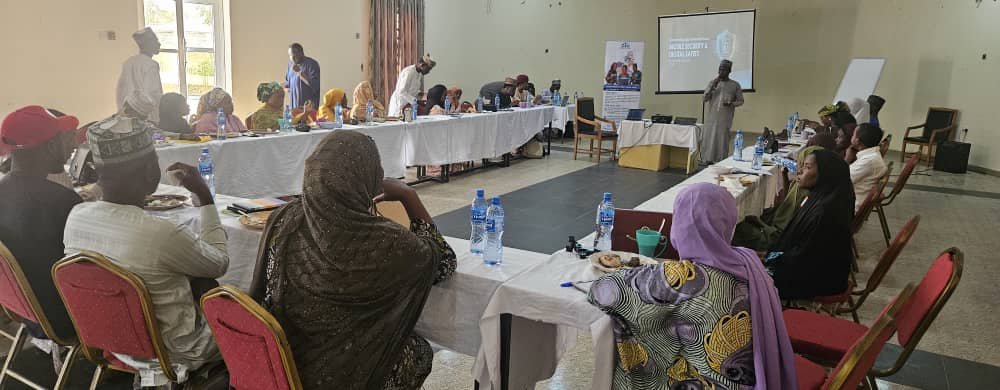
The observation was made on Saturday by the Executive Director of Centre for Information Technology and Development (CITAD), Yunusa Zakari Ya’u, at the commemoration of a 2-day Bauchi Feminist Internet School (BIS), for Thirty-Seven participation drawn from across the Nineteen Northern States and FCT.
Represented by an ICT Expert, Ali Sabo, the EC stated that, “When we envisioned this school back in 2018, we saw a critical void that could no longer be ignored. Since then, organized annually, BAFIS has grown into a groundbreaking, flagship initiative entirely dedicated to bridging the gender digital divide across Northern Nigeria.”
According to him,”Today, we stand firmly together to challenge and dismantle the completely outdated notion that technology is a space reserved only for men. Our mission here is clear: we are replacing that narrative with a sustainable, powerful network of tech-savvy women and men leaders who will redefine the digital landscape in years to come.”
The CITAD ED told the participants that,”As you undergo this intensive training, I want you to keep three core objectives at the center of your focus.”
He stared, “First, we are here to Produce Digital Inclusion Champions. Our goal goes far beyond basic digital literacy. We are intentionally raising a new generation of fierce tech leaders who are fully equipped to advocate for equal internet access and digital equity across every corner of Nigeria.”
He further stated that,”Second, we must Bridge the Gender Digital Divide. This requires active, deliberate work. We are here to dismantle the systemic barriers, online violence, and socio-economic hurdles that prevent women in Northern Nigeria from safely accessing, utilizing, and—crucially—shaping digital technologies.”
“Third, we must Advance Internet Governance & Rights. True inclusion means having a seat at the table where decisions are made. BAFIS will cultivate a deep understanding of digital rights within you, ensuring that women are actively participating in, and influencing, national policy conversations and legislative frameworks,” he added.
According to him,”The internet is the modern frontier for governance, commerce, education, and human rights. If women are excluded from this space, we are excluding half of our society’s intelligence, creativity, and leadership.”
He stressed that, “Over the next two days, challenge yourselves, network intentionally, and absorb this knowledge. You are not just here as students; you are stepping into your roles as advocates, leaders, and defenders of digital equity.”
Coordinator of the programme, Fatima Bakura, explained that the training became expedient in order to fill the wide gap in the assessibility of internet by the female in a male dominated space.
She added that, ‘It is important to ensure women have adequate access to the internet and digital resources because we have realized that men often have greater access and occupy more decision-making positions.”
She stressed that,”We want to bridge that gap by bringing together girls and women from different communities and states to address these challenges and promote digital spaces.”
According to her “The Feminist Internet School project started in 2018, and this year marks its eighth edition.”
Fatimah Bsbskura added that, “There is a growing interest among women in the programme. Over the years, we have seen an increasing number of applications from women who want to participate. In fact, interest now extends beyond Northern Nigeria, even though the Bauchi Feminist Internet School primarily focuses on women in this region. The growing number of applicants demonstrates the relevance and impact of the initiative.”
She further explained that, “The school runs for two days. It is an intensive programme that starts in the morning and continues until about 5:00 p.m. each day. At the end of the training, all participants receive certificates. We believe the programme equips them with valuable knowledge and skills, and the certificate serves as evidence of the capacity they have built.”
The Participants are then encouraged to return to their communities, share the knowledge they have gained, and engage policymakers on issues related to gender equality, digital inclusion, and internet governance.
She added that,”Our goal is to ensure that women are actively represented and involved in discussions and decision-making processes concerning the digital space.”
According to her, “This year, we have about 37 participants drawn from different communities and states, including Kano, Plateau, Abuja, Maiduguri, and Yobe, among others. We intentionally included participants not only from urban centres but also from rural communities because these are often the groups that are left behind in digital development initiatives.”
“By equipping them with the necessary knowledge and skills, they can return to their communities and help expand awareness and access to digital opportunities, ” She added.
She then disclosed that the programme was solely an initiative of CITAD saying, “It is independently organized and not funded through a collaboration with any other organization. The selection process begins with a public call for applications, which is announced online. We received a large number of applications, and participants are selected from among the applicants based on the programme’s criteria and objectives.”
Some of the participants commended CITAD for organizing the programme as it will be beneficial to them and others in their various communities.
About the Author