Share

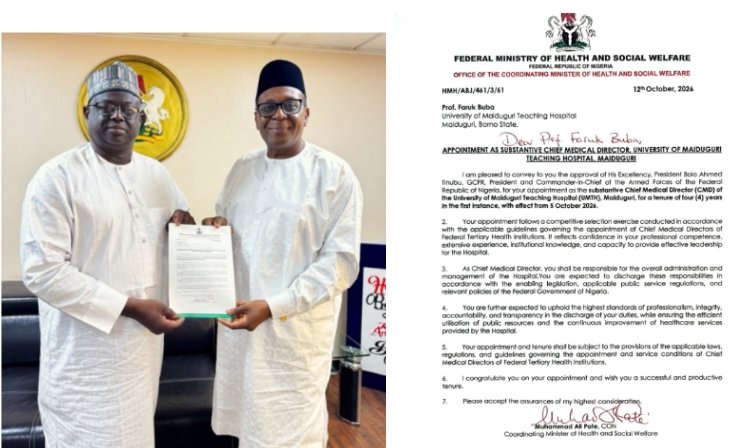
Share  By Deborah Coker The Medical and Health Workers Union of Nigeria (MHWUN) has faulted the appointment process for the new Chief Medical Director (CMD) of the David Umahi Federal University Teaching Hospital (DUFUTH), Uburu, Ebonyi. The union expressed their displeasure in a letter addressed to the leadership of theContinue Reading

Share

ShareChairman of Nigeria’s National Malaria Elimination Council (NMEC) and United Nations Malaria Ambassador, Aliko Dangote has called on governments and the private sector to urgently scale up coordinated action to eliminate malaria, describing the moment as critical to ending one of the world’s most devastating diseases. Speaking to mark WorldContinue Reading

Share

The Steer for Change Mother and Newborn Foundation is directly combating high maternal and infant mortality in underserved Nigerian communities by providing integrated healthcare, essential supplies, and critical education to vulnerable pregnant women and new mothers. Its model uniquely combines direct medical services—like pregnancy monitoring and blood pressure checks—with comprehensive material support, including birth kits, baby-care products, and nutritional aid. Since 2019, the NGO has scaled its impact to over 6,000 women across 20 communities, demonstrating a replicContinue Reading

Share

Nigeria’s sickle cell crisis is being addressed through a powerful dual strategy of legislative action and grassroots care. The proposed Sickle Cell Disorder Research and Therapy Centres Bill represents a landmark structural intervention, aiming to establish specialized national hubs for advanced treatment and research. This top-down policy effort is complemented by vital on-the-ground work, as demonstrated by NGOs providing free clinics to hundreds of patients. The convergence of sustained advocacy, community care, and now potential government commitment marks a critical turning point in managing this pervasiveContinue Reading

Share

Kwara State has distinguished itself as a national leader in primary healthcare, securing the “Best Performing State” title for the third consecutive year—a testament to its systemic, long-term reform strategy. This achievement, validated by a peer-reviewed national challenge, has earned a $400,000 grant to be strategically invested in infrastructure, drug supplies, and manpower under strict UNICEF and NGF guidelines. The core insight is that Kwara’s success stems from treating primary healthcare as the foundational cornerstone of the health systemContinue Reading

Share

Zamfara State has been awarded $500,000 for achieving the top performance in the North-West Zone’s Primary Healthcare Leadership Challenge, a competitive initiative backed by major global and national partners including the Bill & Melinda Gates Foundation and Dangote Foundation. This victory validates the state’s declared health sector emergency as an effective strategy, demonstrating that focused political leadership can rapidly improve primary healthcare outcomes. The broader program successfully incentivizes systemic improvements across Nigeria by leveraging competitive financing, with a total of $6Continue Reading

Share

Enugu State demonstrates a scalable model for achieving Universal Health Coverage by effectively deploying Nigeria’s Basic Healthcare Provision Fund, providing quality care to over 53,000 vulnerable residents for just ₦1,000 ($~0.66) per person monthly. The program’s success hinges on strategic digitalization for transparency and prompt payments to 276 primary healthcare centers, coupled with significant government investment in modernized health infrastructure. This integrated approach of financial access, operational efficiency, and facility revitalization offers a practical blueprintContinue Reading

Share

The Nigerian government claims its policy of “medical industrialisation” is actively reversing the nation’s crippling brain drain of healthcare professionals. Key initiatives, including significant investments in primary care, the launch of six new oncology centers, and the rehabilitation of tertiary facilities, are cited as creating a more attractive domestic environment. This strategy aims not only to retain new graduates but also to incentivize the return of expatriate medical personnel. The administration positions this holistic upgrade of infrastructure and working conditions as the core solution toContinue Reading