A landmark royal commission into antisemitism, called in the aftermath of the Bondi shooting, has recommended that gun reforms be prioritised and policing arrangements for Jewish holidays extended to other Jewish festivals.
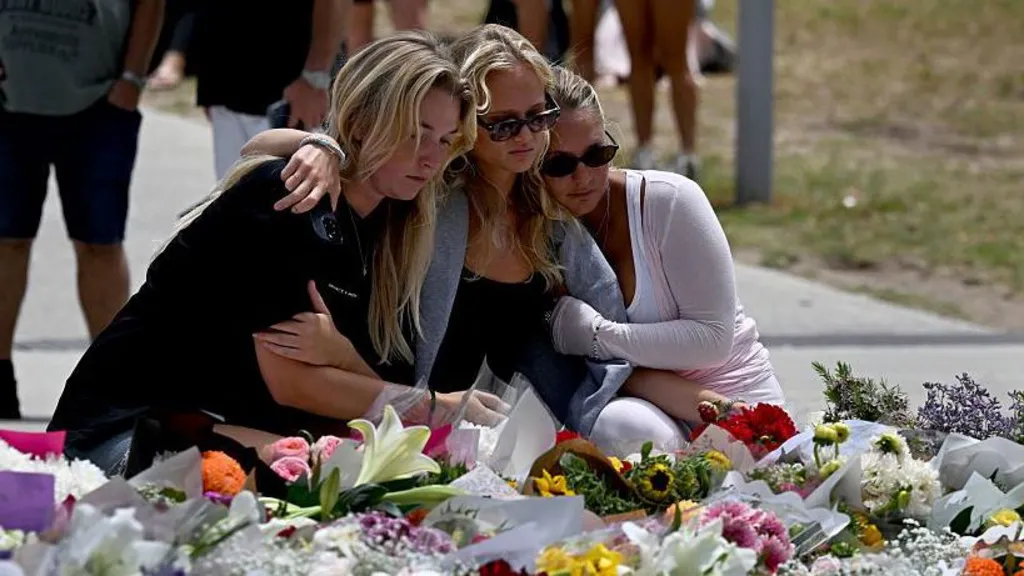
The commission – Australia’s most powerful form of public inquiry – was announced in January, three weeks after two gunmen opened fire at a Jewish event at Bondi Beach, killing 15 people.
The interim report by former High Court judge Virginia Bell gave 14 recommendations although five of them remain confidential due to national security concerns.
Prime Minister Anthony Albanese said a National Security Committee meeting had agreed to implement all of Bell’s recommendations.
On 14 December last year, a father-and-son duo – armed with rifles and shotguns – targeted a Sunday afternoon event at a Bondi Beach park.
Sajid Akram, 50, was killed by police at the scene of the shootings and his son Naveed Akram – the other alleged attacker – was critically injured and later transferred from hospital to prison.
The 24-year-old has been charged with 59 offences, including 15 counts of murder and one of committing a terrorist attack.
Thursday’s report recommended that state and federal governments should prioritise efforts to finalise and implement “nationally consistent” firearms reforms as well as a proposed gun buyback scheme.
Gun reforms put forward in the wake of the shooting have received a lukewarm response from some of Australia’s states and territories, with Queensland, for example, refusing the buyback scheme and cap on firearms ownership.
It also said New South Wales (NSW) police procedures used for Jewish high holy days should be extended to other “high risk Jewish festivals and events, especially those with a public facing element”.
Other recommendations included a review of joint counter-terrorism teams in Australia – made up of federal and state police forces, and the Australian Security Intelligence Organisation (ASIO) – as well as making the counter-terrorism commissioner’s role full time.
The prime minister and national cabinet ministers should also take part in counter-terrorism exercises within nine months of each federal election, the report said.
The report said that it had not identified any gap in existing legal frameworks that would have prevented the attack, or impeded the ability of law enforcement or other agencies to respond to it.
“In these respects, no issue requiring urgent or immediate action has been identified,” the report said.
It added that any failures to identify and act upon intelligence in the lead up to the shooting and in the allocation of police to the Hanukkah festival would be addressed in hearings, though some of these may be closed to the public.
Albanese said the report showed “no urgent changes” were required but that governments “could always do better”.
David Ossip, President of the NSW Jewish Board of Deputies, said the report was “an important first step” in examining the circumstances around the attack but that it was “only part of the picture”.
Antisemitism was “not only a law enforcement issue” but a “societal issue” and “the environment for Jewish Australians had been deteriorating well before Bondi”, he said.
Alex Ryvchin, of the Executive Council of Australian Jewry, told the ABC there were still “burning questions” surrounding the attack including how the Akrams were able to acquire firearms and why the festival hadn’t been better resourced by police.
A first series of public hearings for the inquiry, which is looking at the rise of antisemitism in society and institutions and the events leading up to the mass shooting, is to begin on Monday.
A final report is to be delivered on the anniversary of the shooting.
About the Author