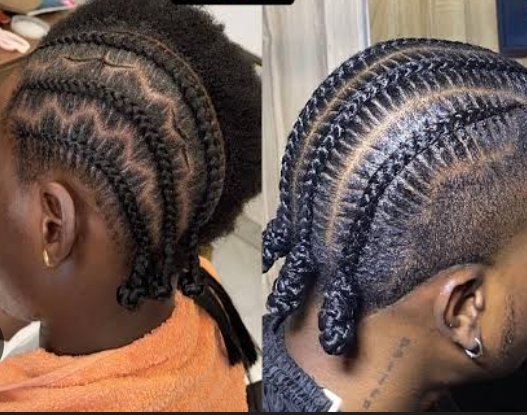
In the bustling streets of Abuja, a quiet sartorial revolution is unfolding, sparking a national dialogue that cuts to the heart of culture, generation, and identity. The growing visibility of young Nigerian men and boys wearing earrings, braiding their hair, or styling dreadlocks is more than a fleeting fashion trend; it is a social litmus test revealing deep-seated values, fears, and the tensions of a globalized society.
This phenomenon, often dismissed by critics as mere Western mimicry, is a complex tapestry woven from threads of self-expression, digital influence, and professional subculture. To understand it requires moving beyond surface-level judgments to examine the historical context, societal pressures, and personal narratives at play.
A Clash of Perceptions: Tradition, Morality, and Modernity
The debate, as captured in interviews with Abuja residents, reveals a stark generational and ideological divide. For many, like civil servant Mr. Isaac Aregbesola, these styles represent a tangible “decline in moral values” and a departure from Nigerian cultural norms. This perspective is rooted in a historical view where specific adornments were clearly gendered. However, this view often overlooks the rich history of male adornment in pre-colonial African societies, where hairstyles, beads, and body modifications signified status, lineage, and achievement, not gender conformity.
Mrs. Joy Ojo and Mrs. Oluwafomilayo Ishola highlight a more pragmatic concern: societal perception and security. In a context where first impressions are heavily weighted and security agencies are known to profile based on appearance, adopting a non-conformist style carries real-world risk. “It is safer to avoid appearances that could attract unnecessary attention,” Ishola notes, pointing to a survivalist calculus many youths are forced to consider. This isn’t merely about fashion preference; it’s about navigating a society where a hairstyle can dictate one’s interaction with authority.
The Power of Association and the Burden of Stereotype
Perhaps the most charged aspect of the conversation is the powerful, and often prejudicial, association between these fashion choices and criminality or deviance. Mr. Adamu Bawa’s comment—”most of these boys who dress like that… move with people who smoke or sell drugs”—exemplifies a sweeping stereotype. This creates a vicious cycle: a style becomes associated with a marginalized group, leading to broader stigmatization, which in turn pushes more mainstream adoption as a form of rebellion, further entrenching the stereotype.
This bias is directly challenged by voices like Mrs. Angela Thandi and Samuel Nnaji. Thandi provides a crucial counter-narrative, recalling how a boy with braids helped her mother, dismantling the automatic link between appearance and character. Nnaji, a young man living this reality, frames his choice in terms of confidence, attraction, and personal joy—a simple desire to “look cute” and enjoy the freedoms of youth, much as previous generations did with their own era-defining styles.
Beyond Rebellion: Subculture, Profession, and Global Flow
To dismiss this trend as mere rebellion is to miss its nuanced drivers. As Mrs. Ishola observes, these styles are deeply normalized within creative and athletic professions—music, photography, sports, and entertainment. Here, hair and accessories function as part of a professional toolkit, signaling creativity, individuality, and connection to global (often African diasporic) cultural movements like hip-hop or Afrobeats. For a young DJ or photographer, braids aren’t a rejection of Nigerian culture but an embrace of a specific, modern professional identity.
Furthermore, the influence of digital media cannot be overstated. The “global fashion trends” Mrs. Ojo mentions are no longer passively consumed; they are actively curated, adapted, and remixed on platforms like TikTok and Instagram. Young Nigerians are not just copying Western styles; they are participating in a global exchange, often re-injecting these trends with local meaning and flair, creating a unique hybrid aesthetic.
The Core Question: What Truly Defines Nigerian Identity?
At its heart, this debate forces a re-examination of a persistent question: What constitutes authentic Nigerian culture in the 21st century? Is it a static set of rules from a particular past, or is it a dynamic, evolving practice that absorbs and adapts? The anxiety expressed by some commentators reflects a fear that the latter will erase the former.
Yet, history shows Nigerian fashion has always been adaptive. The grand, flowing Agbada itself has evolved in cut and fabric. The conversation around boys’ hairstyles is, therefore, part of a longer story of cultural negotiation. It is a struggle between the desire to preserve a perceived cultural purity and the inevitable, messy, and creative process of cultural change driven by youth.
The path forward likely lies in the space Mrs. Thandi advocates for: cautious open-mindedness. It requires separating aesthetic preference from moral judgment, and individual character from group stereotype. It asks parents, as Samuel Nnaji hints, to recall their own youthful experiments. And it demands of society a more critical eye, recognizing that a braid or an earring is a piece of fashion, not a proxy for a person’s heart, integrity, or Nigerianness.
The boys with braids in Abuja’s markets and streets are, consciously or not, acting as cultural provocateurs. Their choices ask a nation proud of its dynamism: How much change can tradition accommodate, and at what point does the suppression of personal expression become a greater cultural loss than the evolution of a hairstyle?
NA/DVK/DE/AMM
==============
Edited by Dorcas Jonah/Abiemwense Moru
About the Author