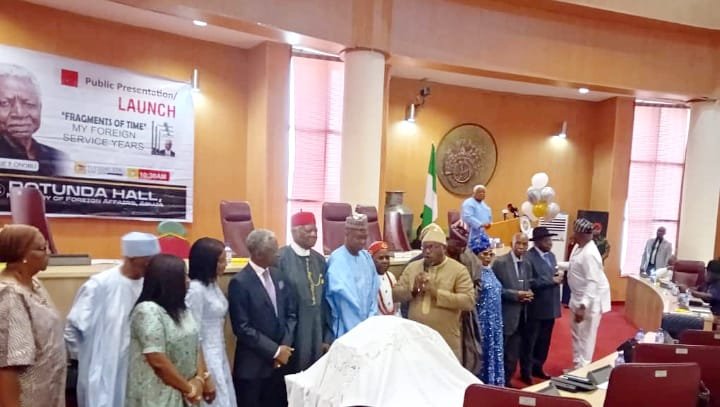
Former Minister of Foreign Affairs, Ike Nwachukwu, on Tuesday, called on the Federal Government to establish a Foreign Service Commission to boost professionalism and strengthen diplomacy.
Nwachukwu made the call in Abuja at the public presentation of “Fragments of Time: My Foreign Service Years,” a new book authored by veteran diplomat, Eineje Onobu.
Chairing the event, he argued that creating a dedicated commission to oversee recruitment, training and career progression in the foreign service would restore professionalism and rebuild confidence in Nigeria’s external engagements.
He said that the absence of such a body has weakened standards within the Ministry of Foreign Affairs and discouraged career officers who expect a structured and merit-driven system.
“It is time to establish a Foreign Service Commission that will ensure only the best minds enter the service and are properly groomed to represent Nigeria as ambassadors across the world,” Nwachukwu said.
He expressed concern that career diplomats are increasingly sidelined in ambassadorial appointments, with many officers retiring without reaching the peak of their profession.
According to him, this trend has eroded morale and diminished the institutional strength of the service.
Drawing from his time in office, Nwachukwu recalled that Nigeria once maintained a deliberate balance between career and non-career ambassadors, with 70 per cent of postings reserved for professionals and 30 per cent for political appointees.
About the Author