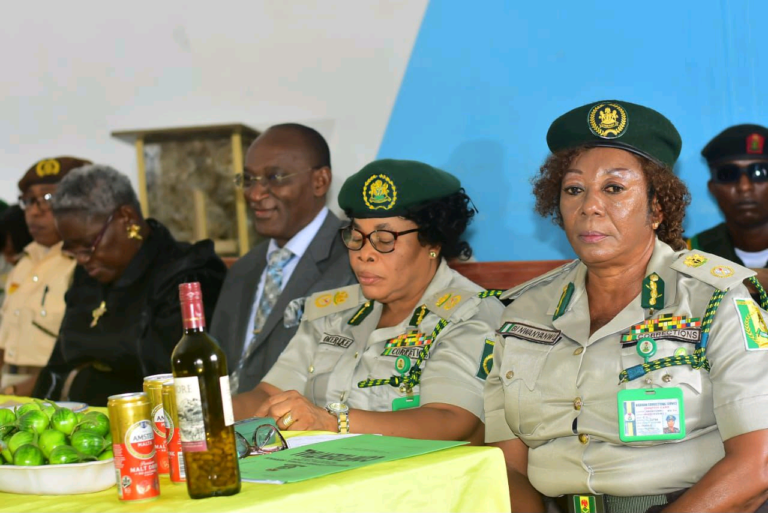
In a formal ceremony at its Makurdi campus, the Nigerian Army College of Environmental Science and Technology (NACEST) has ushered in a new chapter of leadership. Colonel Olalekan Bamiteko officially assumed the role of the institution’s 12th Rector, marking a pivotal transition for this unique military-owned tertiary establishment. [[PEAI_MEDIA_X]]
The handover, announced by the college’s acting Assistant Director of Army Public Relations, Lieutenant Nkuma Mba, is framed not merely as an administrative change but as a strategic move designed to “consolidate academic excellence and advance staff welfare.” This dual focus highlights the distinctive mission of military academies like NACEST, which must balance rigorous academic standards with the disciplined ethos and personnel-centric culture of the armed forces.
In his inaugural address, Col. Bamiteko laid out a clear vision built on three foundational pillars: student welfare, staff development, and elevated institutional standards. This tripartite approach is critical for institutions operating at the nexus of defense and education. For students—many of whom may be service members or civilians entering specialized environmental science fields—welfare encompasses not only academic support but also the leadership and character development integral to military training. Staff development, meanwhile, is essential for retaining expertise in competitive scientific and technical disciplines within the public sector framework.
A significant portion of the new Rector’s remarks was dedicated to fostering institutional harmony. He explicitly urged management to “avoid unhealthy rivalries” and remain concentrated on enhancing academic quality. This directive speaks to a common challenge in academic administrations, where departmental silos and competition for resources can hinder progress. By addressing this upfront, Bamiteko signals a leadership style prioritizing collaboration and a unified mission, which is paramount for a specialized college aiming for national relevance in environmental science and technology.
Col. Bamiteko also paid tribute to his predecessor, Brigadier-General Solomon Inuwa, acknowledging his “positive legacies” and committing to build upon them. This continuity is vital for long-term projects such as curriculum modernization, research infrastructure, and accreditation processes. He further commended the College Registrar, Lt. Col. Umar Ja’afaru, for stewarding the institution during the interim period, ensuring a stable transition.
The new Rector brings a relevant background to this role, having served with distinction as the Commandant of Command Secondary School, Ipaja, Lagos. This experience in leading an educational institution within the Army system provides him with practical insights into academic administration, student management, and the integration of military values with educational objectives. His appointment by the Chief of Army Staff, Lt. Gen. Waidi Shaibu, underscores the high-level strategic importance placed on NACEST within the broader framework of the Nigerian Army’s commitment to education and specialized skill development.
As NACEST moves forward under this new leadership, the broader implications are worth considering. How will the college leverage its unique position to address Nigeria’s pressing environmental challenges—such as land degradation, water resource management, and climate resilience—through applied military-civilian research? The focus on “environmental science and technology” is particularly pertinent, suggesting a role in equipping both soldiers and civilians with the skills for disaster response, ecological conservation, and sustainable engineering. [[PEAI_MEDIA_X]] The success of Col. Bamiteko’s tenure will likely be measured by his ability to translate the stated emphasis on welfare, development, and standards into tangible advancements in these critical areas, solidifying NACEST’s place as a center of excellence.
Reported by Nicholas Dechi for the News Agency of Nigeria (NAN). Edited by Peter Amine.
About the Author