By Adamu Lawal Toro
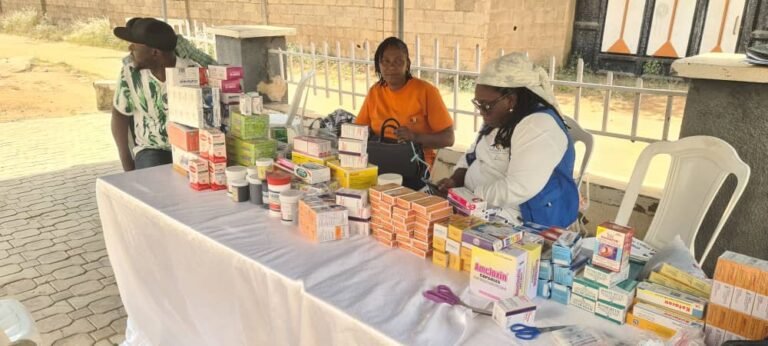
Hunger has no party card. It does not ask whether a family voted APC, PDP or ADC before it empties their pot. It visits the civil servant in Kaduna, the farmer in Bauchi and the trader in Onitsha with the same cruelty. Yet in the season of campaigns, hunger has become a political football, kicked from one end of the field to the other while the people go on starving.
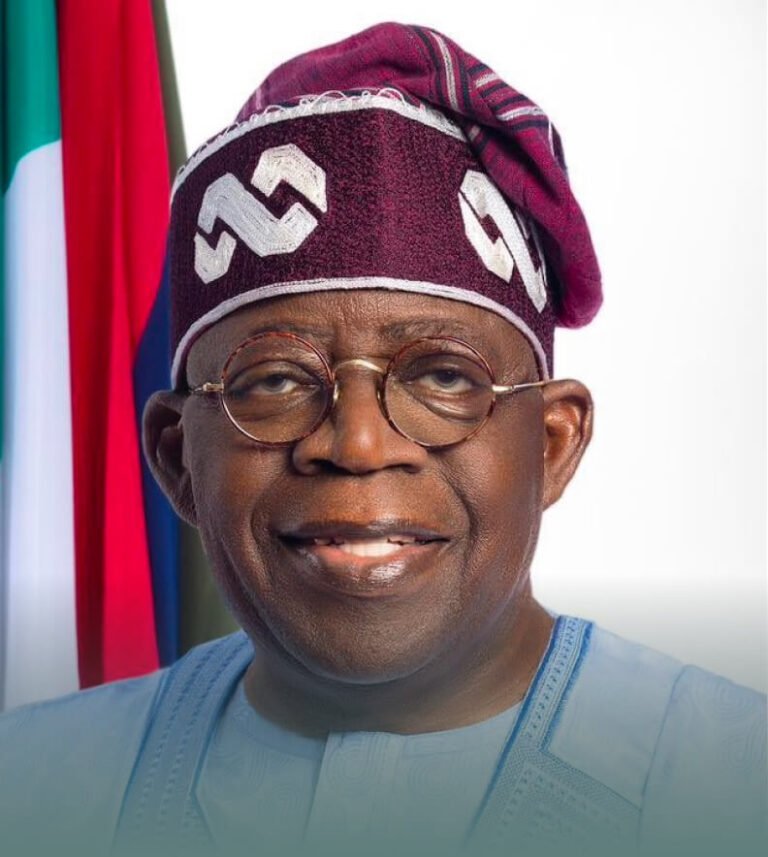
On Saturday, at the Ranchers Bees Stadium in Kaduna, President Bola Tinubu flagged off his re-election campaign with a question and an answer. “I hear my opponent talking about hunger, poverty. Who created it? They did!” he told the crowd. “They created the hunger, they created the poverty. We are trying to eradicate it.”
Within hours, Atiku Abubakar, the presidential candidate of the African Democratic Congress, fired back. Blaming the opposition for hunger, he said through his spokesman, Phrank Shaibu, is “either delusion or a staggering case of political amnesia.” A President, he argued, cannot light the fire of hardship with his own policies and then blame the neighbours for the smoke.
So who is right? And more importantly, who is liable?
The President’s claim is not entirely baseless. Nigeria’s poverty did not begin in May 2023. The structural rot that keeps millions poor is decades old: an economy chained to crude oil, a subsidy regime that enriched cartels more than citizens, a collapsed power sector, neglected agriculture and insecurity that has driven farmers from their land. Many of the men now leading the opposition were at the centre of power when those foundations were laid. Atiku himself was Vice President for eight years. Others in the opposition coalition served as APC governors and ministers until recently.
That is the President’s strongest point. Nigeria’s political class, across parties, shares the blame for the country’s long decline.
But that is where his argument ends, and where his liability begins.
A President is not elected to describe inherited problems. He is elected to solve them. Tinubu did not stumble into office. He campaigned for it for years, under the slogan “Emi lo kan,” it is my turn. He promised renewed hope.
Three and a half years later, what do Nigerians see?
The World Bank, in its April 2026 Nigeria Development Update, estimated that 63 per cent of Nigerians, about 140 million people, lived below the national poverty line in 2025. Food inflation climbed back above 20 per cent in July. Petrol, which sold for under ₦200 a litre before May 2023, now costs about ₦1,400 in Abuja. Even the President’s adviser, Daniel Bwala, admitted on national television this month that “more people went down to poverty” under these reforms.
That is not the work of the opposition. The opposition did not remove the fuel subsidy on inauguration day without a cushion. The opposition did not float the naira without first protecting the poor from its fall. The opposition does not control the Federal Executive Council, the Central Bank or the national budget.
Policies have authors. Their consequences have owners.
At the same rally, the President told Nigerians that this election “is not a matter of hunger” and that his opponents “are angry because they are failures.” With respect, for the mother who cannot afford a bag of rice, it is entirely a matter of hunger. To dismiss that pain as opposition propaganda is to tell her that her suffering is imaginary. That is the delusion Atiku spoke of.
Yet the opposition should not be let off the hook either.
Atiku’s statement raises serious questions about ₦7.13 trillion recorded under “energy security,” about NNPC pipeline spending and about gaps in Nigeria’s external accounts. The government owes Nigerians answers. But a list of accusations is not a programme. Nigerians have heard what the opposition is against. They have yet to hear clearly what it would do differently.
How would an ADC government bring down food prices? Would it restore the fuel subsidy, and how would it pay for it? How would it stabilise the naira without draining reserves? How would it end banditry in the North-West and kidnapping on the highways?
These are the questions voters will ask in January. Shouting “delusional” across the aisle does not answer them.
There is also a danger in this blame game. When the ruling party says the opposition caused hunger, and the opposition says the government caused it, the debate becomes about who to blame rather than how to fix it. Hunger becomes a slogan. The hungry become props.
Nigeria cannot afford that kind of campaign. So, who is liable? The honest answer is that the political class as a whole created the conditions for Nigeria’s poverty. But the man in office owns the present. He holds the budget, the policies and the power. If hunger has deepened on his watch, he cannot outsource the responsibility to people who are not in government.
President Tinubu has every right to defend his reforms. He may argue that the pain is temporary, that the economy is stabilising, that the gains will come. Let him make that case, with evidence, and let Nigerians weigh it. But he should not ask hungry people to believe that their hunger was created by those who have no power to create it.
In the end, the election on January 16, 2027 will not be won in a stadium in Kaduna but it be decided in the kitchens of ordinary Nigerians, by a woman who stands over an empty pot and asks a simple question: is my family eating better today than three years ago?
Whoever can honestly answer that question deserves her vote.
About the Author