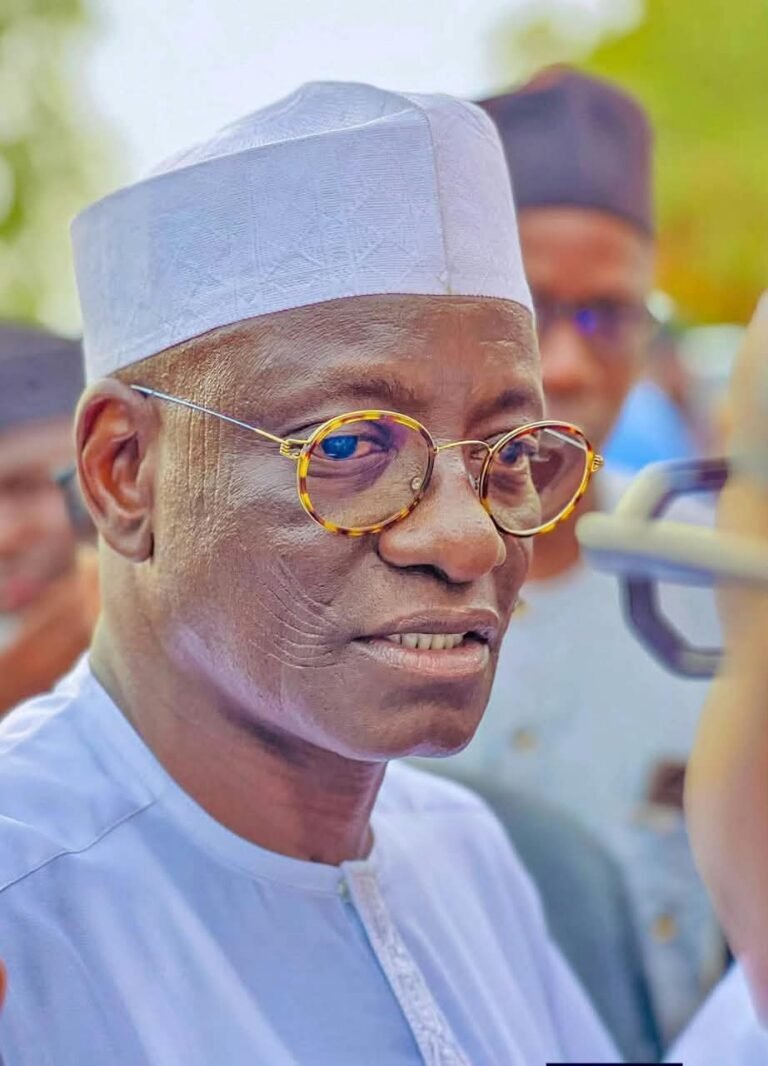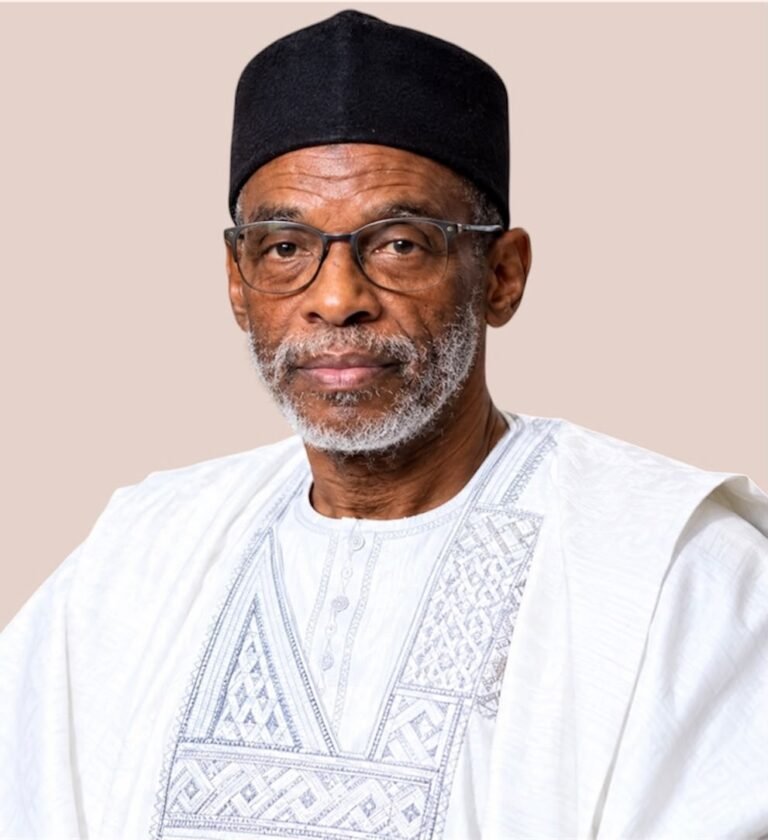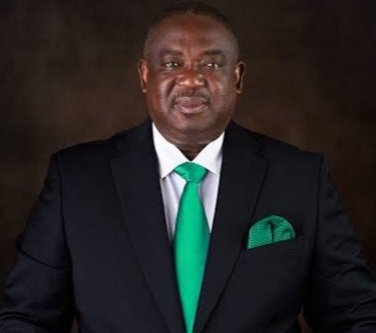
Governor Caleb Mutfwang of Plateau State
By Pam Ayuba
Plateau State’s political configuration has changed significantly since the 2023 governorship election.
The most consequential development is Governor Caleb Mutfwang’s movement from the Peoples Democratic Party (PDP) to the All Progressives Congress (APC), alongside his emerging political accommodation with Professor Nentawe Yilwatda, his former opponent and now National Chairman of the APC.
In 2023, Mutfwang and Nentawe contested the governorship, with Mutfwang eventually prevailing after the Supreme Court affirmed his election. Today, both operate under the same political banner.
This raises a central question:
Can former rivals convert reconciliation into a disciplined, coherent and electorally effective organisation ahead of 2027?
THE RAINBOW QUESTION
The much-discussed Rainbow Coalition remains part of Plateau’s political conversation. However, APC State Chairman Rufus Bature has publicly said the party has no knowledge of any recognised Rainbow Coalition structure in the state, insisting that APC members should operate within the party’s formal framework.
The debate nevertheless exposed competing interests and uncertainty about political alignments ahead of 2027.
The key question has now shifted.
Can previously separate political structures function within one APC architecture without creating parallel centres of authority?
FROM RIVALRY TO ACCOMMODATION
Mutfwang’s movement to the APC altered the political landscape.
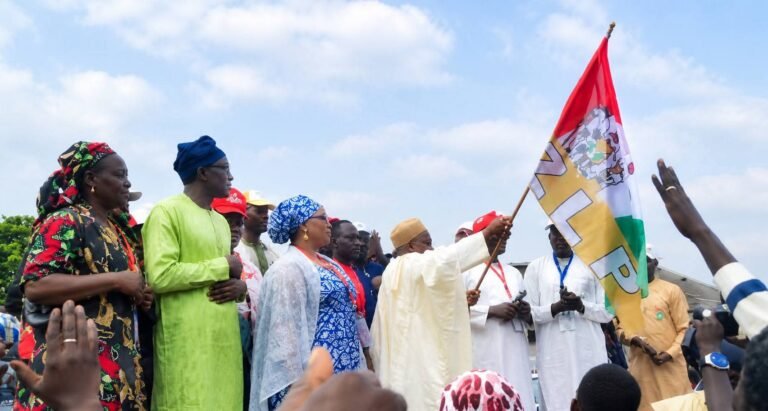
In January 2026, he and Nentawe jointly launched the party’s electronic membership registration and revalidation exercise in Plateau, publicly pledging to work together for peace, unity and development.
Their public partnership demonstrates political accommodation.
But leadership-level reconciliation does not automatically unite supporters, local actors or party structures.
The harder task is organisational integration.
That is where the real political test begins.
THE NENTAWE FACTOR
Nentawe’s 2023 governorship campaign created political networks across Plateau’s 17 local government areas. His emergence as APC National Chairman has now added national institutional authority to his existing political capital.
The important question is whether the political structures associated with his 2023 campaign can be integrated into the recognised APC organisation without creating parallel centres of influence.
Reports of elements of his former political structure moving towards the Mutfwang re-election effort, following his direction, are therefore significant.
The structure associated with Nentawe was not merely a loose collection of supporters. It included 17 LGA-level campaign coordinators, subsequently reorganised as liaison officers, alongside women and youth deputies, media actors and grassroots networks.
If these structures are effectively incorporated into the wider campaign organisation, the development would represent more than an endorsement.
It would amount to organisational convergence.
But political declarations and leadership directives are only the beginning.
The real test will be at the LGA, ward and polling-unit levels.
Will former Nentawe supporters work effectively with Mutfwang’s existing political base?
Will established APC stakeholders accept the enlarged coalition?
Will responsibilities and resources be managed transparently?
And can the different tendencies operate as one organisation without creating competing command structures?
Those are the questions that will determine whether the current accommodation becomes durable.
56 NEW ADVISERS: ANOTHER SIGNAL OF ACCOMMODATION?
On 6 October 2026, Governor Mutfwang approved the appointment of 56 advisers – 45 Special Advisers and 11 Honorary Advisers – with the government saying the appointments were intended to strengthen governance, policy implementation and service delivery.
Politically, the timing and composition of the appointments have generated discussion.
Some observers view the appointments as part of the broader effort to accommodate interests associated with the Nentawe camp. That interpretation cannot be independently established for every appointee. However, if a significant number of the appointees are drawn from previously separate political constituencies, the appointments would represent another practical expression of political accommodation.
The development has also attracted criticism over the cost and size of the governing machinery.
That raises a legitimate question:
Where should the line be drawn between political inclusion and administrative efficiency?
The government maintains that the appointments were based on competence, experience and strategic governance needs. Their real test, however, will be whether they improve administration, broaden inclusion and justify the additional institutional cost.
In the broader context of the Mutfwang-Nentawe relationship, the appointments are politically noteworthy because they suggest that accommodation may be moving beyond public appearances and political declarations into the composition of the governing structure.
But inclusion must ultimately produce value.
The credibility of the appointments will therefore depend not merely on who has been appointed, but on what those appointees deliver.
ACCOUNTABILITY AND THE LESSONS OF 2023
As APC National Chairman, Nentawe carries national responsibilities. At the same time, his Plateau background means that the party’s performance in the state will inevitably attract particular political attention.
The APC now has an incumbent governor seeking re-election, a National Chairman who contested the governorship in 2023, a formal state party structure and an evolving coalition of political interests.
That creates both opportunity and accountability.
If the new arrangement produces strong organisational performance, it could demonstrate that political accommodation has matured into genuine consolidation.
If it fails to do so, questions will inevitably arise about the effectiveness of the architecture.
That is not necessarily a question of assigning blame to one individual. It is a question of political responsibility and organisational performance.
There is also a compelling case for the party to conduct a serious post-election review of its 2023 performance.
Such a review should examine internal divisions, grassroots mobilisation, resource deployment, campaign organisation and the relationship between candidates and party structures.
The purpose should not be recrimination.
It should be institutional learning.
A political organisation that refuses to examine its failures risks reproducing them.
THE ARI FACTOR
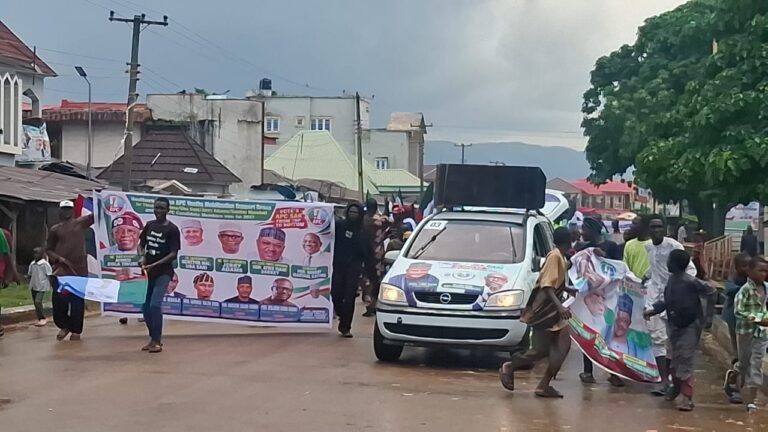
The appointment of Sir Joseph Ari as Director-General of the Mutfwang/Piyo 2027 Governorship Campaign Council adds another layer to the emerging structure.
Ari brings public-sector and institutional management experience to the assignment. His responsibility will extend beyond administration to the coordination of political interests, campaign structures, communication networks and grassroots mobilisation.
His effectiveness will ultimately depend on whether he can bring the APC structure, Mutfwang’s political base, Nentawe’s network, women and youth groups and the media into one disciplined statewide campaign organisation.
The challenge is considerable.
A campaign of this nature requires coordination without duplication, inclusion without confusion and political accommodation without competing centres of command.
THE DENOMINATIONAL DIMENSION
Plateau’s denominational identities remain relevant to political coalition-building, although voters do not vote mechanically along religious lines.
Mutfwang and Deputy Governor Josephine Piyo are associated with the COCIN tradition, while Ari is a prominent Catholic figure.
It would, however, be simplistic to view Ari’s appointment solely through the denominational lens, particularly given the governor’s stated emphasis on consultation, competence, political maturity and organisational capacity.
The broader political significance may lie in the possibility of widening the campaign’s sense of ownership across political, geographical and denominational constituencies.
In coalition politics, perception matters.
A political project perceived as belonging exclusively to one constituency can struggle to generate broad ownership. The inclusion of respected figures from different constituencies can, by contrast, help broaden the coalition.
The Ari appointment can therefore be viewed both through the lens of managerial competence and through the wider politics of coalition-building.
THE FOUR CENTRES OF RESPONSIBILITY
The emerging structure can broadly be understood through four principal centres of responsibility.
Mutfwang represents incumbency.
He must defend his administration’s record and persuade the electorate on the case for another term. Ultimately, his record will be subjected to the voters’ judgement.
Nentawe represents national party authority and political capital.
He now occupies the national chairmanship of the ruling party, while retaining the political history and networks associated with his 2023 governorship campaign.
That creates an obvious question of accountability.
In 2023, Kanke, Nentawe’s home local government area, was a significant source of support for the Tinubu-Shettima ticket. Can the National Chairman now translate his political influence and organisational network into broader APC performance across Plateau?
If he succeeds, it would strengthen the argument that his political capital remains electorally relevant.
If he fails, questions will naturally arise about the effectiveness of that political capital.
Rufus Bature represents the formal APC state structure.
The state party machinery remains indispensable to any serious electoral organisation. Bature has publicly rejected the existence of a Rainbow Coalition structure in Plateau. Yet beyond that denial, there is a wider expectation that the party should critically examine its previous electoral performance and strengthen its internal organisation ahead of 2027.
Joseph Ari represents campaign coordination.
His task is to convert the political understanding among these different interests into a disciplined statewide campaign structure.
These roles can complement one another.
But poor coordination could create competing centres of influence.
Ari’s appointment has also generated questions about whether his public-sector background, rather than a history of direct electoral contests, provides sufficient political weight for the task.
That question can only be answered by performance.
Will he be able to coordinate the political terrain, reconcile competing interests and deliver an effective statewide campaign?
Time will tell.
THE GRASSROOTS TEST
The new alignment will ultimately be judged beyond Government House, party offices and media platforms.
It will be tested at the grassroots.
Will the 17 LGAs operate as an integrated organisation?
Will former rivals cooperate at ward level?
Will Mutfwang’s political base accommodate former Nentawe supporters?
Will women and youth structures participate meaningfully?
Will the formal party and campaign structures work together?
Will resources and responsibilities be managed transparently?
And, crucially, will the different tendencies work collectively across the ballot rather than concentrate narrowly on individual interests?
A joint political photograph demonstrates proximity.
It does not necessarily demonstrate political understanding.
A declaration demonstrates intention.
Functioning structures at the grassroots demonstrate integration.
That is where political reality is ultimately measured.
THE NEW POLITICAL REALITY
Plateau politics has moved beyond the old Nentawe-versus-Mutfwang contest.
The former rivals now operate within the same political environment: one as governor, the other as National Chairman of the party under which the governor seeks re-election.
The Rainbow debate, the 56 adviser appointments and Ari’s campaign role all reflect, in different ways, the search for a broader political coalition.
The central question is therefore no longer simply whether former rivals can reconcile.
It is whether reconciliation can become organisational integration, and whether organisational integration can produce measurable political and electoral performance.
For Mutfwang, the challenge is to convert political accommodation into genuine inclusion without compromising administrative efficiency.
For Nentawe, the challenge is to demonstrate that national party leadership and accumulated political capital can translate into effective organisation in his home state.
For Bature, the responsibility is to strengthen the formal APC structure and ensure that the party remains institutionally coherent.
For Ari, the task is to coordinate these different interests into one disciplined campaign organisation.
For the wider political constituencies, the challenge is to accommodate differences without creating competing command centres.
That is the real test of political maturity.
The 2027 election will provide the ultimate empirical test.
Until then, Plateau’s political landscape should be judged not merely by speeches, endorsements, appointments, and photographs but by the harder evidence of grassroots mobilisation, internal accountability, coalition management and organisational performance.
The old political equation has changed.
The real question is whether Plateau’s new political equation can hold.
2027 will be the mirror- and the electorate will deliver the verdict.
Ayuba, a journalist, Peace Ambassador, and Public Affairs Analyst, writes from Jos.
About the Author