By Anthony Maliki, Abuja
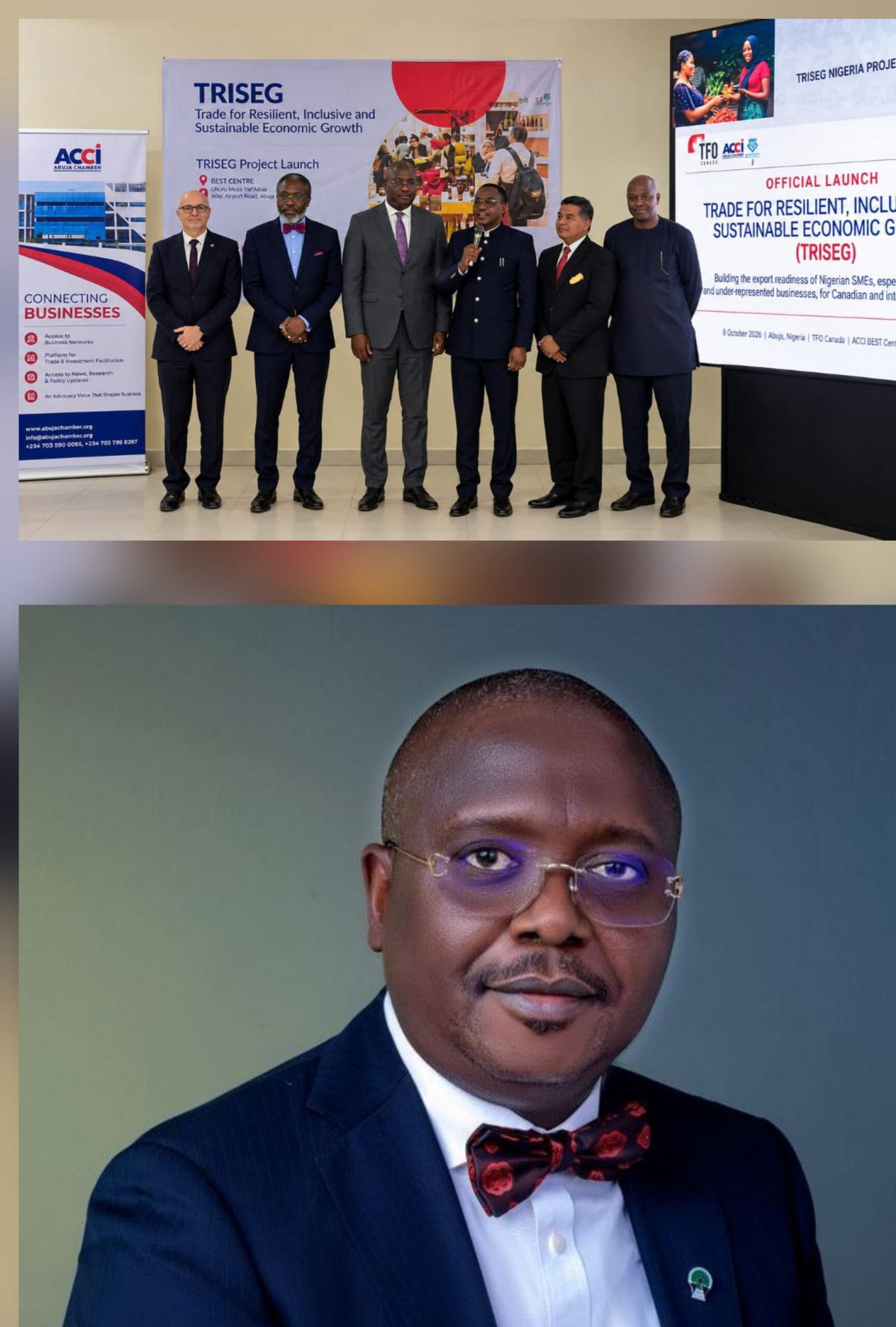
The President, Abuja Chamber of Commerce and Industry (ACCI), Chief Emeka Obegolu, SAN, PhD, said the Chamber recognize that many Nigerian Small and Medium Enterprises (SMEs) have the potential to compete internationally, but continue to face practical constraints.
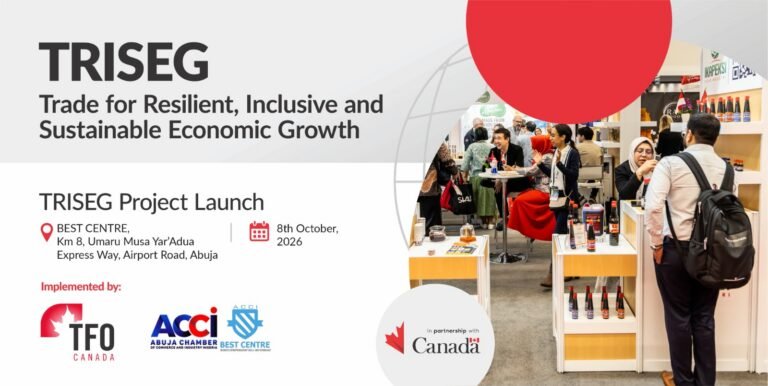
The President spoke on Thursday in Abuja at the formal inauguration of Trade for Resilient, Inclusion and Sustainable Economic Growth (TRISEG) project in Nigeria.
The event also futured the Stakeholder Validation Workshop on the Nigeria Export Market Analysis and Institutional Capacity Assessment.
Chief Obegolu said the TRISEG project provides an opportunity to strengthen the capacity of Trade Support Institutions to deliver more inclusive and gender-responsive services.
The TRISEG initiative is a five-year programme running from 2025 to 2030 across 16 developing countries and funded by the Government of Canada through Global Affairs Canada and implemented by TFO Canada.
The initiative focuses on strengthening Trade Support Institutions and enabling SMEs particularly women-owned, women-led businesses and other under-represented groups to overcome barriers to growth and internationalization particularly relevant to Nigeria.
The President expressed delight that the TRISEG framework includes a Climate Resilience Fund for SMEs with support for technical assistance, digital resources, capacity building, training and the development of investment plans for environmental sustainability and climate resilience.
According to him, the aspect of Climate Resilience Fund is an important direction for Nigerian enterprises as the country seek to build businesses that are not only commercially successful but also environmentally responsible and future-ready.
In Nigeria, Chief Obegolu noted, the project is expected to directly target 200 SMEs, with 67 percent being owned or led by women and under-represented groups.
He pointed out that this is an important commitment because the future of inclusive economic growth depends not only on the number of businesses created, but also on ability to help those businesses become productive, competitive, resilient and capable of accessing larger markets.
The President said for the Abuja Chamber of Commerce and Industry, the TRISEG partnership is a natural extension of its mandate.
On the Stakeholder Validation Workshop, Chief Obegolu stressed that it is equally important because market analysis and institutional capacity assessment have generated findings that now require the wisdom and practical experience of the stakeholders.
He said ACCI must use this opportunity to test the findings against the realities businesses face every day and find out if they are truly the major constraints limiting Nigerian SMEs from entering international markets.
The President posited that which barriers require institutional reform, which require capacity building, where are the gaps in financing and where can digitalisation make the greatest difference?
Besides, he asked what support do women-owned and women-led enterprises require differently and how can linkages be strengthened between SMEs, financial institutions, Trade Support Institutions and international buyers?
The President encouraged participants at the workshop to contribute openly and constructively saying it should not be simply a validation exercise where things written are just confirmed a platform for refinement, prioritisation and action.
Chief Obegolu said ACCI believed that partnerships are most valuable when they move beyond meetings and documents to create tangible opportunities for businesses.
He averred that ACCI’s longstanding relationship with TFO Canada has demonstrated the value of international partnerships in supporting Nigerian enterprises, particularly women-owned and women-led businesses, with knowledge, market access and opportunities for international engagement.
About the Author