The emerging results of governance, party reorganisation and grassroots mobilisation
By Pam Ayuba
As Nigeria approaches the 2027 General Elections, the All Progressives Congress (APC) is entering a critical phase in its political history.
The question is no longer simply whether the party has the numerical strength to contest another general election. The more important issue is whether the party can demonstrate that the reforms of the Bola Ahmed Tinubu administration are producing measurable results, while simultaneously building a more organised, cohesive and grassroots-oriented political structure.
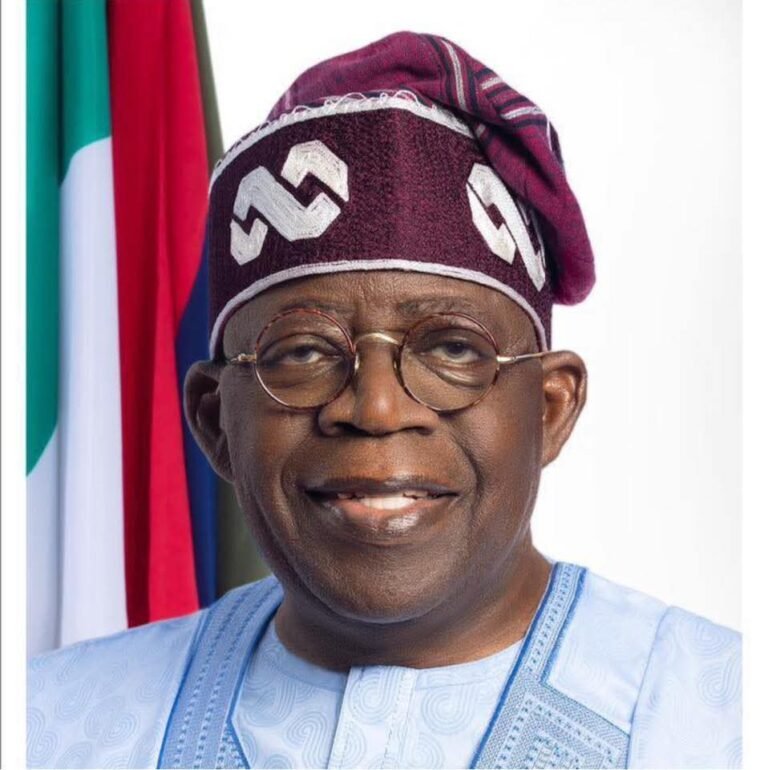
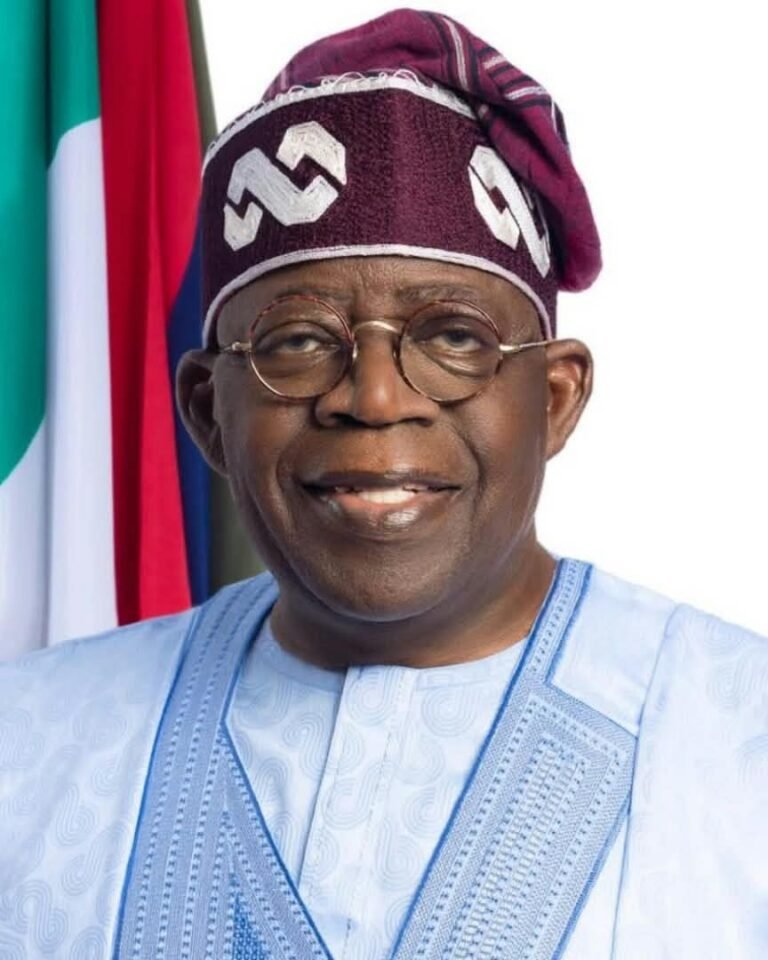
In this regard, two names have become particularly significant: President Bola Ahmed Tinubu, as head of government and leader of the administration’s reform programme, and Professor Nentawe Goshwe Yilwatda, as National Chairman of the APC and one of the principal architects of the party’s organisational preparation for 2027.
Their responsibilities are different, but their political trajectories are increasingly intertwined.
Tinubu is dealing with the difficult business of restructuring an economy that has accumulated serious structural weaknesses over many years.
Nentawe is dealing with the equally difficult task of reorganising a national political party whose members, interests and ambitions do not always move in the same direction.
There are therefore two parallel stories unfolding: reform in government and renewal in the party.
And there are already results worth examining.
TINUBU: FROM STABILISATION TO ACCELERATION
When President Tinubu assumed office in May 2023, Nigeria was confronted by significant fiscal pressures, foreign-exchange distortions, fuel-subsidy costs, declining revenues, insecurity and weak investor confidence.
His administration responded with reforms that were politically difficult and economically disruptive in the short term, particularly the removal of the petrol subsidy and the restructuring of the foreign-exchange regime.
Three years later, international assessments provide evidence of measurable macroeconomic improvement, even though the social consequences remain difficult for many Nigerians.
The IMF reported in June 2026 that reforms undertaken over the preceding three years had improved Nigeria’s macroeconomic outcomes and strengthened economic resilience. It reported real GDP growth of about 4 percent in 2025 and projected 4.1 percent for 2026. It also noted that gross international reserves had risen to $46 billion at the end of 2025 from $40 billion a year earlier.
The World Bank’s 2026 country assessment similarly reported that Nigeria’s macroeconomic performance had improved, with real GDP growth reaching 4.2 percent in the first half of 2026, compared with 3.9 percent a year earlier. It also reported stronger external reserves and a current-account surplus.
These figures do not mean that Nigeria’s economic problems have disappeared. They demonstrate, however, that the reform programme has produced measurable changes in the macroeconomic environment.
That is an important foundation.
FROM NUMBERS TO INFRASTRUCTURE
One of the most visible dimensions of the Tinubu administration has been infrastructure.
According to the President’s May 2026 third-anniversary statement, more than 2,700 kilometres of highways and major roads were under construction, reconstruction or rehabilitation, including the Lagos-Calabar Coastal Highway, Sokoto-Badagry Super Highway, Abuja-Kaduna-Zaria-Kano Road and East-West Road.
The same statement reported ongoing rail modernisation, investments in power transmission and generation, agricultural interventions and housing projects.
Whatever one’s political interpretation of the administration, infrastructure is an area where government performance can increasingly be subjected to physical verification.
A road either exists or it does not.
A bridge either connects communities or it does not.
A railway either carries passengers and goods or it does not.
A housing project either reaches beneficiaries or it does not.
This is why infrastructure delivery will remain an important part of the 2027 political conversation.
THE 2026 BUDGET: CAPITAL INVESTMENT
The direction of government spending also provides another measurable indicator.
President Tinubu assented to the 2026 Appropriation Act providing for aggregate expenditure of ₦68.32 trillion.
Of this amount, ₦32.2 trillion was allocated to the Development Fund for capital expenditure, representing approximately half of the total budget.
That allocation places infrastructure, security and development expenditure at the centre of the government’s fiscal programme.
The important test, of course, is implementation.
Budgetary allocation is not the same as completed development.
But a significant capital allocation creates the fiscal platform from which projects can be delivered.
TAX REFORM AND FISCAL RESTRUCTURING
Another major component of the Tinubu reform programme is taxation.
The administration’s new tax laws became operational in January 2026, with the government presenting them as an attempt to simplify Nigeria’s tax system, improve compliance and create a more investment-friendly fiscal environment.
This is particularly important because Nigeria’s development problem is partly a revenue problem.
A country of more than 200 million people cannot depend excessively on volatile oil revenue while simultaneously expecting government to finance roads, schools, hospitals, security, electricity and social protection.
A broader and more efficient tax base is therefore central to fiscal sustainability.
The challenge now is to ensure that increased revenue mobilisation does not translate into an excessive burden on households and productive businesses.
HUMAN CAPITAL: THE STUDENT LOAN EXPERIENCE
One of the more tangible social interventions cited by the Presidency is the Nigerian Education Loan Fund.
According to the administration’s May 2026 anniversary statement, more than 1.5 million students had gained access to higher education through the programme, with more than ₦282 billion disbursed.
Whether the programme ultimately succeeds on the scale intended will depend on sustainability, repayment mechanisms, institutional capacity and its ability to reach students from genuinely disadvantaged backgrounds.
But the figures indicate that the programme has moved beyond policy announcement into implementation.
That distinction matters.
HOUSING, AGRICULTURE AND JOB CREATION
The administration has also reported progress in housing and agriculture.
The Presidency said the Renewed Hope Housing Programme and Federal Housing Authority programmes were delivering more than 10,000 housing units across 14 states and the FCT, with associated employment opportunities. It also reported agricultural interventions involving improved inputs, mechanisation, irrigation, finance and market access.
Again, the real test is not the announcement of projects but their completion, quality and accessibility.
Nevertheless, these programmes demonstrate a movement from macroeconomic reform towards sector-specific interventions.
And this is where the political importance of 2027 becomes clear.
The Tinubu administration will increasingly have to demonstrate not only that the Nigerian economy is stabilising, but that ordinary Nigerians are beginning to feel the benefits.
THEN COMES NENTAWE
If Tinubu’s responsibility is to demonstrate governmental performance, Professor Nentawe Yilwatda’s task is to organise the political vehicle through which that performance is communicated to Nigerians.
The APC National Chairman appears to understand this distinction.
In February 2026, at a Renewed Hope Ambassadors summit, Yilwatda reportedly observed that many government projects were not sufficiently visible because they were poorly communicated.
His formulation was striking:
“Good governance without communication is invisible.”
That statement captures one of the central political challenges facing the APC.
Government can construct roads, reform taxation, expand student financing and improve macroeconomic stability. But if citizens do not know what government has done, or cannot distinguish completed projects from promises, political communication becomes weak.
Yilwatda has therefore pushed communication and grassroots mobilisation higher on the party’s agenda.
FROM NATIONAL SECRETARIAT TO POLLING UNIT
Perhaps one of the most important developments under Yilwatda’s chairmanship is the reported attempt to take party organisation beyond Abuja and into the grassroots.
In September 2026, following a three-day National Working Committee retreat in Maiduguri, Yilwatda announced that the APC had reviewed its structures from the national, state, local government and ward levels down to polling units.
This is significant.
Nigeria’s elections are not won at national secretariats.
They are ultimately won through millions of individual interactions at wards and polling units.
A political party that does not know its members, cannot communicate with its grassroots, cannot resolve local disputes and cannot mobilise credible polling-unit agents is structurally vulnerable.
The emphasis on the polling unit is therefore one of the most practical aspects of the current APC reorganisation.
E-REGISTRATION: BUILDING A MODERN PARTY
The effort to build a more reliable membership database also deserves attention.
The APC leadership announced the commencement of e-registration of members across wards, local governments and states.
This is more than a technological exercise.
A credible membership database can help a political party know:
who its members are;
where they are located;
how to communicate with them;
how to organise internal elections;
how to identify areas of strength and weakness;
and how to improve grassroots participation.
For a party preparing for a modern election, data is political infrastructure.
RECONCILIATION: NENTAWE’S OTHER FRONT
Perhaps even more important than technology is reconciliation.
Political parties are coalitions of interests.
There will always be disagreements over appointments, primaries, zoning, leadership positions, nominations and political influence.
Yilwatda’s approach has increasingly emphasised reconciliation at state, local government and ward levels.
Following the September 2026 NWC retreat, he said reconciliation committees should be established where they did not already exist and that the party would intensify reconciliation efforts at the grassroots.
This is not merely administrative housekeeping.
It is political conflict management.
The real achievement will be measured by whether former rivals can remain within the same political family after primaries and whether defeated aspirants can be persuaded to continue contributing to the party.
That is where political leadership is tested.
RECENT ELECTORAL PERFORMANCE
Yilwatda’s leadership has also pointed to the APC’s performance in recent off-cycle and by-elections as evidence of organisational momentum.
According to his September 2026 account, the party recorded victories in Ogun and Delta, while winning four of five elections conducted in the preceding week.
These are documented electoral results, although they should not automatically be interpreted as a prediction of the 2027 general election.
What they demonstrate is that the APC’s machinery has remained electorally active beyond the national political arena.
TINUBU AND NENTAWE: THE POLITICAL SYNERGY
There is now a visible institutional connection between the President and the party chairman.
The August 2026 APC Presidential Campaign Council placed President Tinubu as chairman, Vice-President Kashim Shettima as vice chairman and Professor Yilwatda as another vice chairman.
This arrangement brings government leadership and party organisation into a common campaign structure.
It also creates an opportunity for better coordination between policy delivery and political communication.
The President produces the record.
The party must explain the record.
The grassroots must understand the record.
And the electorate must ultimately decide how it interprets that record.
WHAT MAKES THE PRESENT MOMENT DIFFERENT?
The emerging difference is that the APC is attempting to address both sides of the political equation simultaneously.
Tinubu is pursuing structural reforms in government.
Yilwatda is pursuing structural reforms in the party.
Tinubu’s administration is working on fiscal reform, taxation, infrastructure, agriculture, education, housing, energy and security.
Yilwatda’s leadership is working on party structures, e-registration, reconciliation, grassroots communication, polling-unit organisation and campaign coordination.
In other words:
Government is being repositioned for delivery.
The party is being repositioned for organisation.
That combination could become important as 2027 approaches.
BUT THE WORK IS NOT FINISHED
An honest assessment must also acknowledge what remains unresolved.
The IMF reported that poverty remained high, with 63 percent of Nigerians estimated to be below the national poverty line and about 27 million people estimated to have faced food insecurity in autumn 2025. It also identified security, electricity, agriculture, infrastructure and human capital as areas requiring continued attention.
The World Bank likewise notes that despite macroeconomic improvements, poverty remains widespread and job creation remains inadequate relative to the number of Nigerians entering the labour force.
These facts do not erase the progress being reported.
They establish the next test.
Can macroeconomic stabilisation become household prosperity?
Can infrastructure become productive economic activity?
Can security gains become permanent peace?
Can party reconciliation become durable unity?
Can grassroots structures become genuine political participation?
These are the questions that will determine the significance of the work now underway.
A FOUNDATION, NOT A FINISHED BUILDING
There is considerable political temptation in Nigeria to judge every administration in absolute terms: success or failure, good or bad, working or not working.
Governance is rarely that simple.
The more useful assessment is to examine what has changed, what has been implemented, what remains unfinished and what measurable outcomes are emerging.
By that standard, the Tinubu administration can point to identifiable reforms and infrastructure programmes, while the APC under Yilwatda can point to concrete organisational initiatives, structural reviews, reconciliation mechanisms, e-registration efforts and recent electoral activity.
President Tinubu himself has described the current phase as a movement from stabilisation towards acceleration.
Professor Nentawe, on his part, has been pushing the party towards stronger communication, reconciliation and grassroots organisation.
That convergence is significant.
THE ROAD TO 2027
The road to 2027 will not be determined by speeches alone.
It will be determined by what Nigerians can see, touch, measure and experience.
For Tinubu, the imperative is to ensure that economic stabilisation produces broader prosperity and that infrastructure, security and social programmes continue moving from policy documents to tangible outcomes.
For Nentawe, the imperative is to ensure that the APC becomes a political organisation that listens, communicates, reconciles and reaches the citizen at the ward and polling-unit levels.
The early signs of that work are visible.
But there is still considerable distance to travel.
Perhaps the most important development is that the two tracks are beginning to converge:
Tinubu is building the governmental record.
Nentawe is building the organisational machinery.
The APC is attempting to connect both to the Nigerian people.
Whether that connection ultimately becomes durable political capital will be determined by performance, communication, internal cohesion and, above all, the judgement of Nigerian voters in 2027.
For now, however, the evidence shows that both the administration and the party leadership have moved beyond mere declarations in several important areas.
The roads are being built.
The reforms are being implemented.
The party structures are being reviewed.
The reconciliation process is underway.
The membership system is being modernised.
And the campaign architecture is taking shape.
The remaining task is perhaps the most difficult of all:
to turn these efforts into lasting results that ordinary Nigerians can see, feel and trust.
Ayuba, a journalist, Peace Ambassodor and public affairs analyst, writes from Jos.
About the Author