By: Dr James Bwala
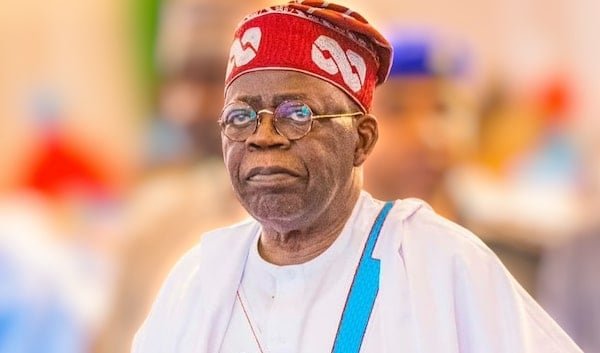
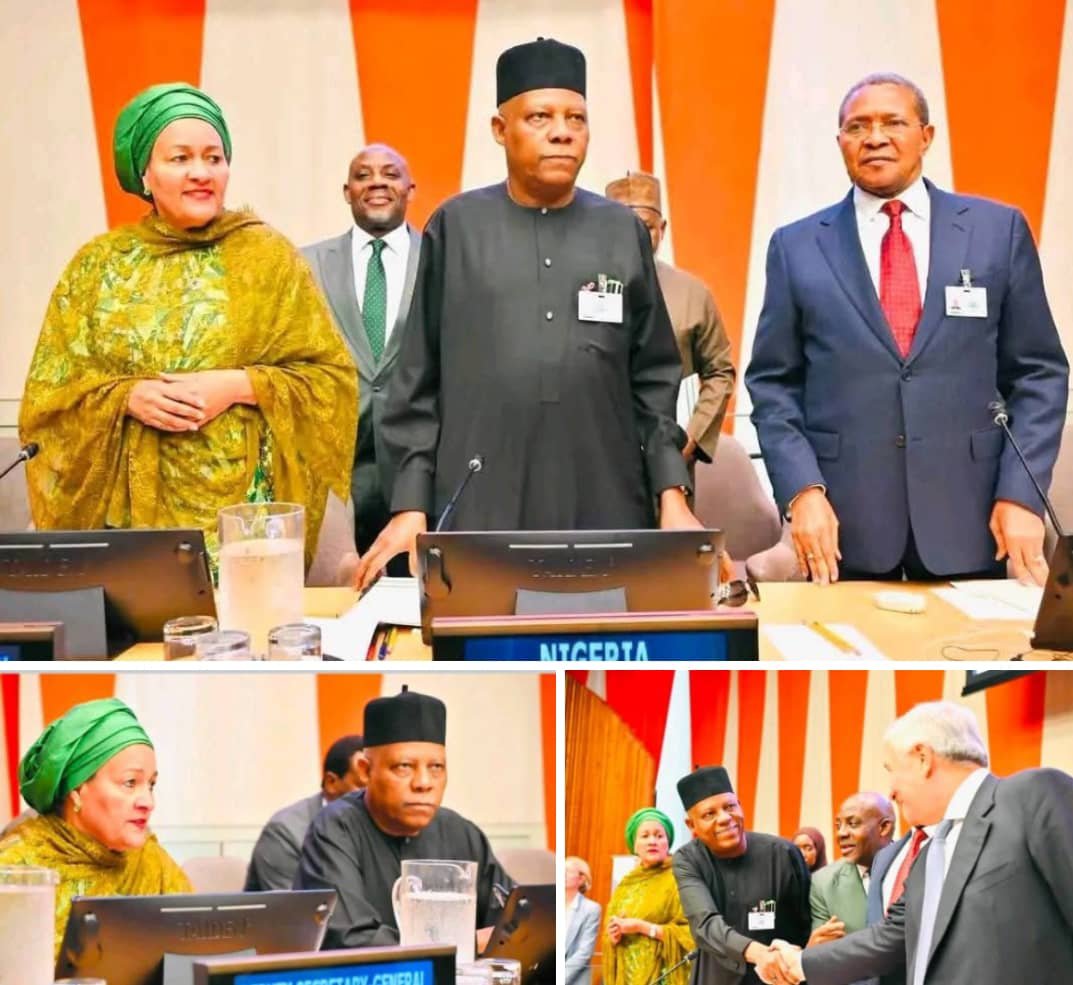
At the 81st Session of the United Nations General Assembly, President Bola Ahmed Tinubu delivered a powerful appeal for the transformation of the international system. Represented at the General Debate by Vice President Kashim Shettima, the Nigerian leader argued that the United Nations can no longer operate according to a structure designed for the world of 1945. At the centre of his address was a demand for the radical reform of the Security Council, including permanent African representation with full rights and veto powers.
Nigeria’s position is both justified and urgent. Africa is central to many of the security, humanitarian, economic and environmental challenges confronting the world, yet the continent remains excluded from permanent membership of the body responsible for making some of the most consequential decisions on international peace and security. The existing arrangement is not merely outdated; it weakens the legitimacy, fairness and effectiveness of the United Nations. Reform must therefore begin with the reconstitution of the Security Council, while also extending to global finance, climate governance, conflict prevention and technological development.
The Security Council’s present structure reflects the distribution of power after the Second World War, not the political and economic realities of the twenty-first century. The five permanent members—the United States, Russia, China, France and the United Kingdom—retain veto powers that enable them to block substantive decisions, even when those decisions command broad support among the wider membership. Meanwhile, an entire continent of more than 1.4 billion people remains without a permanent voice in the Council.
As Vice President Shettima stated on behalf of President Tinubu, “the world of 2026 cannot remain captive to the distribution of power in 1945.” This observation captures the central weakness of the current system. The international order has changed dramatically since the founding of the UN. Decolonisation created dozens of new states, Africa emerged as a significant diplomatic bloc, and global challenges became increasingly interconnected. However, the institutional arrangement for international security has largely remained unchanged.
Nigeria’s demand is specific. In accordance with the Ezulwini Consensus and the Sirte Declaration, it seeks at least two permanent seats for Africa, with all the rights and responsibilities attached to permanent membership, including veto power for as long as the veto exists. It also calls for a total of five non-permanent seats for the continent. This proposal is not an attempt to privilege Africa. Rather, it seeks to correct a profound imbalance and ensure that those most affected by international decisions participate meaningfully in making them.
Africa cannot continue to supply peacekeepers, host displaced populations, suffer the consequences of foreign interventions and carry the burden of conflicts while remaining absent from the Council’s permanent membership. Many of the crises discussed at the Security Council occur on African soil or have direct consequences for African societies. Conflicts in Sudan, the Sahel, the Democratic Republic of Congo and other regions demonstrate the importance of African perspectives in conflict resolution. Permanent representation would improve the Council’s understanding of regional realities and make its decisions more credible.
Critics may argue that expanding the permanent membership would make the Council less efficient. However, efficiency without legitimacy is not a sustainable basis for international governance. Decisions that exclude large parts of the world are likely to face resistance, weak implementation and declining public trust. A more representative Council may require more negotiation, but it would also produce decisions with greater moral authority and broader international support. In global governance, legitimacy is not an obstacle to effectiveness; it is one of its foundations.
President Tinubu’s call for Security Council reform was part of a broader warning about the danger of war, unilateral aggression and rising nationalism. He urged world leaders to reject the assumption that conflicts in distant countries have no consequences elsewhere. In an interconnected world, warfare disrupts food supplies, energy markets, migration patterns, investment and global security. Domestic conflicts can become international crises, while regional instability can create conditions for terrorism, organised crime and humanitarian disaster.
The President therefore called for a return to the founding principles of the UN Charter: dialogue, mutual respect, collective responsibility and the peaceful settlement of disputes. These principles are not empty diplomatic slogans. They represent a practical framework for preventing escalation and preserving a rules-based international system. Diplomacy should prevail over coercion, cooperation over isolation and international law over the arbitrary exercise of power.
Nigeria’s own record strengthens this argument. The country has repeatedly accepted significant responsibilities in support of peace and stability across Africa. Through its contributions to operations in Liberia, Sierra Leone, Darfur, Mali and The Gambia, Nigeria has demonstrated a willingness to commit personnel, resources and political capital when regional peace is threatened. Its role through ECOWAS, the African Union and Gulf of Guinea partnerships has also included mediation, democratic governance, counter-terrorism and maritime security.
These efforts show that Nigeria is not demanding influence without responsibility. On the contrary, the country’s claim to stronger representation is supported by its history of service. Africa has made significant sacrifices for international peace, frequently facing challenging economic and logistical circumstances. It is therefore reasonable that African states should have a permanent role in determining how global peace and security are protected.
The same principle applies to international economic governance. President Tinubu highlighted inadequate financing as one of the greatest obstacles to sustainable development. Many developing countries devote a large share of their national resources to debt servicing, leaving insufficient funds for education, healthcare, infrastructure and social protection. This situation limits economic growth and makes it more difficult for governments to respond to crises.
A reformed international system must therefore address the unfairness of global financial structures. Developing countries need wider access to concessional financing, responsible debt restructuring and financial arrangements that recognise their developmental needs. It is unreasonable to demand ambitious progress from countries while denying them the resources required to achieve it. International financial institutions must become more responsive, transparent and inclusive, particularly in relation to the needs of African economies.
Nigeria’s economic reforms, according to President Tinubu, are based on disciplined macroeconomic management, strong institutions, private-sector growth and strategic public investment. These domestic efforts are important, but national reforms cannot succeed in isolation from global conditions. High interest rates, unstable commodity prices, debt burdens and limited access to capital can undermine even well-designed economic policies. Nigeria’s development, like that of other African countries, depends partly on a global system that does not systematically disadvantage developing economies.
Climate change provides another compelling reason for greater African representation. Africa contributes less than four per cent of global greenhouse-gas emissions, yet it experiences some of the most severe consequences of a warming planet. Droughts, floods, desertification, food insecurity and climate-related displacement are already affecting communities across the continent. These consequences create economic and security pressures that extend beyond national borders.
President Tinubu rightly rejected the false choice between development and climate action. Developing countries must industrialise, eradicate poverty and expand energy access, but they should be enabled to do so through low-carbon pathways. This requires technology transfer, climate finance and a fair energy transition. It is unjust to expect African countries to remain poor in order to compensate for emissions largely produced by industrialised nations.
Nigeria’s commitment to the Paris Agreement and its goal of achieving net-zero emissions by 2060 demonstrate that climate responsibility and economic development can be pursued together. But international cooperation is needed to back up commitments. Climate finance should not be delivered primarily as loans that increase debt burdens. It must include accessible and predictable funding, technology sharing and support for renewable energy, resilient infrastructure and sustainable agriculture.
The President also addressed emerging technologies, particularly artificial intelligence. Nigeria, he said, will not allow fear to dictate its technological future. AI is a tool shaped by human choices, and its effects will depend on how governments and societies regulate and deploy it. Nigeria’s efforts to expand digital public infrastructure, broadband access and technology entrepreneurship are therefore important not only for economic growth but also for national resilience.
Africa should not be treated merely as a consumer of technology developed elsewhere. African countries must participate in innovation, data governance, digital regulation and the development of emerging industries. At the same time, technological advancement must be accompanied by attention to privacy, inequality, cybersecurity and employment. A human-centred approach can ensure that AI promotes education, healthcare, productivity and public services rather than deepening existing divisions.
Security remains a central concern in Nigeria’s foreign policy. Drawing on the country’s prolonged struggle against Boko Haram, ISWAP and other armed groups, President Tinubu observed that no nation can fully secure itself against threats sustained beyond its borders. Terrorist networks, cybercriminals, arms traffickers and organised criminal groups exploit gaps in international cooperation. Military force may be necessary, but it cannot provide a lasting solution on its own.
Sustainable security requires education, economic opportunity, accountable governance and respect for human rights. Young people who lack meaningful opportunities are more vulnerable to recruitment by extremist organisations. Communities that distrust government institutions may be less willing to cooperate with security agencies. Where justice is absent, grievances can become fuel for instability. International security strategies must therefore address the political and socioeconomic conditions that allow violence to persist.
The conflicts in Sudan and other war-torn countries further demonstrate the need for urgent diplomacy. The international community must not become desensitised to prolonged crises or permit propaganda to obscure the distinction between victims and aggressors. As President Tinubu warned, a world in which truth becomes a crime and perpetrators are protected from justice represents a betrayal of the UN’s founding promise.
Ultimately, Nigeria’s message at the UN General Assembly is a call to restore credibility to multilateralism. The world cannot effectively confront war, terrorism, climate change, debt, poverty and technological disruption through institutions that exclude major regions from meaningful decision-making. Africa’s permanent inclusion in the Security Council is therefore not a symbolic concession. It is a practical requirement for a more representative and capable international order.
A reformed United Nations must reflect the world as it exists today, not as it existed eight decades ago. It must give Africa all the support to participate in the decision that also affects Africa is so many ways.
Bwala, PhD, writes from Abuja
About the Author