By Michael Olukayode
For many young Nigerians, migration begins as a dream.
It is the dream of a better job, a better education, financial independence and the ability to support family members back home. For some women and girls, travelling abroad represents an escape from economic hardship and a chance to build a life beyond the limitations of their immediate environment.
But for those who embark on irregular migration journeys, the dream can quickly become a nightmare.
Some are trafficked. Some are detained. Some are forced into labour. Others suffer sexual exploitation, rape, physical abuse and gender-based violence, often at the hands of people who initially presented themselves as agents of opportunity.
The danger is particularly acute for women and girls whose vulnerability is exploited at different stages of the migration journey.
This was one of the sobering realities highlighted by the International Organisation for Migration (IOM) Chief of Mission in Nigeria, Ms. Dimanche Sharon, who warned that irregular migration can place migrants outside formal systems of protection, creating an environment in which traffickers and other criminal actors can easily exploit them.
“Migration itself is not the problem. The problem is unsafe migration,” she said.
That distinction is critical.
The conversation around irregular migration is often dominated by statistics: the number of Nigerians leaving the country, those intercepted at borders, returnees assisted or victims rescued from trafficking networks.
But behind those figures are human beings whose experiences frequently include violations of their most basic rights.
For women and girls, one of the most devastating forms of that violation is sexual and gender-based violence.
The hidden violence behind the journey
Irregular migration does not automatically result in SGBV. But the absence of legal status, protection and reliable support can significantly increase vulnerability to abuse.
Women travelling through unregulated routes may depend heavily on smugglers, traffickers, intermediaries, employers or people they meet along the way. That dependency can create opportunities for sexual exploitation and other forms of abuse.
Sharon explained that women and girls face particularly high risks of sexual exploitation and gender-based violence, while children travelling alone or separated from their families are also extremely vulnerable.
The problem can begin even before a migrant reaches the intended destination.
A woman may be promised legitimate employment abroad only to discover that the job does not exist. Her passport may be confiscated. She may be isolated from people who could help her. She may be threatened with violence or debt. In the most horrific circumstances, she may be forced into prostitution or other forms of sexual exploitation.
What began as a migration plan therefore becomes a system of control.
And once a victim is trapped, escaping can be extraordinarily difficult.
Traffickers prey on vulnerability
Human trafficking thrives on vulnerability.
Poverty, unemployment, displacement, climate-related disasters and lack of economic opportunities can leave people desperate for alternatives. Traffickers understand this desperation and use it to make seemingly irresistible offers.
For young women, the promises can be particularly attractive: a job abroad, domestic work, modelling, hospitality employment, education or an opportunity to earn money and support their families.
But behind some of these offers are criminal networks whose real objective is exploitation.
Sharon noted that traffickers increasingly use social media and technology to identify and recruit victims. Fake employment opportunities can be advertised online, while sophisticated digital identities are created to establish credibility and gain the trust of potential victims.
The danger, therefore, is no longer confined to remote borders, deserts or airports.
It can begin with a message on a mobile phone.
A job advertisement.
A Facebook post.
A WhatsApp conversation.
A seemingly genuine video call.
The technology may change, but the objective remains the same: identify vulnerability, create trust, facilitate movement and ultimately exercise control over the victim.
The woman who returned home with nothing
Among the experiences shared by Sharon was the story of a young Nigerian woman from Edo State who accepted an offer of opportunity abroad.
Her mother sold property to finance the journey.
But when the woman arrived at her destination, the reality was completely different from what had been promised. She experienced exploitation and abuse, became ill and eventually escaped.
Yet returning home presented another form of trauma.
She was ashamed.
Her family had sacrificed a valuable property to finance her journey. She feared returning with nothing. She worried that people would regard her as a failure.
Even some relatives reportedly encouraged her to remain abroad and continue searching for an opportunity rather than return home.
This illustrates an often-overlooked dimension of SGBV and trafficking: the violence does not necessarily end when the survivor escapes.
There can be shame.
Stigma.
Economic insecurity.
Psychological trauma.
Fear of rejection.
And the pressure to conceal what happened.
Eventually, however, her mother encouraged her to return.
With support from the Nigerian Government and IOM, she began rebuilding her life. She became part of a cooperative, acquired land, developed a livelihood and was able to send her child to school.
Her story offers an important counter-narrative to the assumption that returning home empty-handed is synonymous with failure.
Sometimes, returning home is the first step towards survival.
The price of silence
SGBV survivors frequently carry wounds that cannot be seen.
Physical injuries may heal, but trauma can remain for years.
Survivors may experience anxiety, depression, fear, loss of confidence and social isolation. Some struggle to trust others. Others are confronted by stigma and discrimination within their own communities.
For a woman who has been sexually exploited abroad, returning home may therefore present a painful dilemma.
Should she tell her family what happened?
Will they believe her?
Will they blame her?
Will they accuse her of making a foolish decision?
Will she be rejected?
Will her community stigmatise her?
These questions can make survivors reluctant to seek assistance.
The consequences are particularly serious where sexual violence is involved because stigma surrounding sexual abuse remains powerful in many communities.
The result is a vicious cycle: violence produces trauma; trauma produces silence; silence shields perpetrators and makes it harder for future victims to recognise danger.
Breaking that cycle requires communities to stop treating survivors as failures and begin treating them as people whose rights have been violated.
Family pressure can become a migration risk
The pressure to succeed abroad is another issue that cannot be ignored.
According to Sharon, some young people migrate partly because of expectations from their families and communities.
They see friends returning from abroad with cars, houses and money. They see photographs on social media portraying seemingly perfect lives overseas.
Then comes the question:
“Why can’t you also travel and succeed?”
For young women in particular, this pressure can intersect with economic vulnerability and gender inequality.
A person who believes that remaining at home represents failure may become more willing to accept an offer without asking critical questions about who is arranging the journey, where the job is located, how much it pays or what legal protections exist.
Once money has been borrowed or property sold to finance the journey, returning becomes even more difficult.
Some victims remain trapped in abusive situations because they fear disappointing their families.
The message that must reach Nigerian households is therefore simple: a child returning home safely is not a failure.
No amount of money, property or social prestige is worth a person’s life or dignity.
Children face an even greater danger
If adult migrants can struggle to navigate unsafe migration routes, children are even less equipped to protect themselves.
Children travelling alone or separated from their families can be exposed to trafficking, forced labour, sexual exploitation, violence and other forms of abuse.
Their vulnerability is heightened because they may lack knowledge of their rights, access to documentation or trusted adults to whom they can turn.
This makes prevention particularly important.
Protection cannot begin at the point where a child has already been trafficked.
It must begin in the family, school and community.
Children and young people need age-appropriate information about trafficking, online recruitment and the dangers of accepting unverified offers from strangers.
The new battlefield is online
Perhaps one of the most disturbing developments is the increasing use of technology by trafficking networks.
The traditional image of a trafficker meeting a victim physically is increasingly incomplete.
Criminal networks can now recruit from a distance.
They can fabricate employment opportunities, create fake profiles and use sophisticated technology to establish credibility.
Sharon recounted the case of a Nigerian man who was recruited through a Facebook advertisement offering employment in Thailand. Communication continued through WhatsApp, with the recruiters presenting what appeared to be convincing evidence that the opportunity was genuine.
The victim eventually travelled and was transported across borders before being forced into online criminal activities.
According to Sharon, artificial intelligence had even been used to create a fake identity for one of the people communicating with him.
If such technology can be used to deceive potential victims generally, it can also be weaponised against women and girls seeking employment and education opportunities abroad.
This makes digital literacy an increasingly important component of anti-trafficking and SGBV prevention.
Young people must learn that a professional-looking social media account is not proof that an employment offer is legitimate.
A video call is not proof of identity.
And an attractive salary is not proof of a genuine job.
Prevention must go beyond warnings
For years, campaigns against irregular migration have often focused on the dangers of the journey: the desert, the sea, detention and death.
Those warnings remain necessary.
But they are not enough.
If a young woman is unemployed, financially desperate and convinced that migration is her only route to survival, simply telling her that irregular migration is dangerous may not change her decision.
Prevention must therefore address the conditions that create vulnerability.
That means creating jobs.
Expanding access to education and skills.
Strengthening women’s economic empowerment.
Supporting communities affected by climate-related displacement.
Improving access to reliable migration information.
And creating genuine regular migration pathways.
It also means strengthening the systems that respond to SGBV.
Survivors need healthcare, psychosocial support, legal assistance, safe accommodation and livelihood opportunities.
They need to know that reporting abuse will not expose them to further humiliation or punishment.
A shared responsibility
The fight against trafficking and SGBV cannot be left to government agencies alone.
Families have a role.
Schools have a role.
Religious institutions have a role.
Communities have a role.
The media has a role.
Technology companies have a role.
And young people themselves must be empowered with information that allows them to recognise dangerous situations.
Sharon emphasised that religious leaders can be particularly influential because of the strong role religious institutions play in Nigerian society.
Schools can also provide young people with accurate information before they make life-changing decisions.
The media, meanwhile, must move beyond sensational stories about migrants who die or return from abroad. It should explain the mechanisms of trafficking, expose fraudulent recruitment schemes, challenge harmful social expectations and provide information about safe migration.
Migration is not the enemy
There is an important danger in presenting every form of migration as negative.
Migration can be transformative.
Nigerians abroad contribute through remittances, skills, knowledge and innovation. Legal migration can provide opportunities for education, employment and professional development.
The objective, therefore, should not be to prevent Nigerians from travelling.
It should be to prevent their dreams from being turned into instruments of exploitation.
Safe migration means migrants know where they are going, why they are going, who is employing them, what their rights are and what protection is available to them.
It means women should not have to exchange their bodies for survival.
It means children should not become commodities in criminal networks.
It means no family should have to wait indefinitely for news of a missing daughter or son.
And it means survivors should be able to return home without shame.
The real measure of success
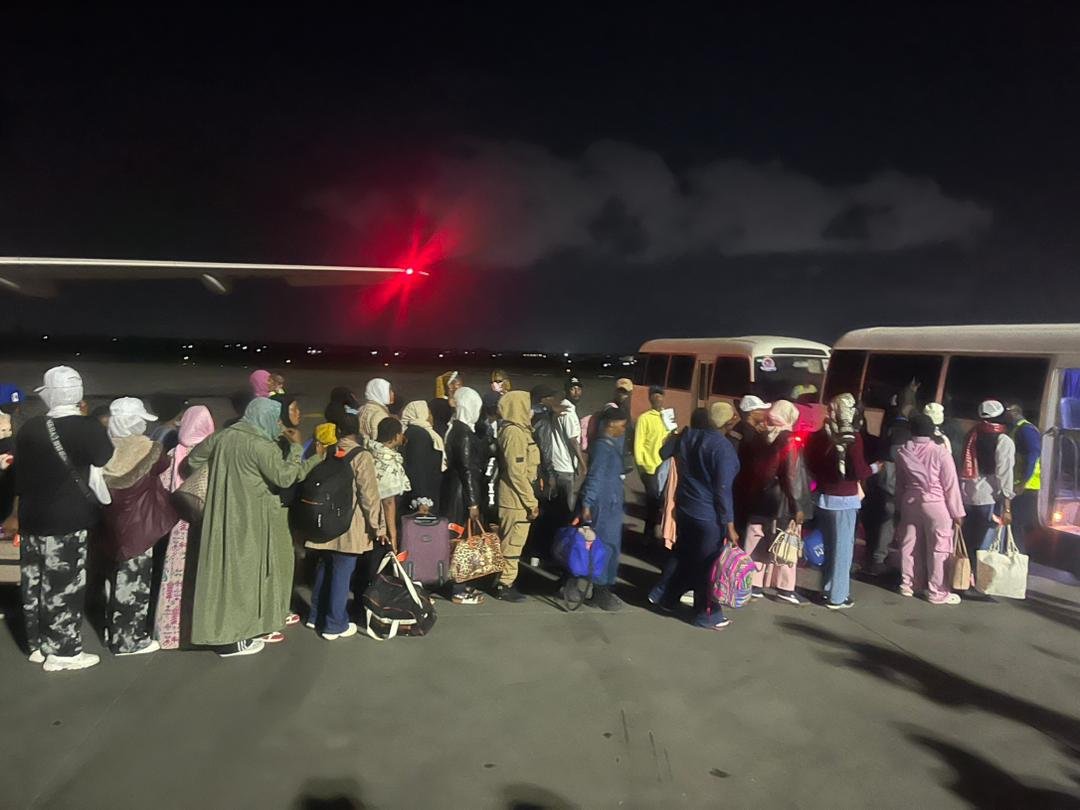
IOM says it has supported more than 68,000 returnees to come home safely and with dignity, while more than 53,000 people have received reintegration support through economic, psychosocial and community-based interventions.
But the real measure of success should ultimately be broader than the number of people rescued or returned.
Success should mean fewer people becoming victims in the first place.
It should mean a young woman can seek work abroad without being sexually exploited.
It should mean a young person can verify an employment offer before boarding a plane.
It should mean families no longer feel compelled to sell their homes to finance dangerous journeys.
And it should mean survivors of SGBV can return to communities that offer support rather than blame.
The fight against irregular migration is therefore also a fight for dignity, equality and protection from violence.
For every young Nigerian contemplating the journey, the message from the IOM Chief of Mission is both a warning and an affirmation:
Dream big. But do not gamble with your life.
There is nothing wrong with wanting to travel.
There is nothing wrong with seeking opportunities abroad.
There is nothing wrong with wanting a better future.
But no opportunity is worth surrendering one’s safety, freedom or dignity.
Migration should be a choice—not a desperate gamble.
And for women and girls in particular, the journey towards a better life must never become a journey into sexual and gender-based violence.
About the Author