[ad_1]
Nigeria must lead Africa in digital finance – SA
Digital
By Rose Okudaye
Lagos, Sept. 3, 2026 (NAN) Mr Ganiyu Oseni, Special Adviser on Technology, Broadband and Innovation to the Lagos State Governor, has urged Nigeria to lead Africa in digital finance, tokenised assets and cross-border financial settlement.
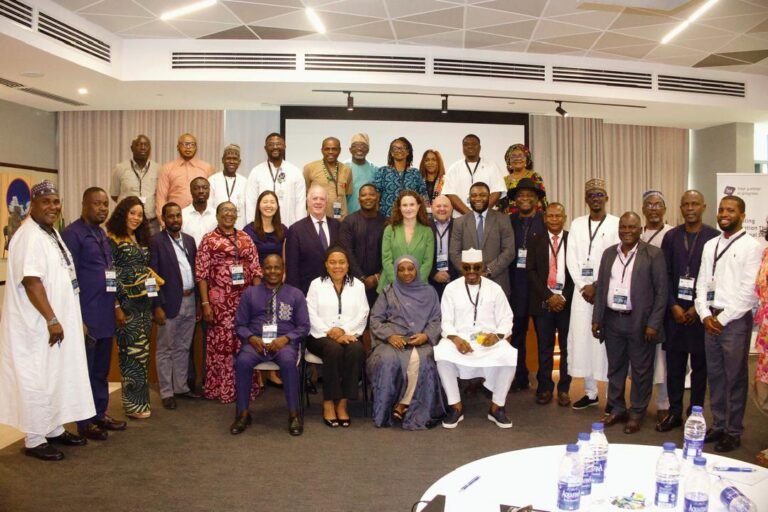
Oseni gave the charge at the close of Gulf Information Technology Exhibition (GITEX) Nigeria, a three-day digital finance summit held in Lagos on Thursday.
He said that Nigeria must move beyond being a market that simply adopts technologies developed elsewhere and instead develop home-grown solutions capable of positioning the country as a leader in Africa’s digital financial ecosystem.
According to him, Nigeria has the talent, technology ecosystem and market size needed to develop innovative digital financial solutions capable of competing within Africa and globally.
He said that Nigeria had already developed significant infrastructure for a digital economy and should now focus on building the regulatory and trust systems needed to attract global capital.
Oseni said that the country had already demonstrated its capacity to operate digital financial services at scale, with billions of transactions processed through its financial system.
He said that the issue was no longer whether Africa’s financial future would become digital, but whether the continent would build, own and replicate the systems locally or depend on external platforms.
According to him, infrastructure is policy, and a digital economy requires four critical foundations: connectivity, power, identity and talent.
He said that significant progress had been made in these areas, including the expansion of fibre infrastructure, investments in computing and data-centre capacity, the development of digital identity systems and support for research and development across Nigerian universities.
Oseni also highlighted Nigeria’s evolving regulatory environment, particularly the Investments and Securities Act 2025, which had brought digital and virtual assets within the capital-market framework.
He said that the development gave Nigeria an opportunity to create a regulated environment in which Nigerian assets could be tokenised and made accessible to investors.
“Two years ago, that sentence should have been aspirational. Today, it’s a filing requirement,” the SA said.
He further pointed to the rapid expansion of the global stablecoin and tokenisation markets, saying that countries that established themselves early as venues for digital-asset transactions could capture significant economic value through fees, jobs, data and investment.
Oseni said that countries such as Singapore and Dubai deliberately positioned themselves as global financial and investment venues, and Nigeria must adopt a similarly deliberate strategy.
He called for greater regulatory coherence among relevant Nigerian institutions, as clear and coordinated rules were essential for attracting investors and preventing jurisdictional uncertainty.
Oseni also called for continued investment in fibre, power and computing infrastructure, saying that these should be developed and priced competitively with other leading digital-finance jurisdictions.
He said that another priority should be the digitisation of government records and real-world assets, particularly land titles, property records and infrastructure concessions.
Oseni said that properly digitising and verifying such assets could transform them into investable instruments.
“Monetising and digitising land and title records is therefore, not a housing reform. It’s a capital markets reform,” he said.
Oseni also urged governments to become early users of digital financial infrastructure through government payments, transportation systems and procurement processes.
He said that government’s adoption would help move digital-finance solutions beyond pilot projects and create sustainable industries around them.
Beyond infrastructure and regulation, Oseni identified Nigeria’s young and technology-adopting population as one of the country’s strongest competitive advantages.
He said that the country’s large population of young people, who had rapidly embraced financial technology, represented a significant asset that could help Nigeria maintain an advantage in the emerging digital economy.
Addressing investors and institutions, the SA said that Nigeria was not seeking charity but investment based on a proper assessment of its potential.
“We would rather have your capital than your admiration, and we would rather have your operational presence than your capital,” he said.
Oseni urged innovators and investors to build within Nigeria’s emerging regulatory framework and use the country as a base for expansion into other African markets.
He concluded that Africa’s financial future would increasingly be tokenised, programmable and cross-border.
“Lagos should position itself as the place where those transactions are settled,” Oseni said.
NAN reports that GITEX brings together tech companies, startups, government leaders and investors to deliberate on Information and Communication technology. (NAN)(NAN)
ROO/FON
========
Edited by Florence Onuegbu(function(){try{var u=”https:\/\/nannews.com.ng\/wp-json\/nan\/v2\/track\/pageurl”,p=891127;if(navigator.sendBeacon){var d=new FormData();d.append(“pid”,p);d.append(“url”,location.href);navigator.sendBeacon(u,d);}else{var x=new XMLHttpRequest();x.open(“POST”,u,true);x.setRequestHeader(“Content-Type”,”application/x-www-form-urlencoded”);x.send(“pid=”+p+”&url=”+encodeURIComponent(location.href));}}catch(e){}})();
[ad_2]
Source link
About the Author