Reputation key to public trust, customs tell officers at Kaduna workshop
By Hussaina Yakubu
January 29, 2026
Nigeria Customs Service (NCS) has underscored the importance of reputation management as a critical pillar for effective public service delivery, security and national development.
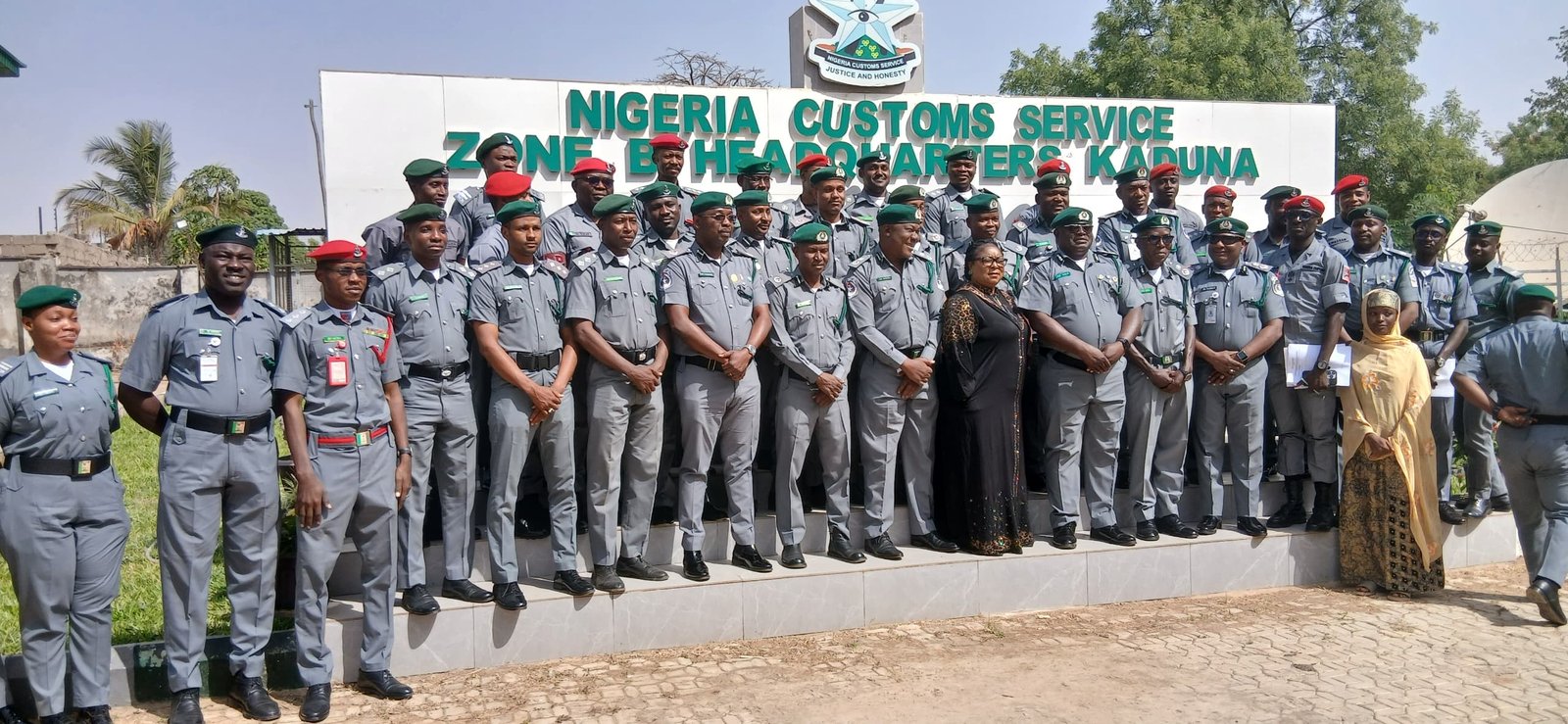
This was the focus of a one day sensitization and awareness programme on reputation management organised by the NCS Zonal Headquarters, Kaduna, in collaboration with the Kaduna Area Command.
Speaking at the opening of the training, the Customs Area Controller, Kaduna area Command, Comptroller Sa’ad Hassan, said the initiative reflected the Service’s commitment to excellence and accountability in public service.
Hassan noted that in a fast paced world driven by rapid information flow, the reputation of an organisation remained one of its most valuable assets, stressing that safeguarding the image of the Service was no longer optional but essential.
According to him, effective reputation management fosters public trust, enhances operational efficiency and advances the NCS mandate in trade facilitation, security and national development, while also equipping officers with tools to proactively manage risks and amplify positive impact.
He urged participants to approach the training with openness and enthusiasm, adding that the goal was not only to train officers but to transform them into better ambassadors of the Service.
Earlier, the Zonal Coordinator, Assistant Comptroller General (ACG) Nsika Umoh, represented by the Comptroller in charge of Operations, Amwe Aku, described reputation management as a collective responsibility that begins with individual conduct and extends to families and society at large.
Umoh emphasised that in the era of globalisation and social media, personal behaviour, both in and out of uniform, had direct implications for the image of the Service, noting that the internet “does not forget.”
He cautioned officers to be mindful of their conduct, communication and social media usage, stressing that actions considered inconsequential could expose officers and the Service to legal, operational and reputational risks.
The first paper, titled “Reputation Management and the Role of Officers,” was presented by Assistant Superintendent of Customs II, Samuel Bodam, who described reputation as one of the most valuable assets of any organisation.
Bodam explained that the image of the NCS was shaped daily by the conduct of officers and men, adding that bias, rudeness and unethical behaviour eroded public trust, while consistency, transparency and effective communication strengthened credibility.
In the second presentation, the Zonal Public Relations Officer, Superintendent of Customs Magaji Dikko, spoke on “Reputation Management of the Nigeria Customs Service: Roles of Officers and Men,” highlighting professionalism, integrity, honesty and adherence to rules as core responsibilities.
Dikko also drew attention to the NCS Social Media Guidelines 2024, particularly Section 9(b), which restricts officers from posting or commenting on social media while on duty, warning that misconduct, excessive use of force or poor crisis handling could escalate into reputational damage.
In another session, Assistant Superintendent of Customs II, Hassan Bukar, from the Customs Police Unit, educated participants on offences and disciplinary procedures under the Public Service Rules, outlining simple and gross misconducts and their consequences on the image and discipline of the Service.
Another presentation by Assistant Superintendent of Customs II, Willow Mumbo, who called for a culture of accountability and integrity, noting that strong discipline would enhance border security, curb revenue leakages, protect the Service’s image and contribute to Nigeria’s economic growth and development.
Giving the vote of thanks, the Acting Deputy Comptroller of Administration, Assistant Comptroller Moses Uchegbu, said the reputation of the Service was directly shaped by the conduct of its officers, noting that the public expected clear explanations of procedures, calm and respectful communication, consistency, transparency and professional appearance.
He reminded officers that they were trained to be fair and professional, not personal, stressing that respect fostered cooperation faster than intimidation.
Uchegbu expressed appreciation to the Comptroller General of Customs, the Zonal Coordinator and other management staff for the opportunity to organise the workshop, and assured that officers of the Zonal and Kaduna Area Commands would put the knowledge gained into practice to enhance the image and effectiveness of the Service.(NAN)
About the Author