The Federal Government has issued a strategic call to action, positioning professional regulatory bodies as the frontline defense against the pervasive issue of quackery in Nigeria’s mining sector. This move signals a critical shift from informal, often illegal extraction towards a formalized, knowledge-driven industry capable of competing on the global stage.

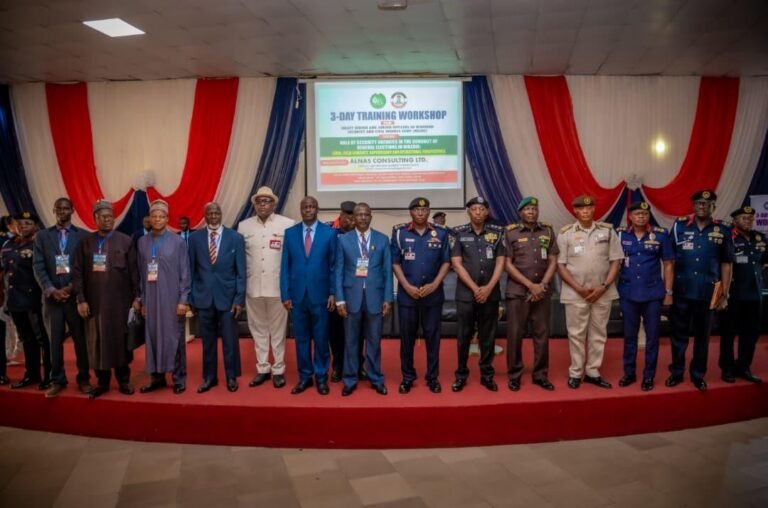
At the 15th induction ceremony for the Council of Mining Engineers and Geoscientists (COMEG) in Abuja, the Minister of Solid Minerals Development, Dr. Dele Alake, underscored the council’s non-negotiable role as the custodian of professional standards. Represented by the Permanent Secretary, Mr. Faruk Yabo, the Minister framed the induction of 259 new professionals not merely as a ceremonial event, but as a direct infusion of certified expertise into a sector historically plagued by unqualified operators.
The High Cost of Quackery: Why Professionalization is Non-Negotiable
Quackery in mining extends beyond unlicensed digging. It encompasses a lack of technical knowledge in geology, improper mine planning that leads to catastrophic collapses, environmentally destructive practices like mercury use in gold processing, and financial mismanagement that deprives the state of royalties. These activities result in tragic loss of life, irreversible environmental degradation, and the significant undervaluation of Nigeria’s mineral wealth. By mandating COMEG registration, the government aims to create a verifiable roster of competent professionals, making it harder for quacks to operate within formal projects and supply chains.
COMEG as a Strategic Implementing Partner, Not Just a Regulator
The Minister’s speech elevated COMEG’s role from a passive regulator to an active “key implementing partner” in President Bola Tinubu’s economic diversification agenda. This partnership is operationalized through several key pillars of the ministry’s seven-point agenda:
1. Digital Integration for Transparency: COMEG’s alignment with government digital systems, such as the Electronic Mining Cadastral System (eMC+) and the Mining Decision Support Platform, is crucial. When only COMEG-certified professionals can submit technical reports or oversee operations within these systems, it creates an automated check against unqualified participation, reducing delays and boosting investor confidence in project legitimacy.
2. From Geoscientist to Geo-entrepreneur: The commendation for COMEG’s mandatory geo-entrepreneurship training points to a deeper need: moving Nigerian mining beyond raw material export. Professionals are being trained to understand value addition—transforming lithium into battery components or barite into drilling mud. This knowledge is essential for capturing more of the mineral value chain within Nigeria.
3. Formalizing Artisanal and Small-Scale Mining (ASM): This is perhaps COMEG’s most complex and vital task. Nigeria’s vast ASM sector is largely informal. COMEG’s mandate includes organizing these miners into cooperatives and providing them with access to certified professionals who can introduce safer, more efficient, and environmentally sound techniques, thereby linking them to the formal economy and its benefits.
4. Strengthened Enforcement and Discipline: The revised disciplinary framework promises “zero tolerance” for misconduct. For this to be a deterrent, it must be backed by visible enforcement actions against both unlicensed quacks and certified professionals who violate codes of ethics, particularly regarding environmental breaches and illegal mining collusion.
Tangible Outcomes and Future Trajectory
The reforms are already being linked to measurable outcomes. The ministry reported issuing over 867 new mining licenses in 2025 and a dramatic increase in revenue generation from N12 billion to over N50 billion. This suggests that formalization and professional oversight are making the sector more attractive to serious investors. The planned expansion of nationwide geophysical surveys in 2026 will further depend on COMEG-certified professionals to interpret data accurately, de-risking exploration for investment.
In response, COMEG’s Registrar, Prof. Zachaeus Opafunso, affirmed the council’s commitment to innovation and youth empowerment through hands-on training. This addresses the dual challenge of skills development and unemployment, creating a pipeline of new professionals. Ms. Rose Ndong, President of the Nigeria Mining and Geosciences Society (NMGS), echoed the call for continuous skill development, reminding inductees that upholding the profession’s credibility is a personal and collective responsibility.
The path forward is clear: Nigeria’s ambition to become a premier mining destination hinges on its ability to replace quackery with qualified competence. The synergy between the Federal Government’s policy frameworks and COMEG’s professional gatekeeping function forms the bedrock upon which a sustainable, safe, and prosperous solid minerals sector will be built.
Edited by Gabriel Yough
About the Author