Nigeria’s Flare Gas Revolution: How 28 Companies Are Turning Pollution into Power and Prosperity
Nigeria has taken a decisive step in its energy transition by awarding 28 companies permits to commercialize flared gas, transforming a major environmental liability into economic opportunity. This initiative directly tackles routine flaring by enabling private investment to capture waste gas for power generation, industrial use, and LPG production, thereby enhancing energy security. The program represents a strategic pivot from a legacy of operational challenges to a market-driven model that aligns climate action with tangible economic value creation. This move positions Nigeria to simultaneously meet its
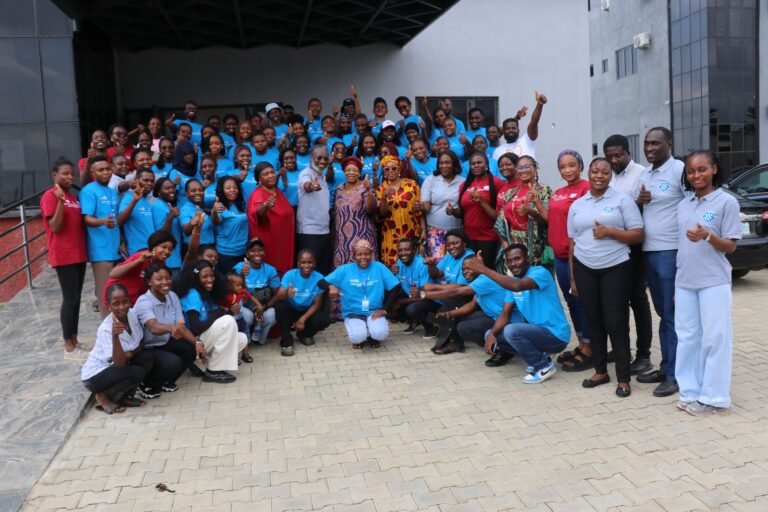
Commission Chief Executive, NUPRC, Mr Gbenga Komolafe (7th left) with awardees and dignitaries at the issuance of the Nigerian Flare Gas Commercialisation Programme (NGFCP) access permit ceremony in Abuja
By Emmanuella Anokam | Abuja, Dec. 12, 2025
In a landmark move for Nigeria’s energy and environmental future, the Nigerian Upstream Petroleum Regulatory Commission (NUPRC) has formally empowered 28 companies to transform a persistent source of waste and pollution into a driver of economic growth. The issuance of Permits to Access Flare Gas under the Nigerian Flare Gas Commercialisation Programme (NGFCP) marks a critical pivot from decades of symbolic pledges to tangible, contract-backed action against routine gas flaring.
The successful awardees, now tasked with harnessing gas from specific flare sites across the Niger Delta, are:
Ace Energy Limited; Afagaf Company Limited; AGH Lero; Almina Resources Limited; Amazon Energy Limited; AUT Energy; Beluga Asiko; Bodej Investment Limited and Cainergy Limited; Cimcmonobuo Nigeria Limited;
Dawcon Consortium; Dawnwatch Limited; Fargab Limited; Folstaj International Limited; Geospectra Energy Limited; Izzi Project Limited; and MMLet Energy Limited.
MSN Consortium; Newgaz Integrated Services Limited; NG Lyon Construction Limited; Oaks Cluster Energy; Seal Energy Limited; Tecnis EPS International Limited; Teobell International; Terms Energies; Zipora Gas; and Stelog Gas Company Limited.
At the permit issuance ceremony in Abuja, Commission Chief Executive Mr. Gbenga Komolafe framed the development as a strategic inflection point. “This signifies the shift from decades of operational challenges to a commercially driven model that will enhance energy security and improve industry efficiency,” he stated.
From Flare to Future: The NGFCP’s Redesigned Engine
Re-inaugurated in 2022, the NGFCP represents a fundamental redesign of previous failed attempts to tackle flaring. Its core innovation is the allocation of specific flare sites to qualified third-party investors, decoupling gas capture from the primary oil production operations of international oil companies (IOCs). This model addresses a key historical hurdle: for IOCs, capturing associated gas was often a cost center that interfered with their core oil production. For the NGFCP awardees, the gas is the core asset.
The commercialisation pathways for this captured gas are diverse, aiming to fuel domestic industry and power generation. They include:
Power Generation: Providing fuel for gas-fired power plants to alleviate Nigeria’s chronic electricity deficit.
Petrochemicals & Fertiliser: Supplying feedstock for industries that have historically struggled with unreliable gas supply.
Liquefied Petroleum Gas (LPG): Producing cooking gas to reduce deforestation from firewood use and improve public health.
Direct Industrial Use: Supplying manufacturers with a cleaner, more reliable alternative to diesel generators.
A Rigorous Journey from Interest to Permit
Komolafe detailed the competitive and transparent process that led to this milestone. From an initial 300 expressions of interest, 139 applicants qualified for the Request-for-Proposal (RFP) stage. A rigorous evaluation ultimately awarded 49 flare sites to 42 successful bidders. The 28 companies receiving permits are those that have successfully negotiated and executed a complex suite of binding commercial agreements, including:
Connection Agreements: With the facility operators (the IOCs) for physical access to the flare stack.
Milestone Development Agreements (MDAs): With the NUPRC, outlining strict project timelines and deliverables.
Gas Sales Agreements (GSAs): Defining the price, volume, and terms for the sale of the captured gas.
“These entities represent a strong blend of operational capability, financial readiness, and technological competence,” Komolafe affirmed.
The Tangible Promise: Emissions, Investments, and Jobs
The scale of the potential impact is staggering. Komolafe provided concrete projections:
Environmental: Capturing 250–300 million standard cubic feet of gas flared daily will cut an estimated 6 million tonnes of CO₂ emissions annually—a major contribution to Nigeria’s Nationally Determined Contribution (NDC) under the Paris Agreement.
Economic: The programme is expected to attract up to $2 billion in new investments and create over 100,000 direct and indirect jobs.
Energy Access: It will add about 170,000 metric tonnes of LPG annually, providing cleaner cooking energy for an estimated 1.4 million households.
Power: Nearly 3 gigawatts of power-generation potential—equivalent to several large power plants—would be unlocked.
The Road Ahead: Execution is Everything
Komolafe was clear that the permit issuance is a beginning, not an end. He urged awardees to accelerate work on engineering, financing, construction, and commissioning, assuring them of continuous regulatory support. “The value of this programme will be realised only through disciplined project delivery,” he cautioned.
The Commission acknowledged the critical support of development partners like the World Bank, Power Africa, USAID, and technical advisors like KPMG, whose contributions helped structure a bankable and credible programme.
This moment represents more than a regulatory achievement; it is a test case for Nigeria’s ability to leverage private sector innovation to solve entrenched environmental and economic problems. If successfully executed, the NGFCP can serve as a blueprint for other gas-flaring nations, proving that the path to a lower-carbon future can be paved with economic opportunity and improved energy security.