By Sam Israel
“There are things an old man sees while sitting down that a child, even when he climbs the highest mountain, may never see.”
This African proverb is not merely an expression of age or experience; it is a profound reminder that history, political understanding and accumulated wisdom must never be sacrificed on the altar of temporary political ambition.
As Nasarawa State approaches another defining moment in its democratic journey, one question deserves an honest, courageous and historically informed answer: After the completion of the current administration in 2027, which senatorial zone has the strongest equitable and historical claim to produce the next governor of Nasarawa State?
For anyone willing to examine the political history of the state objectively, the answer deserves serious consideration: the Western Senatorial Zone.
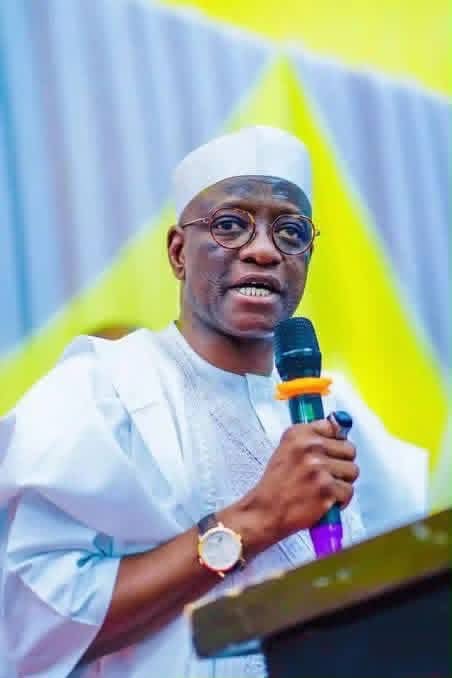
And when the conversation moves from the question of zoning to the question of who should emerge as the candidate from the Western Zone, Senator Ahmed Wadada Aliyu stands prominently in the picture.
This is not an argument against the people of the Northern or Southern Zones. It is an argument for consistency, fairness, political accommodation and respect for the historical understanding upon which equitable power rotation was founded.
THE HISTORY THAT MUST NOT BE FORGOTTEN
When Nasarawa State was created in 1996, its people celebrated the birth of a new political identity and the opportunity to determine their collective destiny.
The return to democratic governance in 1999 presented an opportunity to build a political system in which the three senatorial zones would enjoy a fair opportunity to participate in the highest political office in the state.
The emergence of Senator Abdullahi Adamu from the Western Zone as the first civilian governor in 1999 established an important chapter in that history. He served two terms, completing eight years in office.
He was succeeded in 2007 by the late Alhaji Aliyu Akwe Doma from the Southern Zone, who served one term. Senator Tanko Al-Makura, also from the Southern Zone, subsequently governed for two terms between 2011 and 2019.
The figures are instructive.
The Western Zone had eight years, while the Southern Zone had twelve years in the Government House.
In 2019, the Northern Zone entered the governorship rotation through the emergence of Engineer Abdullahi Sule, who subsequently secured a second term.
By 2027, his administration will have completed eight years.
Therefore, the historical sequence presents a compelling case for returning the governorship to the Western Zone.
The argument is straightforward: if the political understanding of equitable rotation is to be respected, the Western Zone deserves serious priority in the 2027 succession arrangement.
EQUITY IS NOT A FAVOUR; IT IS A PRINCIPLE
One of the greatest dangers in politics is the tendency to remember history only when it favours our immediate interests and conveniently forget it when it becomes inconvenient.
If zoning was considered desirable when other zones benefited from it, why should it suddenly become irrelevant when the Western Zone’s turn approaches?
If the people of Nasarawa accepted the importance of political accommodation in previous transitions, why should the same principle not guide the 2027 succession?
Equity cannot be selective.
It cannot be invoked to justify political opportunities for one constituency and discarded when another constituency seeks the same consideration.
The principle of rotation was never supposed to be a decorative political slogan. Its fundamental purpose was to build confidence among the three senatorial zones, discourage the perception of permanent political domination and strengthen the unity of the state.
The Western Zone is not asking for charity. It is asking that the same spirit of fairness that accommodated other zones should be extended to it.
2027: THE WESTERN ZONE’S MOMENT OF HISTORICAL OPPORTUNITY
There is a significant difference between political ambition and a legitimate claim founded on historical understanding.
Every qualified citizen has the constitutional right to aspire to the governorship. However, political leadership also involves sensitivity to established understandings, the expectations of constituent communities and the need to preserve peaceful coexistence.
The question is not whether individuals from the Northern or Southern Zones are qualified to govern Nasarawa State. Many undoubtedly possess the necessary credentials.
The question is whether it would be politically equitable to overlook the Western Zone in 2027 after the historical distribution of governorship opportunities.
A responsible political arrangement should not encourage the impression that the expectations of one zone can be postponed indefinitely whenever competing political interests emerge.
Nasarawa needs a succession arrangement that strengthens confidence in the political system rather than creates fresh grounds for disagreement.
This is why 2027 should be approached as an opportunity to consolidate the understanding of equitable rotation.
WHY SENATOR AHMED WADADA ALIYU FITS THE MOMENT
Having established the historical argument for the Western Zone, the next question is leadership.
Who has the political experience, public profile, institutional exposure and development vision to translate the Western Zone’s opportunity into meaningful governance?
Senator Ahmed Wadada Aliyu deserves serious consideration.
Wadada is not a newcomer to public service or the political environment of Nasarawa State. His legislative experience, engagement with public accountability and understanding of governance provide an important foundation for his governorship ambition.
As former Chairman of the Senate Committee on Public Accounts, he occupies a strategic position in the national legislative institution, where public expenditure, accountability and responsible management of public resources are central concerns.
These responsibilities are particularly relevant to a state seeking improved infrastructure, stronger institutions, economic expansion and better service delivery.
His political aspiration is also accompanied by a development blueprint known as the HEARTS Agenda, which provides a framework for addressing critical sectors of the state.
The agenda emphasises:
* H — Human Capital Development: Investing in people through education, skills development and opportunities for young people.
* E — Energy and Mineral Resources: Harnessing the state’s natural resources and expanding economic opportunities.
* A — Agriculture and Green Economy: Strengthening agriculture, food production and rural economic activities.
* R — Rural Development: Bringing development closer to communities beyond major urban centres.
* T — Transportation and Infrastructure: Improving connectivity and facilitating economic activities.
* S — Security: Promoting a safer environment for residents, investors and businesses.
The significance of the HEARTS Agenda is that it presents governance as a comprehensive development responsibility rather than merely an opportunity to occupy the Government House.
Wadada has also consistently associated his political vision with accountability, equal opportunity, institutional development and the consolidation of existing development efforts.
His ambition, therefore, should be assessed not simply through political popularity but through the substance of his proposed programme for the state.
THE IMPORTANCE OF CONTINUITY AND CONSOLIDATION
Nasarawa State has recorded development initiatives under successive administrations. The next administration should build upon legitimate achievements rather than abandon valuable projects because of political differences.
The Western Zone’s opportunity in 2027 should not be interpreted as an invitation to disrupt the state’s development trajectory.
Rather, it should provide an opportunity to consolidate progress, correct shortcomings, expand economic opportunities and ensure that development reaches communities across all three senatorial zones.
Wadada’s stated commitment to the HEARTS Agenda offers an opportunity for a broader conversation about how the state can strengthen human capital, agriculture, infrastructure, security and economic productivity.
The next governor must understand that the responsibility of leadership extends beyond the constituency that produces him.
A governor elected from the Western Zone must govern the Northern, Southern and Western Zones with equal commitment.
That is the essence of statesmanship.
THE THREE SENATORIAL ZONES MUST REMAIN ONE FAMILY
The three stones supporting a traditional cooking pot provide a useful illustration of political stability.
Each stone has a responsibility in maintaining balance. None should assume that the entire structure belongs exclusively to it.
Nasarawa’s three senatorial zones must similarly recognise that the strength of the state depends on mutual respect, accommodation and a sense of belonging.
The Western Zone’s aspiration should not be interpreted as hostility towards the Northern or Southern Zones. Neither should the legitimate aspirations of other zones be dismissed.
However, unity must not become an excuse for abandoning fairness.
A family remains united not because one member permanently receives every opportunity, but because members recognise one another’s legitimate interests.
The 2027 governorship succession should therefore be an opportunity to demonstrate that Nasarawa’s political understanding is bigger than individual ambition.
A CALL TO POLITICAL ELDERS AND STAKEHOLDERS
The responsibility before Nasarawa’s political elders is enormous.
They must look beyond immediate political calculations and consider the long-term implications of the decisions being made today.
They witnessed the political transitions that shaped the state. They understand the importance of accommodation and the consequences of unresolved political disagreements.
Their responsibility is to encourage a succession process that respects history, promotes confidence and strengthens the relationship among the three senatorial zones.
The younger generation is watching.
It deserves a political culture in which agreements have meaning, fairness is respected and political power is not treated as the permanent possession of any particular constituency.
The elders must therefore speak with wisdom, courage and consistency.
THE FINAL ARGUMENT: LET HISTORY, EQUITY AND COMPETENCE CONVERGE
The 2027 governorship election is more than another electoral contest. It is an opportunity for Nasarawa State to demonstrate the maturity of its democratic institutions and the sincerity of its commitment to equitable political participation.
The Western Zone has a compelling historical argument. Its eight-year experience in the Government House, followed by twelve years of Southern Zone leadership and eight years of Northern Zone leadership, provides a basis for advocating its return to the governorship.
While zoning remains a political understanding rather than a constitutional entitlement, its value lies in the confidence, inclusion and stability it can promote.
Within that argument, Senator Ahmed Wadada Aliyu presents himself as a prominent aspirant whose legislative experience, public accountability responsibilities and HEARTS development blueprint deserve serious consideration.
The choice of the next governor must ultimately be made through the democratic process and the will of the electorate. But before that choice is made, the people of Nasarawa must honestly confront the question of fairness.
If the Western Zone’s turn is to be respected, Ahmed Wadada Aliyu deserves to be at the forefront of the conversation.
Let us not allow political convenience to erase historical understanding. Let us not allow temporary alliances to undermine the principle of equitable representation. And let us not confuse the constitutional right to contest with the political wisdom of respecting an established understanding.
Nasarawa belongs to all its people. Its political future must reflect that reality.
In 2027, the state has an opportunity to demonstrate that fairness is not merely something politicians preach when it benefits them, but a principle they are prepared to uphold when it is someone else’s turn.
The Western Zone has a compelling case. Wadada has a development vision. The people deserve a leadership choice anchored on equity, competence, accountability and unity.
2027: LET EQUITY HAVE ITS WAY. LET HISTORY SPEAK. LET NASARAWA MOVE FORWARD.
IN GOD WE TRUST.
Israel JP is the Senior Special Assistant on media to Senator Wadada
About the Author