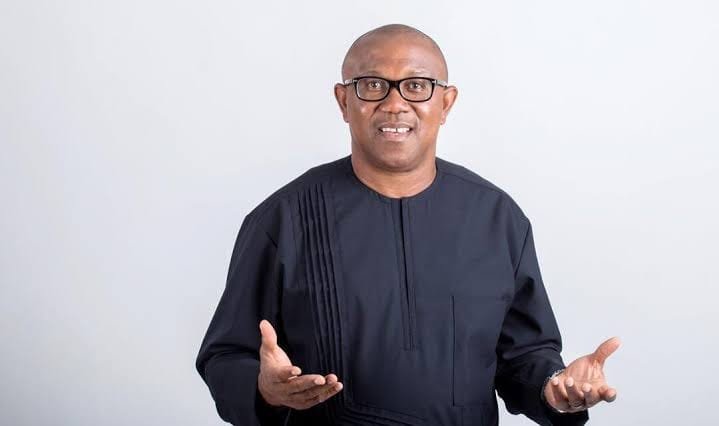
The presidential candidate of the Nigeria Democratic Congress (NDC), Mr Peter Obi, has unveiled his policy agenda for Nigeria ahead of the 2027 general elections, promising to prioritise national unity, security, economic growth, education, healthcare and accountable leadership.
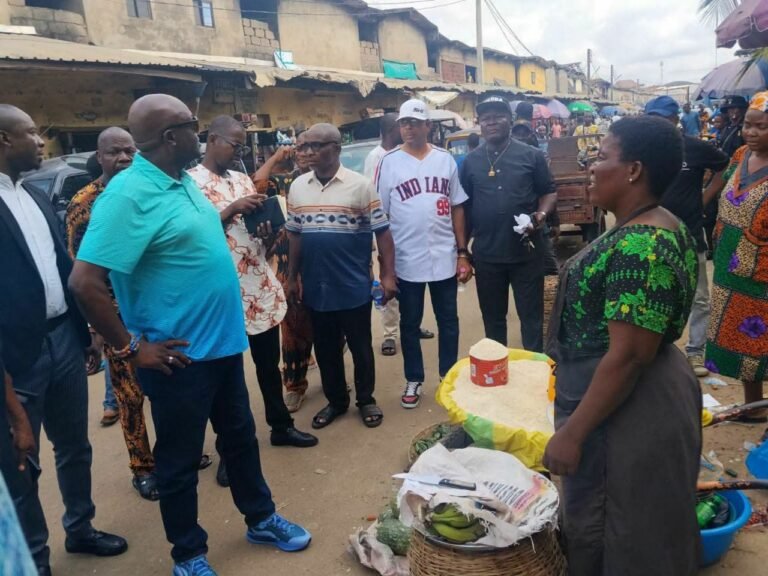
Obi made the disclosure on Tuesday in Jos, Plateau State, during a town hall meeting with supporters, where he outlined his vision for addressing some of the country’s most pressing challenges.
The former Anambra State governor identified national unity as the foremost priority of his proposed administration, lamenting that Nigeria was increasingly divided along ethnic and religious lines.
According to him, bringing Nigerians together would be the foundation for national development and progress.
“Our number one commitment is to unite the Federal Republic of Nigeria because today we have no unity. We are divided along tribal and religious lines. That should not be. We are Nigerians,” he said.
On security, Obi described the protection of lives and property as the primary responsibility of government, promising to tackle kidnapping, terrorism and other forms of violent crime.
He assured Nigerians that his administration would take decisive action to end the persistent killings and ensure that citizens could live without fear.
He also pledged to facilitate the safe return of Internally Displaced Persons (IDPs) to their ancestral communities, insisting that the continued existence of displacement camps reflected a failure of governance.
“If any Nigerian remains in an Internally Displaced Persons camp, we have failed. Once one Nigerian is in an IDP camp, the entire Nigeria is in an IDP camp. People must return to their homes,” he stated.
Obi further promised to strengthen the country’s security architecture and pursue kidnappers and other criminals, stressing that no criminal should be allowed to abduct innocent citizens and escape justice.
He expressed particular concern over the security challenges confronting communities in Plateau State, including Bokkos, Barkin Ladi and Mangu, describing the situation as unacceptable.
The NDC candidate said the suffering of displaced persons, victims of violence and families who had lost loved ones remained among the major reasons behind his presidential ambition.
On governance, Obi promised to adopt a people-oriented leadership approach, stressing that elected leaders must listen to citizens and make policies based on their needs and expectations.
He criticised the practice of politicians speaking to voters during election campaigns without listening to their concerns, insisting that leadership must be demand-driven.
Turning to the economy, Obi said his administration would move Nigeria from a consumption-based economy to one driven by production, arguing that increased local production would create employment, reduce poverty and improve living standards.
He noted that insecurity had severely affected agricultural activities and business operations, particularly in Plateau State, where farmers were unable to access their farms and some companies had reportedly shut down.
Obi also promised to improve access to affordable financing for small and medium-sized businesses, saying his experience in the financial sector had given him an understanding of the challenges entrepreneurs face in accessing credit.
He pledged to ensure that a reasonable proportion of available banking-sector credit was directed towards small businesses to support expansion, investment and job creation.
On corruption, the former governor vowed to promote transparency and accountability in public administration, insisting that government resources must be deployed for the benefit of citizens.
“Public money must be used for public good. Today, public money is wrongly being used, and that must change,” he declared.
Education also featured prominently in his agenda, with Obi expressing concern over the estimated 18 million Nigerian children said to be out of school.
He promised to invest in new classrooms, recruit qualified teachers and improve the functionality of public schools to ensure that more Nigerian children had access to quality education.
According to him, education remains a critical foundation for national development, adding that no country can achieve meaningful progress while millions of its children are denied access to learning.
On healthcare, Obi promised to strengthen primary healthcare centres across the country and improve access to quality medical services, particularly in rural communities.
He expressed concern over the high rates of maternal and infant mortality, attributing some of the challenges to inadequate and poorly equipped healthcare facilities.
He maintained that every community must have access to functional healthcare services to reduce preventable deaths and improve the well-being of Nigerians.
The NDC presidential candidate also emphasised the need for a compassionate government that would prioritise the welfare of vulnerable citizens, including the poor, elderly people and persons living with disabilities.
He said his administration would ensure that government policies and programmes addressed the needs of disadvantaged groups rather than leaving them behind.
Obi urged Nigerians to take an active role in determining the country’s future through their participation in the 2027 general elections.
He called on voters to remain at polling units after casting their ballots to ensure that their votes were properly counted, recorded and transmitted.
He stressed that the 2027 election should be about the future of Nigeria, urging citizens to exercise their voting rights responsibly and defend the integrity of the electoral process.
Obi said the town hall meeting was part of his commitment to engaging directly with Nigerians, listening to their concerns and incorporating their expectations into his proposed governance agenda.
About the Author