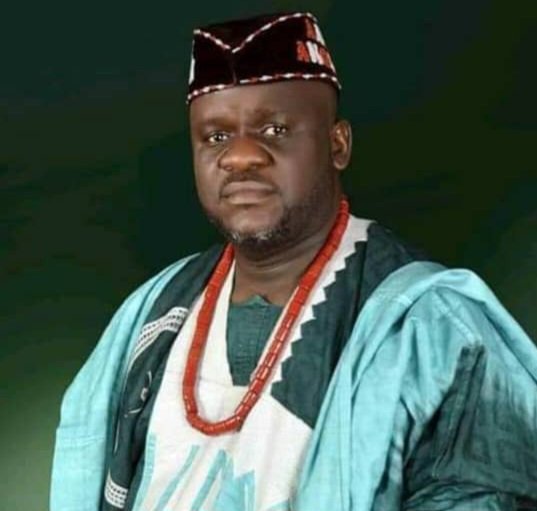
A financial expert, Asiwaju Busari Shaamsuddeen Akande, has called on President Bola Tinubu to reduce Nigeria’s dependence on conventional borrowing and adopt asset-backed financing models to fund major infrastructure projects.
Akande’s position comes against the backdrop of Tinubu’s request to the National Assembly for approval of $20.52 billion and €1.045 billion in additional external loans under the 2026–2027 Supplementary External Borrowing Plan.
The President said the proposed facilities would finance projects in infrastructure, agriculture, healthcare, education, water supply, security, employment generation and financial management reforms.
But Akande warned that heavy borrowing without corresponding productive returns could expose the country to mounting debt-servicing obligations and undermine its ambition of becoming a $1 trillion economy by 2030.
In an analysis titled, ‘The $1 Trillion Calculus: Balancing Infrastructure Debt with Asset Productivity,’ the expert argued that the success of the administration’s economic programme should be measured by the capacity of infrastructure investments to generate economic activities and revenue.
He said projects such as the Lagos-Calabar Coastal Highway and deep seaport expansions could reduce logistics costs and stimulate production, but cautioned that the benefits must materialise quickly enough to justify the cost of financing them.
According to him, borrowing at high interest rates to finance projects with long gestation periods could create cash-flow difficulties if the investments fail to generate sufficient returns within a reasonable period.
The expert, who holds the professional designations FICA, CIFE and CMA, recommended greater use of Public-Private Partnerships (PPPs) and sovereign Sukuk structures as alternatives to direct government borrowing.
He explained that such arrangements could attract private capital into infrastructure development while ensuring that financing was tied to tangible assets and the risks shared among participating investors.
Akande also warned that high government borrowing costs could crowd out private businesses, as commercial banks might prefer investing in government securities rather than extending credit to productive enterprises.
He called for the integration of industrial hubs, agricultural processing centres and other productive activities along major transport and maritime corridors to ensure that the infrastructure serves businesses and generates wider economic benefits.
The expert further proposed that government should establish clear fiscal mechanisms requiring a portion of revenue generated from infrastructure projects to be channelled towards debt repayment.
He said Nigeria’s economic transformation would depend on the alignment of capital investment, asset productivity, equitable access to economic opportunities and prudent credit administration.
Akande cautioned that without these measures, the country’s growing infrastructure investments could become a burden on public finances rather than the economic multiplier needed to achieve the 2030 target.
About the Author