
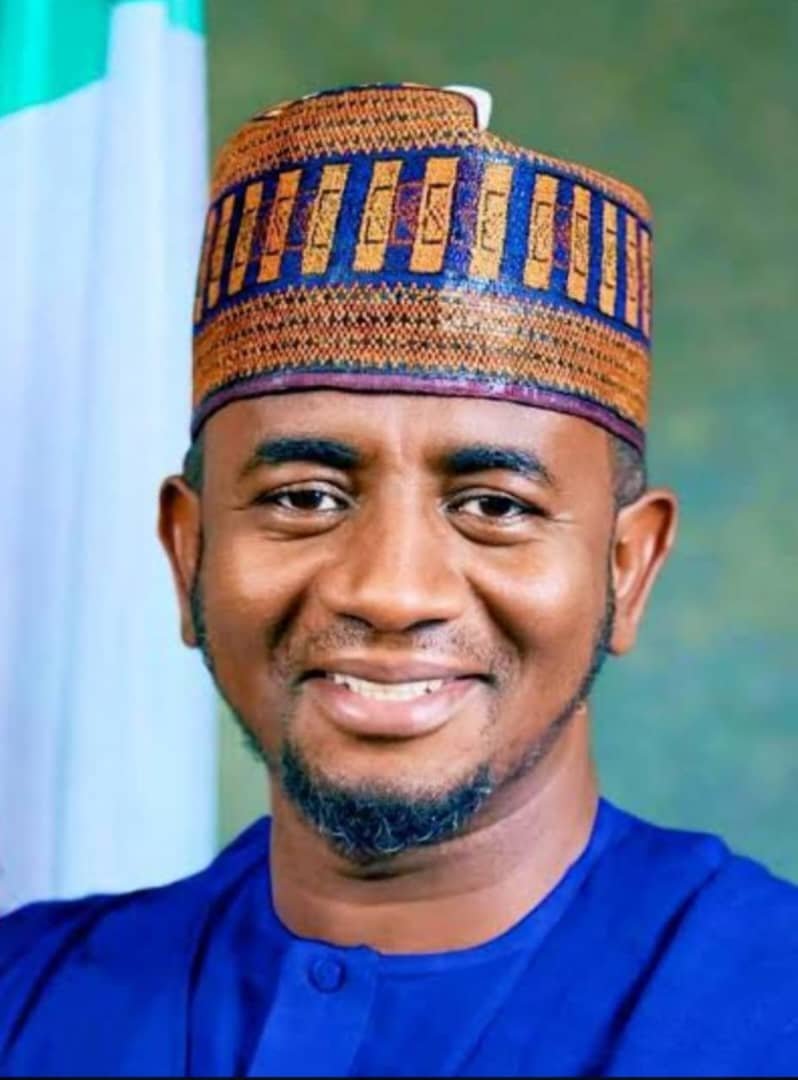
If there is one politician whose growing influence is redefining political calculations in Bauchi State and sending strong signals across Northern Nigeria, it is Senator Shehu Buba Umar, the governorship candidate of the Peoples Redemption Party (PRP). His political strength is rooted in years of grassroots engagement, constituency interventions, youth and women’s empowerment, and an expanding network of loyal supporters who see him as a credible alternative for the leadership of Bauchi State. His emergence as the PRP flagbearer has changed the dynamics of the 2027 governorship race, transforming what many initially perceived as an internal APC affair into a broader political movement with the potential to reshape the state’s electoral landscape. Senator Buba is not entering the contest as an unfamiliar face seeking public acceptance; he is coming with an established political identity, a recognisable record of representation and a support base that cuts across different communities. The central reason his candidacy is generating considerable attention is simple: his supporters believe that his political influence extends beyond party boundaries, and that his decision to contest under the PRP has opened a new avenue for translating that influence into statewide electoral success. One of Senator Buba’s greatest strengths is his connection with the people at the grassroots. Over the years, his political engagement has been associated with interventions in education, healthcare, rural infrastructure, agricultural support, youth development and women’s empowerment. His supporters point to these activities as evidence of a politician who understands that representation must produce tangible benefits for ordinary citizens. Through reported empowerment programmes, assistance to vulnerable households and development interventions across Bauchi South, he has cultivated relationships that extend beyond formal political structures. These relationships are particularly valuable in a state where personal credibility, community networks and a candidate’s accessibility can strongly influence electoral choices. Unlike a politician whose appeal depends entirely on party machinery, Senator Buba has built a political profile that his supporters can present directly to voters. This is why his movement is attracting attention within and outside the APC: many of those who identify with his leadership do so because of their personal confidence in him, creating the possibility of a political realignment in which loyalty to the candidate becomes as significant as loyalty to a party. The empowerment of women and young people remains another major pillar of Senator Buba’s growing political appeal. Across Bauchi State, young people are looking for meaningful opportunities, women are seeking stronger economic participation, and families want practical interventions that can improve their living conditions. Senator Buba’s reported empowerment activities, including support for small businesses, vocational initiatives, educational assistance and agricultural livelihoods, have helped strengthen his standing among communities that value direct engagement and practical assistance. Such programmes can create lasting goodwill because their impact is often felt beyond the immediate beneficiaries, reaching families, neighbourhoods and wider community networks. For a gubernatorial candidate, this grassroots goodwill represents a valuable political foundation. His supporters see him as a leader who has demonstrated an understanding of the economic realities confronting ordinary people and who can extend that experience to the wider state if elected governor. With a campaign that continues to engage women, young people, community leaders and other influential grassroots groups, Senator Buba has an opportunity to convert his established constituency network into a broad coalition capable of competing strongly across Bauchi’s 20 local government areas. Toro Local Government Area occupies a particularly important place in Senator Buba’s political calculations because of his roots in Nabordo and his established connections with communities across the area. His familiarity with the people, their expectations and their everyday challenges gives him a valuable home-ground advantage. From Toro town to Nabordo, Lame and neighbouring communities, his supporters have an opportunity to mobilise around a candidate whose political journey is closely connected with their local environment. His constituency interventions and grassroots relationships provide a strong basis for presenting his candidacy as an extension of the representation he has offered over the years. Toro’s significance, however, goes beyond being his home base: a strong performance there could create momentum for a campaign seeking to unite supporters across Bauchi South and the wider state. His appeal can also benefit from the relationships he has built with community stakeholders, youth organisations, women groups and political actors who are familiar with his work. For these reasons, Toro could serve as a strategic launchpad for a wider PRP movement, demonstrating how personal credibility and local connections can become the foundation of a competitive statewide campaign. The political implications of Senator Buba’s candidacy become even more significant when his potential reach is considered across local government areas such as Zaki and Warji, as well as Alkaleri, Kirfi, Tafawa Balewa, Dass, Bogoro and Bauchi metropolis. Each area has its own political dynamics, but the desire for effective representation, accessible leadership and meaningful development creates opportunities for a candidate who can communicate a clear and inclusive vision. In Zaki and Warji, his campaign can appeal to voters by emphasising the importance of rural development, agricultural opportunities, education, healthcare and improved infrastructure. In Alkaleri and Kirfi, where rural livelihoods and access to public services are important concerns, his experience in constituency representation can form part of a compelling message about responsive governance. In Dass, Bogoro and Tafawa Balewa, community engagement and a commitment to equitable development could help broaden his coalition. Meanwhile, Bauchi metropolis presents opportunities to connect with professionals, traders, civil servants, young voters and urban communities. By building on his established relationships while addressing the distinct needs of these areas, Senator Buba can position himself as a candidate whose ambition is not limited to one senatorial district but extends to every part of Bauchi State. Perhaps the most significant development in the unfolding political contest is Senator Buba’s emergence under the PRP platform after leaving the APC. The move has introduced a new political reality: a candidate with an established profile and grassroots network is now challenging the existing party arrangement from outside the APC. This creates an opportunity for him to attract not only his loyal supporters but also APC members and other political actors who are searching for a new platform ahead of 2027. His candidacy offers these individuals a focal point around which they can organise, negotiate and participate in a different political coalition. If the relationships he built during his time in the APC translate into active support for his PRP bid, the consequences for the state’s political balance could be substantial. The strength of Senator Buba’s position lies in the possibility that his supporters may remain committed to him regardless of the party logo on the ballot. This is the basis of the argument that he is sweeping APC support into a new political direction: not necessarily because every APC member will follow him, but because his personal appeal gives him the capacity to attract political support that might otherwise have remained within the party. A well-organised campaign, supported by credible local leaders and effective ward-level structures, could turn that opportunity into a formidable statewide movement. Beyond party realignments, Senator Buba’s greatest opportunity is to present himself as a unifying candidate capable of bringing together different interests under a shared development agenda. Bauchi State needs leadership that can strengthen security, create employment opportunities, improve education and healthcare, support farmers, expand infrastructure and manage public resources responsibly. His supporters can argue that his experience in the Senate and his grassroots engagement provide a foundation for addressing these priorities. His candidacy can also appeal to voters who believe that political leadership should be measured by accessibility, responsiveness and the capacity to deliver results. By placing these issues at the centre of his campaign, Senator Buba can build a message that reaches beyond party loyalists and speaks to citizens concerned about the future of their communities. His potential coalition is particularly promising because it can draw from multiple constituencies: women seeking economic empowerment, young people seeking opportunities, rural communities seeking development, political stakeholders seeking a credible platform and voters looking for a fresh direction. The broader and more inclusive this coalition becomes, the greater his opportunity to challenge established political expectations and emerge as a leading contender in the gubernatorial race. Ultimately, Senator Shehu Buba Umar is entering the 2027 Bauchi governorship contest with political assets that make his candidacy difficult to dismiss. His grassroots relationships, reported empowerment initiatives, experience in the National Assembly, connections across Bauchi South and emergence as the PRP flagbearer have given his campaign a foundation upon which a statewide victory can be pursued. From Toro, his political home, to Zaki and Warji, and from the communities of Bauchi South to the urban and rural centres across the state, his opportunity lies in transforming personal popularity into a disciplined, inclusive and well-coordinated electoral movement. The APC may retain its established structures, but Senator Buba’s candidacy challenges the assumption that party machinery alone determines political outcomes. His supporters believe that his record, personal appeal and expanding coalition can attract voters across party lines and reshape the balance of power in Bauchi. If that support is sustained through effective mobilisation, credible grassroots organisation and a convincing programme for the state’s future, Senator Buba could emerge as one of the strongest contenders for the governorship. For his growing political movement, the objective is no longer simply to participate in the election; it is to turn the momentum surrounding his candidacy into a decisive mandate to lead Bauchi State.
Mustapha, Garkuwan Matasa Tilde writes from Tilde
About the Author


