By Sunny A. David, Awka
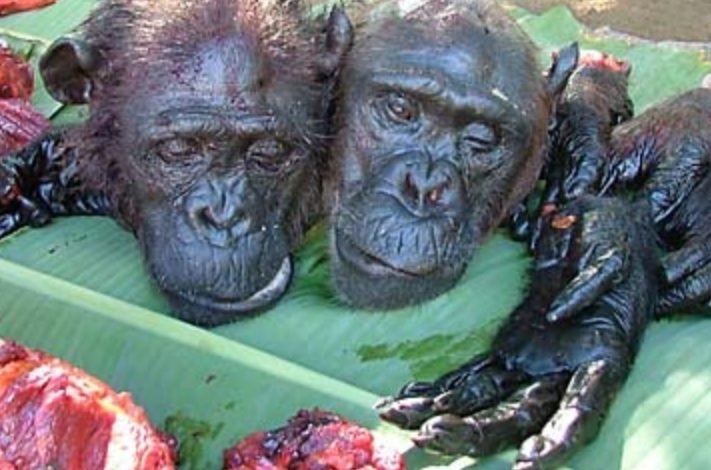
There was a dramatic scene at the popular Eke Awka Market in Awka, Anambra State, after some women of Awka extraction confronted a female trader over the alleged display and sale of dried monkey meat and monkey heads in her shop.
The incident, which was captured in a video now circulating on social media, showed the women engaging the trader in a heated argument as they demanded the immediate removal of the monkey parts from the shop.
The identity of the trader could not immediately be confirmed. However, reports indicated that she is a traditional practitioner, while items displayed in her shop suggested that she deals mainly in traditional and sacrificial materials.
The women insisted that monkey meat and other parts of the animal should not be sold in Eke Awka Market or anywhere within Awka, describing the act as a violation of the town’s long-standing cultural tradition.
According to them, killing or eating monkeys is traditionally forbidden in Awka, a belief that remains an important aspect of the cultural identity of many indigenes of the community.
Awka is widely associated with the expression “Awka na-asọ enwe,” loosely interpreted as meaning that the people of Awka forbid the killing or consumption of monkeys.
Local tradition holds that monkeys played an important role in the ancient history of Awka, particularly by alerting members of the community to approaching enemies and invaders. As a result, the animals came to be protected and regarded as significant within the town’s cultural heritage.
Some of the women said they had previously warned the trader against displaying and selling monkey parts in the market. They reportedly threatened to take the matter to the market leadership if she refused to comply with their demands.
During the confrontation, the trader initially resisted the women’s demands. However, following mounting pressure, she eventually removed the monkey parts from her shop.
The trader was also said to have warned the women against sharing the video of the encounter online. Despite the warning, the footage later surfaced on social media and has since generated widespread reactions.
While some social media users supported the women’s action, arguing that the sale of monkey meat in Awka was offensive to the town’s cultural values and traditions, others questioned the enforcement of traditional beliefs within a modern commercial environment.
The incident has continued to spark debate online over the preservation of cultural traditions and their place in contemporary society.
About the Author