By Sam Israel JP
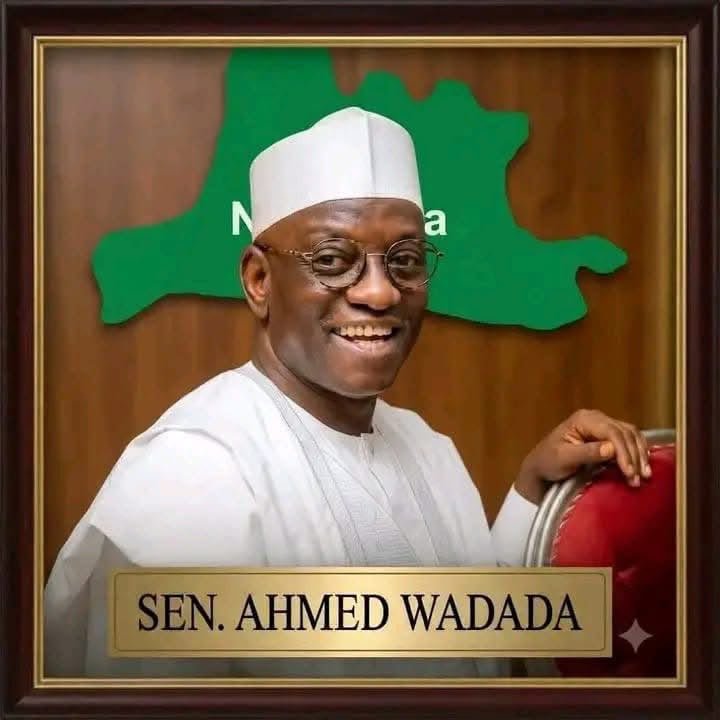
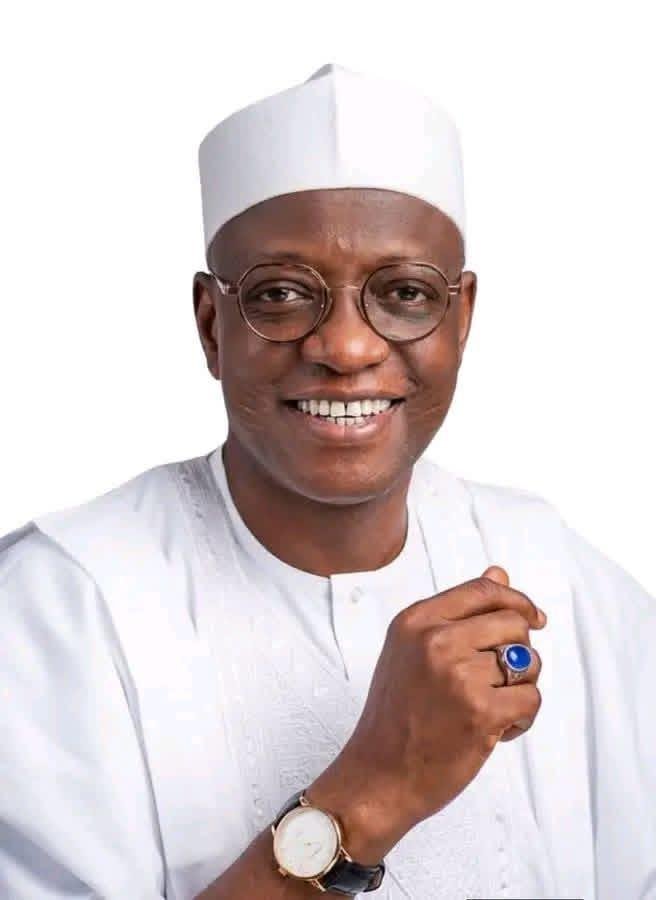
Nasarawa is approaching another defining political moment, and this time the question cannot be answered by slogans alone. The question is simple, direct and unavoidable: after years of political representation, legislative advocacy and grassroots interventions, what does Senator Ahmed Wadada Aliyu’s record say about the kind of leadership he is prepared to offer Nasarawa State?
That question has become increasingly relevant as the state moves towards the 2027 governorship election. Wadada is no longer merely a name on a ballot or a senator representing a senatorial district. His political trajectory—from two terms in the House of Representatives to the Senate and now into the governorship contest—has created a record that citizens can examine, debate and measure against the challenges confronting the state.
The strongest argument in politics is not what a politician promises to do tomorrow; it is what his record demonstrates he has attempted to do today. This is where the Wadada conversation becomes particularly significant.
His legislative journey has been accompanied by interventions in infrastructure, education, healthcare, water supply, empowerment and community development. Among the most prominent is the Keffi–Nasarawa–Toto–Abaji road corridor, the Garaku – Morao road are major infrastructure project with implications for transportation, commerce and rural economic activity. The reported 129.3-kilometre project, with a contract value of approximately ₦36.13 billion, illustrates how federal-level advocacy can have consequences far beyond the walls of the National Assembly.
In education, interventions reportedly valued at about ₦100 million have supported projects in communities across Karu, Keffi and Kokona. This is important because Nasarawa’s long-term development cannot depend exclusively on physical infrastructure. The state needs educated, skilled and productive citizens capable of driving agriculture, technology, industry, commerce and public administration.
At the community level, interventions such as the provision of a borehole at Suara, renovation of Government Day Secondary School in Nasarawa Local Government Area and medical outreach in Keffi demonstrate another aspect of the political record: responding to immediate needs that directly affect ordinary citizens.
The empowerment dimension is equally notable. From food-distribution programmes reaching communities across the three senatorial zones to transportation and grassroots support initiatives, Wadada’s political activities have maintained a visible connection with communities. His family-supported women’s empowerment programme, reportedly valued at ₦325 million and reaching 6,500 women across all 13 local government areas, further illustrates the scale of that grassroots engagement.
But the real test of empowerment is sustainability. Financial assistance can provide immediate relief; genuine economic empowerment must help beneficiaries build productive enterprises, acquire skills, enter markets and become economically independent. This is an area where any future administration associated with Wadada would need to demonstrate measurable results.
The same principle applies to the youth. Nasarawa’s young population represents both its greatest opportunity and one of its greatest policy challenges. Young people need more than political mobilisation. They need education, skills, employment, entrepreneurship, digital opportunities, access to finance and an economy capable of absorbing their talents.
It is against this background that the HEARTS Agenda becomes relevant. Human Capital Development, Accountability, Rural Transformation, Empowerment and Sustainable Governance provide broad pillars for a proposed development philosophy, while the wider emphasis on agriculture, energy and mineral resources, infrastructure, trade, industrialisation, investment and security reflects an attempt to address the structural challenges facing the state.
But the people of Nasarawa should demand more than attractive policy language.
They should demand numbers, timelines, priorities and implementation mechanisms.
How will agriculture be transformed from subsistence activity into a commercially viable sector? How will solid minerals generate legitimate employment and government revenue? How will industries be attracted? How will young people find sustainable jobs? How will rural communities receive infrastructure? How will healthcare and education be improved? How will public funds be protected? How will citizens know whether government promises have actually been fulfilled?
These are the questions that should define the 2027 conversation.
Wadada’s record gives him something tangible with which to enter that conversation. But a governorship is a much larger responsibility than constituency representation. The Government House requires an administrator, policy strategist, economic manager and institution builder capable of coordinating the affairs of the entire state.
Nasarawa’s 13 local government areas must therefore be central to any development proposition. Karu’s rapid expansion requires different solutions from the rural development needs of Toto. Keffi’s educational and commercial importance requires strategic planning, while Lafia’s position as the state capital creates unique urban-development responsibilities. The other local government areas likewise possess different economic opportunities and development challenges.
The objective should be a state-wide development architecture in which no community is treated as politically invisible.
This is where the 2027 election can become bigger than the usual contest for political power. It can become a serious public examination of competing records and competing visions. Wadada should be examined. Other candidates should be examined. Every promise should be questioned. Every achievement should be verified.
The people deserve nothing less.
The record must speak louder than the rhetoric. The plan must be stronger than the slogan. And the future of Nasarawa must be placed above personal political ambition.
For Wadada, the challenge is to demonstrate that the interventions associated with his years of representation can be transformed into a coherent programme for governing an entire state.
For the electorate, the challenge is to look beyond political noise and demand evidence.
Ask what was promised. Ask what was delivered. Ask what changed. Ask what can realistically be achieved next.
That is how a mature electorate chooses leadership.
As 2027 approaches, Nasarawa stands before another important crossroads. The decision will ultimately belong to its people. But before that decision is made, every candidate—should be required to answer the same fundamental question:
What have you done, what have you learned, what will you do differently, and why should the people entrust you with the future of Nasarawa State?
The answer should not be measured by applause.
It should be measured by the record.
Wadada’s record speaks for itself!
Israel is the Senior Special Assistant SSA on media to Senator Ahmed Wadada Aliyu
About the Author