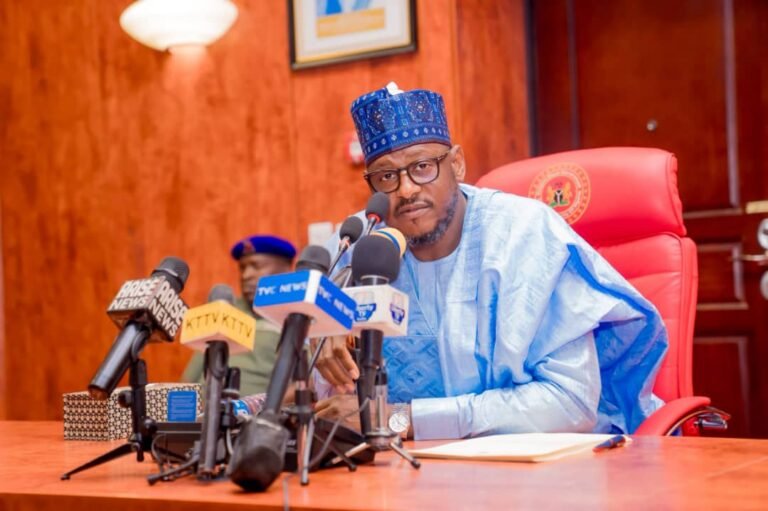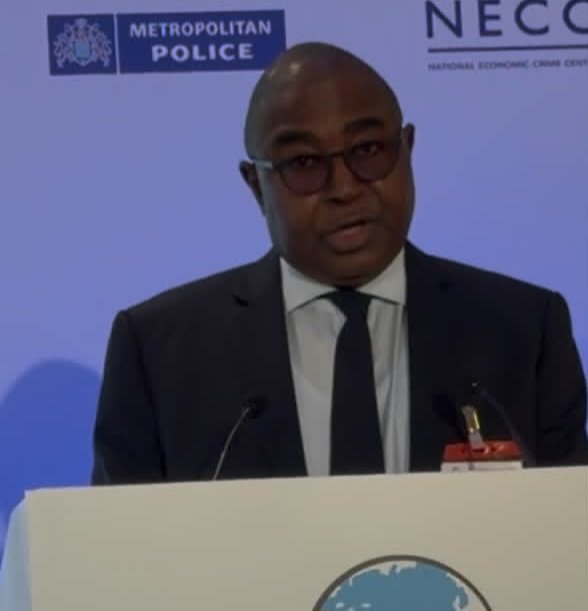
Chairman and Chief Executive Officer of the National Drug Law Enforcement Agency (NDLEA), Brig. Gen. Buba Marwa (retd), has declared that the fight against drug trafficking can only succeed when criminal networks are stripped of the financial gains that sustain their operations.
Marwa made the assertion while delivering a presentation at the 43rd Cambridge International Symposium on Economic Crime, organised by the Centre for Geopolitics at the University of Cambridge, United Kingdom, where judges, law enforcement chiefs, financial crime experts and academics from across the world gathered to discuss strategies for combating organised crime.
Speaking on the theme, “Criminal Property and the Criminal Process: How Can We Make It More Effective?”, the NDLEA boss argued that the success of anti-drug efforts should not be measured solely by arrests and convictions, but by the extent to which criminal enterprises are deprived of their illicit wealth.
“The effectiveness of the criminal process should not be measured only by the number of convictions secured. It should also be measured by whether crime is made unprofitable,” Marwa said, stressing that traffickers who retain their fortunes after serving prison terms can easily finance fresh criminal activities.
He likened the arrest of drug traffickers without confiscating their assets to “pruning a weed at the stem while leaving its roots undisturbed,” warning that illicit wealth often resurfaces through front companies and operations spread across multiple jurisdictions.
Marwa outlined six strategies adopted by the NDLEA to strengthen asset recovery, drawing legal backing from the NDLEA Act 2004, the Proceeds of Crime (Recovery and Management) Act 2022 and the Money Laundering (Prevention and Prohibition) Act 2022.
As evidence of the agency’s approach, he cited the recovery and sale of the Hook Hotel, a property linked to a fugitive drug suspect, through a non-conviction-based forfeiture process. The property was sold for $4.2 million, with proceeds remitted into the Federal Government’s forfeited assets account at the Central Bank of Nigeria.
He also disclosed that the agency has integrated investigators and prosecutors from the onset of cases to accelerate restraint orders on suspected assets. According to him, NDLEA froze bank accounts holding more than $7 million last month and secured interim forfeiture orders on assets worth billions of naira, including filling stations, multi-storey buildings and luxury vehicles linked to a fugitive methamphetamine cartel.
Marwa further highlighted the case of suspected drug baron Amadi Simon, arrested in Switzerland through collaboration involving NDLEA, the United States Drug Enforcement Administration (DEA), and authorities in Switzerland, Greece and France. He said hotels linked to the suspect were placed under professional asset managers to preserve their commercial value pending the conclusion of legal proceedings.
The NDLEA chairman noted that provisions relating to unexplained wealth and lifestyles beyond legitimate income have become critical tools in tracing illicit assets, while interlocutory sales are now used to prevent the depreciation of seized properties.
He said these measures have been incorporated into Nigeria’s National Drug Control Master Plan 2026–2030, ensuring that the disruption of drug cartels’ financial structures remains a sustained national priority.
While acknowledging challenges such as delays in international legal cooperation and limited forensic accounting capacity, Marwa called for stronger cross-border collaboration and wider recognition of non-conviction-based forfeiture orders.
He reaffirmed Nigeria’s commitment to working with international partners to dismantle the financial architecture of drug trafficking, insisting that depriving criminals of their wealth remains one of the most effective weapons in the global war against illicit drugs.
About the Author