President Bola Tinubu on Friday reaffirmed Nigeria’s determination to tackle substance abuse and illicit drug trafficking through evidence-based and innovative interventions, declaring that his administration would continue to deploy a multi-pronged strategy to protect citizens and secure the country’s future.
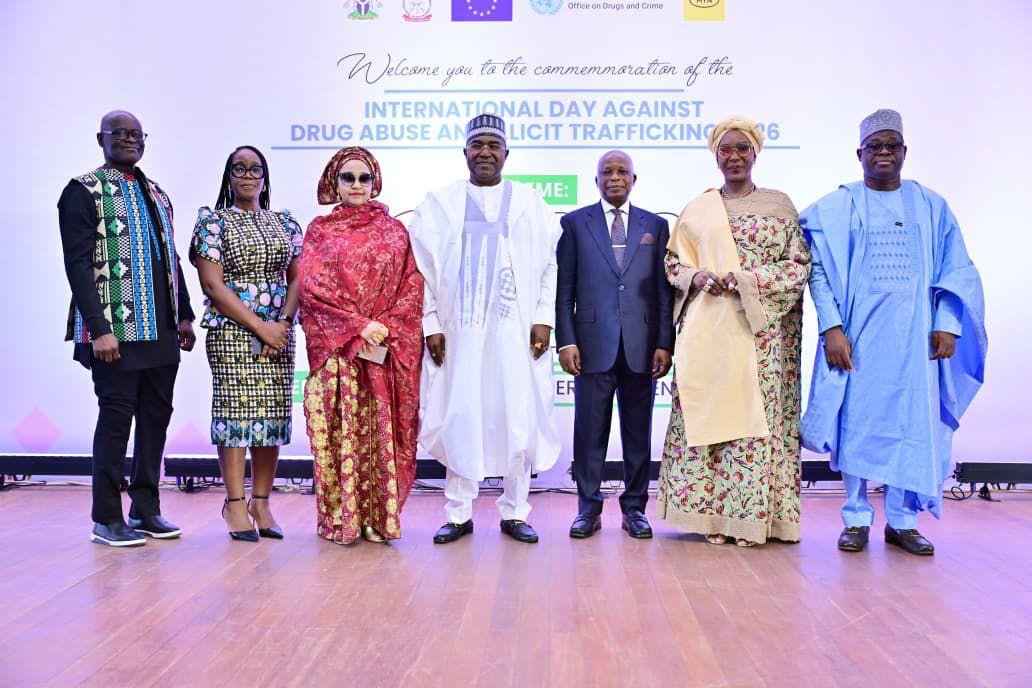
Speaking at the grand finale of activities marking the 2026 International Day Against Drug Abuse and Illicit Trafficking in Abuja, the President, represented by the Attorney General of the Federation and Minister of Justice, Prince Lateef Fagbemi (SAN), said the evolving global drug challenge requires vigilance, adaptability and collective action.
With this year’s theme, “The World Drug Problem: Persisting Issues, New Challenges, Innovative Responses,” Tinubu warned that the devastating impact of drug abuse extends beyond individual users to families, schools, workplaces and national security.
He said the federal government’s response under the Renewed Hope Agenda includes expanding access to education, promoting skills development, supporting entrepreneurship, creating employment opportunities and implementing social intervention programmes aimed at addressing the underlying factors that expose people, particularly young Nigerians, to substance abuse and criminal recruitment.
The President stressed that reducing the demand for illicit substances must go hand in hand with decisive efforts to disrupt supply chains through stronger border management, improved surveillance at airports, seaports and land borders, enhanced intelligence gathering and greater collaboration among national, regional and international law enforcement agencies.
According to him, science, technology and reliable data have become indispensable tools in combating the drug menace, noting that authorities must continue to improve their capacity to collect, analyse and utilise data for early detection of emerging trends and the design of effective interventions.
Tinubu also underscored the need to strengthen forensic laboratories, enhance technological capabilities and support scientific research to stay ahead of increasingly sophisticated drug networks and emerging psychoactive substances.
He added that law enforcement agencies, investigators, prosecutors and the courts all have critical roles to play in ensuring that criminal organisations are dismantled and offenders brought to justice.
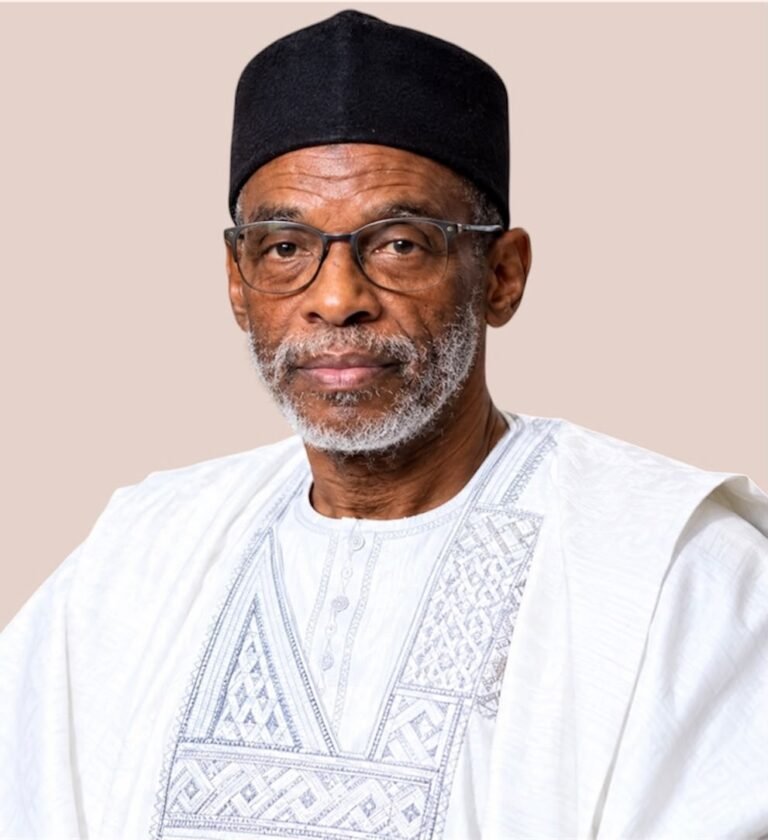
The President used the occasion to commend the leadership and personnel of the National Drug Law Enforcement Agency (NDLEA), led by retired Brigadier General Mohamed Buba Marwa, for what he described as remarkable achievements in the fight against organised crime.
He praised the agency’s increased arrests and seizures, successful convictions, recovery of multi-billion-naira assets, extensive rehabilitation and advocacy campaigns, as well as the dismantling of organised drug cartels, including the syndicate behind the largest methamphetamine laboratory ever discovered in Nigeria.
According to him, these achievements demonstrate his administration’s zero tolerance for organised crime and unwavering commitment to protecting society from the devastating effects of narcotics.
However, Tinubu cautioned that government alone cannot win the war against drugs, calling on parents, families, schools, religious and traditional institutions, the media and the private sector to play active roles in prevention, awareness creation, treatment and rehabilitation initiatives.
He urged civil society organisations, international partners and citizens to strengthen their commitments toward building safer, healthier and drug-free communities.
In his welcome address, NDLEA Chairman and Chief Executive Officer, Brigadier General Buba Marwa (Rtd.), said Nigeria remains firmly aligned with the global community in confronting one of the most persistent threats to public health, national security, social stability and human development.
Marwa disclosed that despite increasingly sophisticated criminal networks, the agency had recorded major operational successes through intelligence-driven enforcement operations across airports, seaports, land borders and remote communities.
He highlighted the dismantling of the notorious Amadi Simon drug cartel in a collaborative operation involving the United States Drug Enforcement Administration and law enforcement authorities from Greece, France and Switzerland.
He also revealed that the agency had neutralised a sophisticated cross-continental methamphetamine syndicate with the arrest of a 63-year-old Nigerian drug kingpin, Innocent Anochili, alongside three Mexican nationals and six Nigerian accomplices.
The NDLEA boss further disclosed that the agency recently uncovered another industrial-scale clandestine methamphetamine laboratory hidden in a forest in Tapa village, Ibarapa North Local Government Area of Oyo State, where a Mexican national and four others were arrested and their multi-billion-naira drug infrastructure dismantled.
Marwa said the agency’s aggressive five-year campaign has significantly weakened drug trafficking operations in Nigeria, leading to the arrest of at least 234 drug barons who coordinated major trafficking networks across the country.
He revealed that in the last 18 months alone, the NDLEA recorded 29,262 arrests, seized 5,305,484.88 kilograms of assorted illicit drugs valued at more than N1.5 trillion and secured the conviction of 5,225 offenders.
According to him, the figures represent millions of lives saved, billions of naira in criminal proceeds confiscated and renewed hope for Nigeria’s young population.
Marwa emphasised that enforcement alone cannot solve the drug problem, noting that the agency has substantially expanded its drug demand reduction initiatives.
He disclosed that through the War Against Drug Abuse (WADA) campaign, the agency has carried out 6,645 sensitisation and awareness programmes in schools, worship centres, workplaces, markets, motor parks, communities and correctional facilities, reaching nearly five million Nigerians with drug prevention messages.
He added that 13,508 drug users had received counselling, treatment and rehabilitation services across the agency’s 31 rehabilitation centres nationwide within the same period.
In line with this year’s focus on innovative responses, Marwa said the agency is increasingly deploying technology, deep-web intelligence and advanced data analytics to identify emerging drug trends before they spread across communities. He also highlighted efforts to strengthen forensic and chemical analysis capabilities for improved detection of precursor chemicals and new psychoactive substances.
He further unveiled the agency’s Alternative Development Programme, described as the first of its kind in Africa, which seeks to provide illicit cannabis farmers with alternative and legitimate means of livelihood through the cultivation of crops such as cassava, maize, cowpeas and cocoa.
Marwa expressed appreciation to President Tinubu for his support and political will in the fight against drug trafficking and substance abuse, while also thanking local and international partners, civil society organisations, the media and community leaders for supporting the agency’s work.
Delivering the guest lecture titled “Celebrating Progress and Inspiring Collective Actions against Drug Abuse,” Professor Oluwatoyin Odeku of the Department of Pharmaceuticals and Industrial Pharmacy, University of Ibadan, said the progress recorded in the past five years provides ample reasons for optimism.
According to her, many once believed the war against drugs was unwinnable when the NDLEA was reinvigorated in 2021, but available data now tells a different story and offers reasons to celebrate.
The United Nations Office on Drugs and Crime (UNODC) also commended the Federal Government for adopting a balanced and coordinated approach to the drug problem.
Represented by Dr. Akanidomo Ibanga, UNODC Country Representative Cheikh Touré said Nigeria’s approach reflects a growing recognition that effective drug control must integrate supply and demand reduction strategies while being guided by evidence and respect for human rights.
He reaffirmed the UN agency’s commitment to supporting Nigeria through technical assistance, partnerships and innovative solutions tailored to realities on the ground.
The event also featured the presentation of prizes to winners of the NDLEA inter-secondary school essay competition, with Ikpeamachi Jennifer of Federal Government College, Enugu, emerging overall winner and receiving N500,000 and a trophy. Aliyu Kama of General Murtala Muhammed College, Yola, came second and won N300,000, while Chiagoziem Ikechukwu of Mimshak Academy, Mbawsi, Abia State, finished third and received N200,000 and a trophy.
About the Author