The international medical humanitarian organisation Médecins Sans Frontières (MSF) is supporting the Borno State Ministry of Health (MoH) to respond to a rapidly evolving surge in suspected cholera cases across Borno State, where more than seven thousand people have fallen ill since early May 2026, placing significant strain on health facilities and response capacity.
The state is seeing a high influx of patients requiring urgent treatment, with numbers increasing significantly each day since the first suspected case was reported on 1 May 2026. As of 7 June 2026, Borno State MoH had recorded 7,850 suspected cholera cases across 14 Local Government Areas (LGAs) and 50 wards, and a total of 74 deaths reported both at facility and community levels.
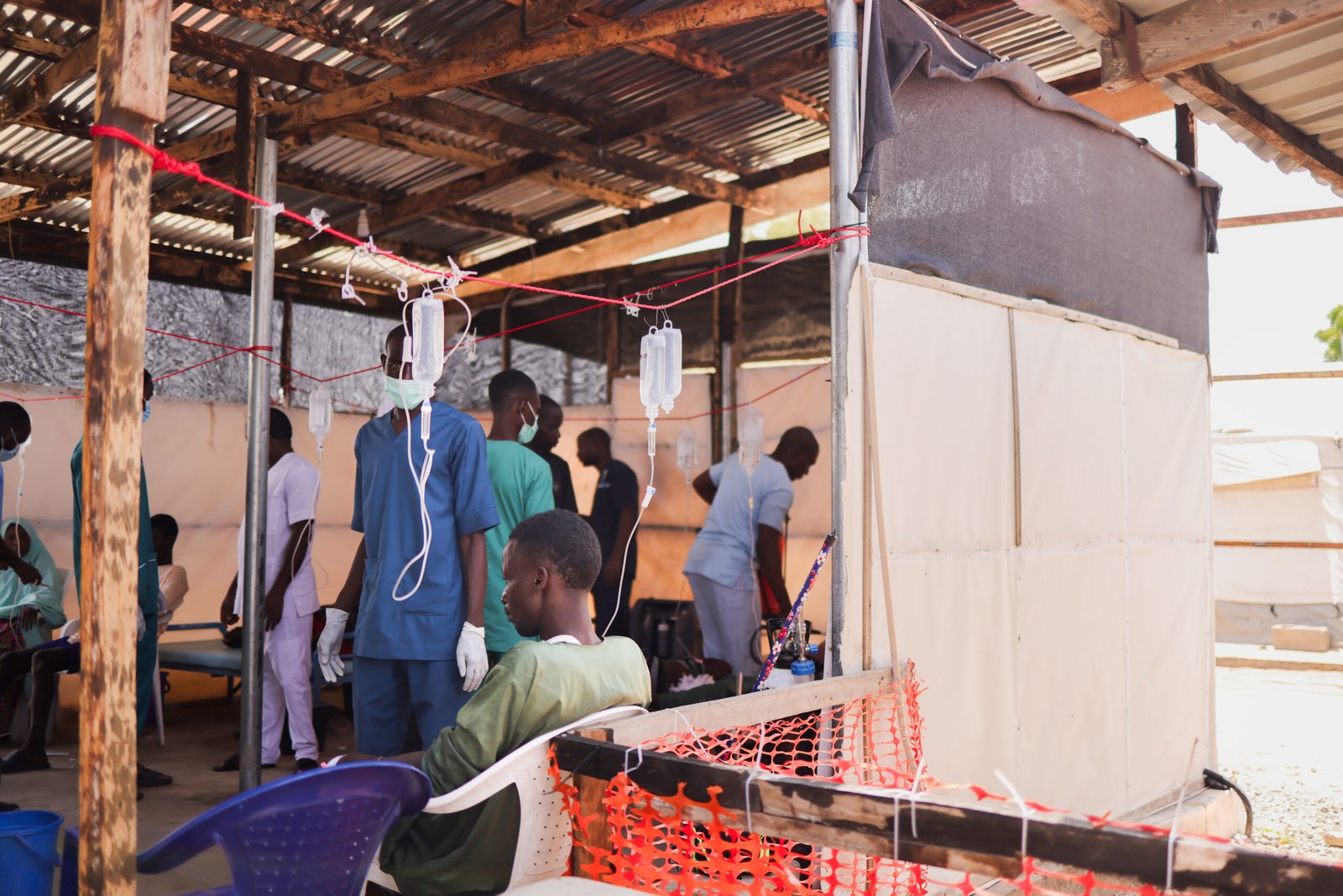
On 7 May 2026, MSF, in collaboration with the State MoH, established a Cholera Treatment Centre (CTC) in Ngarannam area, in the state capital, Maiduguri City, to support the response. Since then, admissions have increased rapidly, forcing the expansion of bed capacity from 121 to 271 beds to accommodate growing needs, with a potential to expand further. MSF also opened a new 20-bed Cholera Treatment Unit (CTU) at Dalaram area in Maiduguri.
As of 7 June 2026, MSF had treated a total of 7,439 patients at the MSF-run CTC and CTU, representing an average of 230 admissions per day. On 5 June alone, MSF received more than 500 patients with acute watery diarrhoea, marking the highest number admitted in a single day since the response began.
“Every day, we see more people arriving with severe watery diarrhoea and dehydration, many of whom have travelled long distances to reach care,” says Bienfait Tombola, MSF project medical coordinator for the surge response in Maiduguri. “The collaboration between the Ministry of Health, MSF and other partners has enabled a rapid scale-up of several aspects of the response, but the continued increase in cases shows that more needs to be done to prevent transmission and ensure people can access care as early as possible.”
Beyond treating patients in the CTC and the CTU, MSF is supporting the broader response by training healthcare workers, establishing oral rehydration points in affected areas, conducting health promotion, supporting water and sanitation including chlorination of water, and strengthening referral pathways to facilitate timely access to care. MSF is also supporting surveillance and case management efforts.
Despite the considerable efforts already underway, the scale and speed of the surge continue to exceed the current response capacity. Acute watery diarrhoea and related water-borne diseases are preventable and treatable, and they thrive in areas with limited access to clean water and sanitation services, hygiene infrastructure, and healthcare, particularly in informal settlements.
“While treatment is essential to save lives, a cholera vaccination is foreseen to be conducted by the Ministry of Health, and this would help cut the chains of transmission,” adds Bienfait Tombola. “Sustainable improvements in access to clean water, sanitation and hygiene are equally critical to reducing transmission and preventing risks of continued surge in cases of waterborne diseases.”
MSF remains committed to supporting the Borno State Ministry of Health and other partners to provide lifesaving care to affected communities and strengthen the ongoing response to the surge in suspected cholera cases.
About the Author