By Ahmed Kaigama
Bauchi, Dec. 30, 2025
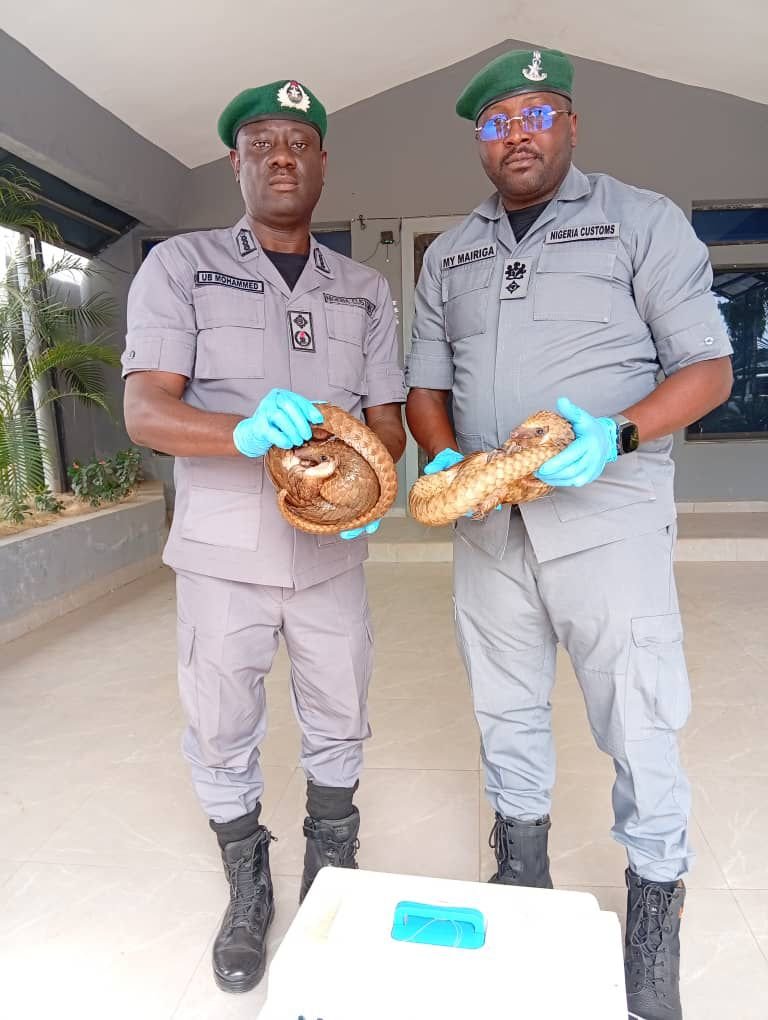
In a significant enforcement action against the illegal wildlife trade, the Nigerian Customs Service (NCS) Federal Operations Unit (FOU) Zone ‘D’ has confiscated 718 donkey skins, valued at over ₦24 million (approximately $26,000 USD), in Mubi, Adamawa State. The seizure underscores Nigeria’s escalating role as a transit hub for a brutal and ecologically devastating global market.
Comptroller Abdullahi Ka’ila, announcing the seizure at a news conference in Bauchi, detailed that the contraband was intercepted on December 26th. Acting on credible intelligence, customs personnel stopped a vehicle transporting the prohibited skins, detaining both the driver and the owner of the goods.
The Grim Economics of Donkey Trafficking
This seizure is not merely about skins; it represents a fragment of a multi-billion dollar illicit industry. Donkey skins are primarily smuggled to meet demand in Asia, where they are boiled to produce ejiao, a key ingredient in traditional medicines and beauty products believed to improve blood circulation and skin health. The soaring demand has decimated donkey populations worldwide, pushing the species toward crisis.
Ka’ila emphasized that the trade and exportation of donkey skins is explicitly prohibited under Nigerian law, enforced by agencies like the National Environmental Standards and Regulations Enforcement Agency (NESREA) and the Nigeria Agricultural Quarantine Service (NAQS). Beyond national statutes, this action ensures Nigeria’s compliance with the Convention on International Trade in Endangered Species of Wild Fauna and Flora (CITES), an international treaty designed to shield endangered species from unsustainable exploitation.
Broader Implications: Biodiversity and Rural Livelihoods
The comptroller framed the issue in stark terms, warning that illegal wildlife trade “threatens biodiversity, undermines rural livelihoods and constitutes economic sabotage.” This statement cuts to the core of the problem. In many Nigerian and African communities, donkeys are not merely beasts of burden but vital economic assets for transportation, agriculture, and trade. Their theft and slaughter for the skin trade cripple local economies and deepen poverty. Furthermore, the cruel and often unhygienic methods of skinning pose serious animal welfare and zoonotic disease risks.
Legal Repercussions and a Zero-Tolerance Stance
Ka’ila confirmed that an investigation is ongoing and the suspects will face prosecution under the stringent NCS Act 2023 and other environmental laws. This action aligns with the zero-tolerance policy against smuggling directed by the Comptroller-General of Customs, Bashir Adewale Adeniyi.
“The Federal Operations Unit Zone ‘D’ remains resolute in enforcing trade and conservation laws. Nigeria will not be used as a corridor for wildlife crimes,” Ka’ila declared. His unit’s jurisdiction spans a critical swath of northeastern and north-central Nigeria—Adamawa, Bauchi, Borno, Benue, Gombe, Taraba, Plateau, Nasarawa, and Yobe states—a region with porous borders that traffickers often exploit.
This seizure serves as a potent reminder of the complex battle against transnational environmental crime. It highlights the nexus between biodiversity conservation, economic security, and international compliance, positioning Nigerian authorities on the front lines of a global fight to protect a humble yet indispensable animal from being skinned into extinction.
Edited by Rabiu Sani-Ali
About Author