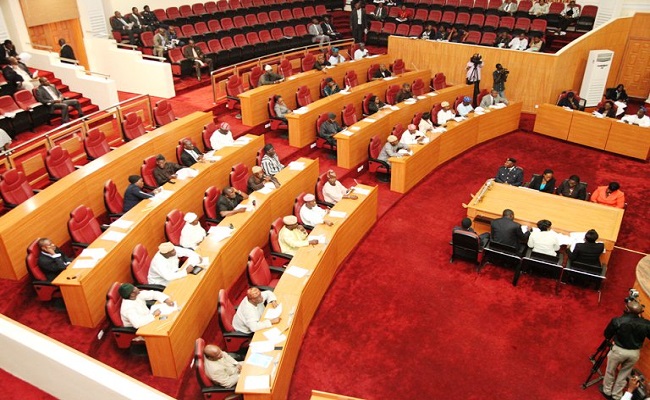
In a significant year-end legislative session, the Bauchi State House of Assembly has given its final approval to the state’s financial blueprint for 2026—a substantial N877 billion Appropriation Bill. The passage, presided over by Speaker Abubakar Sulaiman on December 30, 2025, marks a critical step in the state’s planning cycle, setting the stage for the coming year’s development agenda.
The budget, detailed in a report by House Committee on Appropriation Chairman Wanzam Mohammed, reveals a clear tilt towards capital projects and long-term investment. With a breakdown of N308.7 billion for recurrent expenditure (covering salaries, overheads, and debt servicing) and a more substantial N568.3 billion earmarked for capital expenditure, the government signals an intent to prioritize infrastructure and development. This nearly 65/35 capital-to-recurrent ratio is noteworthy; it suggests a strategic move away from merely funding government operations and toward tangible asset creation, though its success hinges entirely on effective implementation and revenue generation.
Chairman Mohammed elaborated that the capital component is designed to be the engine for “infrastructure development, enhanced social services, and stimulated economic growth.” In practical terms, this could translate to new roads, upgrades to water and electricity networks, investments in healthcare facilities, and school construction. The committee also commended the state government’s accompanying fiscal reforms, which are arguably as important as the budget figures themselves. These include the establishment of a Fiscal Service Commission to enhance transparency, capacity building on a new budget framework, strict sanctions against extra-budgetary spending, timely fund releases to MDAs, and strengthened audit and procurement processes. These measures are essential to prevent the budget from becoming a mere paper document and to ensure public funds achieve their intended impact.
In a parallel and potentially transformative legislative act, the Assembly also passed the landmark Persons with Disabilities (PWDs) Bill. This moves far beyond symbolism, creating a comprehensive legal framework for inclusion. The law prohibits all forms of discrimination against PWDs, with prescribed penalties including fines and imprisonment for violators—a crucial enforcement mechanism often absent in similar policies.
Its provisions are sweeping and practical: mandating accessibility in public buildings, facilities, and transportation through ramps, lifts, and other aids; guaranteeing access to inclusive education and subsidized healthcare; and ensuring political participation and access to social housing and poverty reduction programs. A pivotal clause requires public institutions to reserve at least 10 per cent of their programs for PWDs, a proactive measure to combat exclusion.
To oversee this ambitious mandate, the bill provides for the establishment of a dedicated Commission for Persons with Disabilities. This body will be responsible for implementation, handling complaints, and supporting victims of rights violations, offering a centralized avenue for advocacy and accountability. The legislation explicitly aligns Bauchi State with its obligations under the United Nations Convention on the Rights of Persons with Disabilities, situating local action within a global human rights context.
Taken together, these two legislative actions paint a picture of a state government aiming to balance hard infrastructure investment with profound social policy. The 2026 budget provides the financial fuel, while the PWDs law establishes a framework for a more equitable and inclusive society. The true test, however, will be in the diligent execution of both in the year ahead. (Based on a NAN report by Ahmed Kaigama, edited by Rabiu Sani-Ali)
About Author