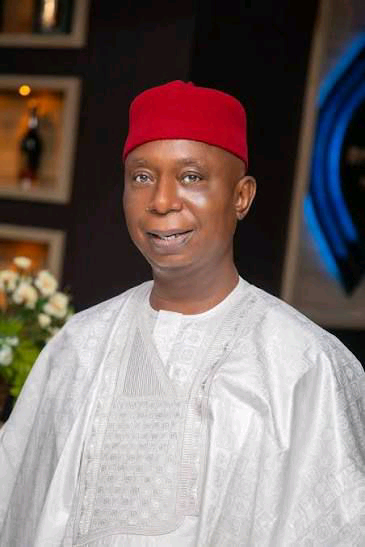
In a nation often defined by its complex social and political fractures, the annual Christmas message from political figures can serve as more than mere seasonal platitude. It can be a barometer of the national mood and a reflection of the values leaders believe are most in need of emphasis. The call from the Accord party, as articulated by its National Chairman, Mr. Maxwell Mgbudem, for unity and renewed faith during the 2025 Christmas season, provides a poignant moment to examine the enduring challenges and latent strengths of Nigeria.
Mgbudem’s statement, issued from Abuja, frames Christmas—the celebration of the birth of Jesus Christ—as a universal symbol of “hope, peace and renewal.” This framing is strategic. In a country where religious identity is deeply woven into the social fabric, anchoring a call for national unity in a shared spiritual metaphor can resonate powerfully. It seeks to transcend the immediate political arena, reminding citizens that their “shared humanity remains the nation’s greatest strength.” This appeal to a common identity above ethnic, religious, or political affiliation is a recurring, yet critically necessary, theme in Nigerian public discourse.
The chairman’s call to “renew faith in Nigeria, its democracy and in themselves” is a direct acknowledgment of the “prevailing national challenges” that test citizen morale. These challenges, often cited as socio-economic hardship and pervasive insecurity, create a climate of anxiety that can erode trust in institutions and fellow citizens. Mgbudem’s counter-argument is one of resilience: Nigeria, he asserts, remains “a country of immense promise, resilience and talent.” This perspective asks citizens to hold a dual view—to honestly confront present difficulties while refusing to abandon the foundational belief in the nation’s potential. It is a plea for patriotic endurance.
On democracy, the message offers a nuanced view. Describing it as “still evolving,” it acknowledges that Nigeria’s democratic project is a work in progress, not a finished product. The statement that it “belongs to the people and must be strengthened through unity, participation and respect for the rule of law” outlines a practical formula for its maturation. Unity prevents social fragmentation from paralyzing governance; participation ensures legitimacy and accountability; and the rule of law provides the stable framework within which political contest occurs. This moves the concept of democracy from an abstract ideal to a set of actionable civic responsibilities.
The message’s shift from citizen duties to leadership imperatives is particularly significant. Mgbudem calls on leaders to “pursue peace, justice and people-centred policies,” placing the “welfare, dignity and security of citizens above all other considerations.” This is a clear, if indirect, commentary on perceived governance deficits. By linking the “persistent challenge of insecurity” directly to the need for “inclusive governance, opportunity and social justice,” the statement posits that security is not solely a military or policing issue. It is fundamentally a governance issue. A society that addresses root causes like economic marginalization, inequality, and perceived injustice is, the argument implies, building a more sustainable form of security than one reliant solely on force.
Ultimately, this Christmas message from the Accord party synthesizes spiritual hope with civic doctrine. It uses the season’s themes of light and new beginnings to advocate for a collective national recalibration. The prayer for peace and unity, and the hope for a New Year that brings “renewed hope to our great nation,” is more than a closing formality. It is an invocation for the resilience of the Nigerian spirit—a reminder that the project of nation-building, though arduous, is a shared vocation that requires, as Mgbudem concludes, moving “forward together in hope.”
(Edited by Kamal Tayo Oropo)
Source link
About Author