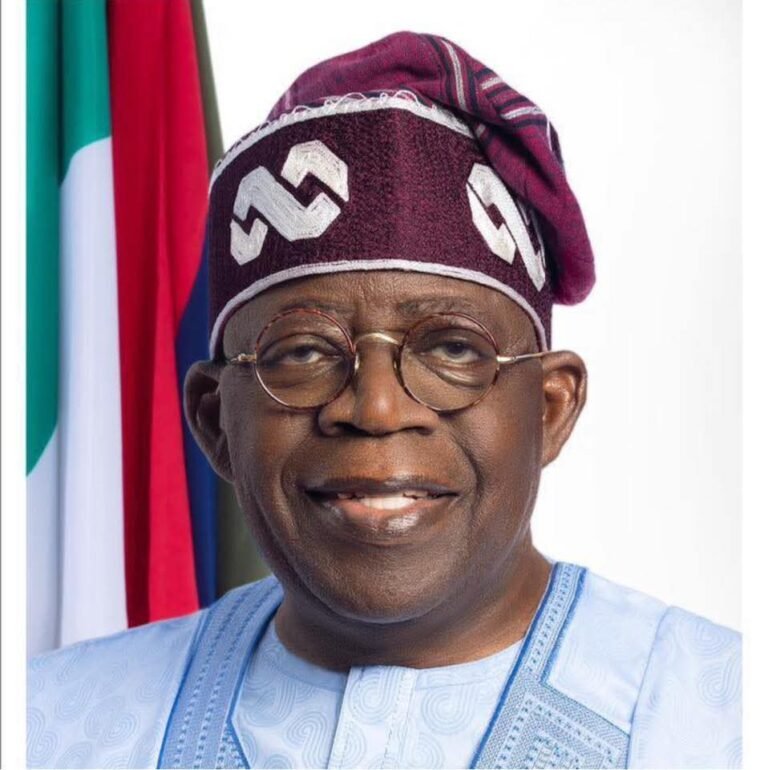
In a landmark address to a joint session of the National Assembly, President Bola Tinubu announced a definitive end to Nigeria’s long-standing and problematic practice of operating multiple, overlapping budgets. He declared that by March 31, 2026, all capital liabilities from previous fiscal years will be fully funded and closed, paving the way for the country to operate on a single, unified budget from April 2026 onward.
The President presented the 2026 Appropriation Bill, dubbed the “Budget of Consolidation, Renewed Resilience and Shared Prosperity,” with a value of N58.18 trillion. He framed this shift as a critical step in a broader national reform agenda, describing the current system as a “problem staring the nation” that leads to abandoned projects, unpaid contractual obligations, and inefficient resource allocation. “We are terminating the habit of running through a budget on one inflow,” Tinubu stated, emphasizing the new principle of “No overlaps, no excuses and no rollover cultures.”
Deconstructing the ‘Multiple Budget’ Problem
For years, Nigeria’s budget cycle has been plagued by a lack of synchronization between revenue inflows and expenditure plans. This often resulted in the government running several budgets simultaneously—an approved current-year budget alongside ‘rolled-over’ capital projects from previous years that were not fully funded. This practice creates significant administrative complexity, obscures true fiscal performance, and perpetuates a cycle of delayed infrastructure and development projects. Tinubu’s plan aims to create a “single budget, backed by a single revenue cycle,” which would enhance transparency, improve project completion rates, and allow for more accurate economic planning.
Context of Reforms and Economic Outlook
The President positioned this fiscal reset as the culmination of two and a half years of “methodically confronting long-standing structural weaknesses,” acknowledging that the necessary reforms “have not been painless” for families and businesses. He asserted that the economy has “turned the corner,” citing a growth rate of 3.98% in the third quarter of 2025, up from 3.86% in the same period in 2024. The 2026 budget, he said, is designed to “lock in macroeconomic stability” and ensure growth translates into jobs and improved quality of life.
Legislative Reception and Broader Implications
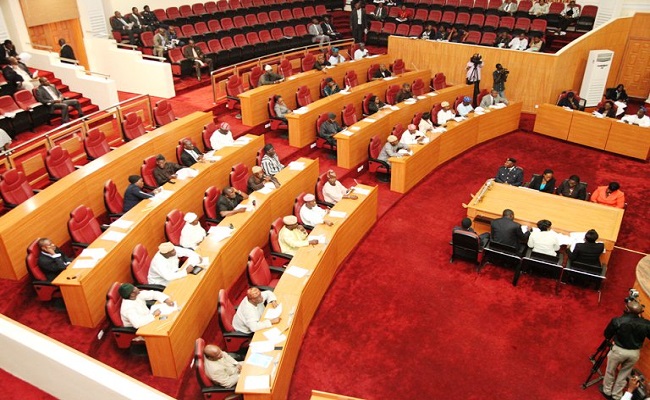
In his welcome address, Senate President Godswill Akpabio contextualized the moment, noting that collaborative work between the executive and legislature is sometimes viewed as a “sell-out” by the parliament, but is essential for national advancement. He described the appropriation bill as “a statement of intent—a reflection of priorities, a record of difficult choices, and a roadmap for the next phase of Nigeria’s national renewal.”
The success of this ambitious consolidation hinges on several factors: disciplined revenue generation to meet the massive N58.18 trillion expenditure target, strict adherence to the March 2026 deadline for clearing legacy liabilities, and sustained political will to break from the entrenched “rollover culture.” If implemented effectively, this shift could represent a defining moment in Nigeria’s public financial management, moving the nation from a cycle of fiscal carry-overs to a more predictable and results-oriented budgeting system.
(NAN) (www.nannews.ng)
NNL/BRM
===========.
Edited by Bashir Rabe Mani
About Author