By Tiamiyu Prudence Arobani
Washington DC, Dec. 15, 2025
In a powerful display of diplomatic and communal solidarity, Nigeria’s former Minister of Finance, Budget and National Planning, Mrs. Zainab Ahmed, has issued a clarion call for national unity, urging citizens to consciously resist narratives and interventions from external actors that seek to exploit the country’s religious and ethnic diversity.
Speaking at the Nigeria Day celebration at the Nigerian Embassy in Washington, D.C., Ahmed framed unity not merely as a social ideal but as a critical component of national sovereignty and self-determination. “We must tell the world that we are actually one,” she told the News Agency of Nigeria (NAN). “We have the full capacity to sort ourselves out and we must not allow any external parties to come between us.”
Her remarks carry significant weight given her current role as the Executive Director for Angola, Nigeria, and South Africa at the World Bank, and her service under the late President Muhammadu Buhari from 2019-2023. This perspective bridges domestic governance and international financial diplomacy, highlighting how internal cohesion directly impacts a nation’s standing and negotiating power on the global stage.
Ahmed’s call for resilience is particularly timely. It comes against the backdrop of the recent U.S. designation of Nigeria as a “Country of Particular Concern (CPC)” regarding religious freedom—a move that has introduced diplomatic strain. Her commendation of the event’s organizers for proceeding “in spite of” this designation underscores a deliberate act of soft diplomacy: using cultural celebration to project an image of a unified, capable nation, countering external criticisms.
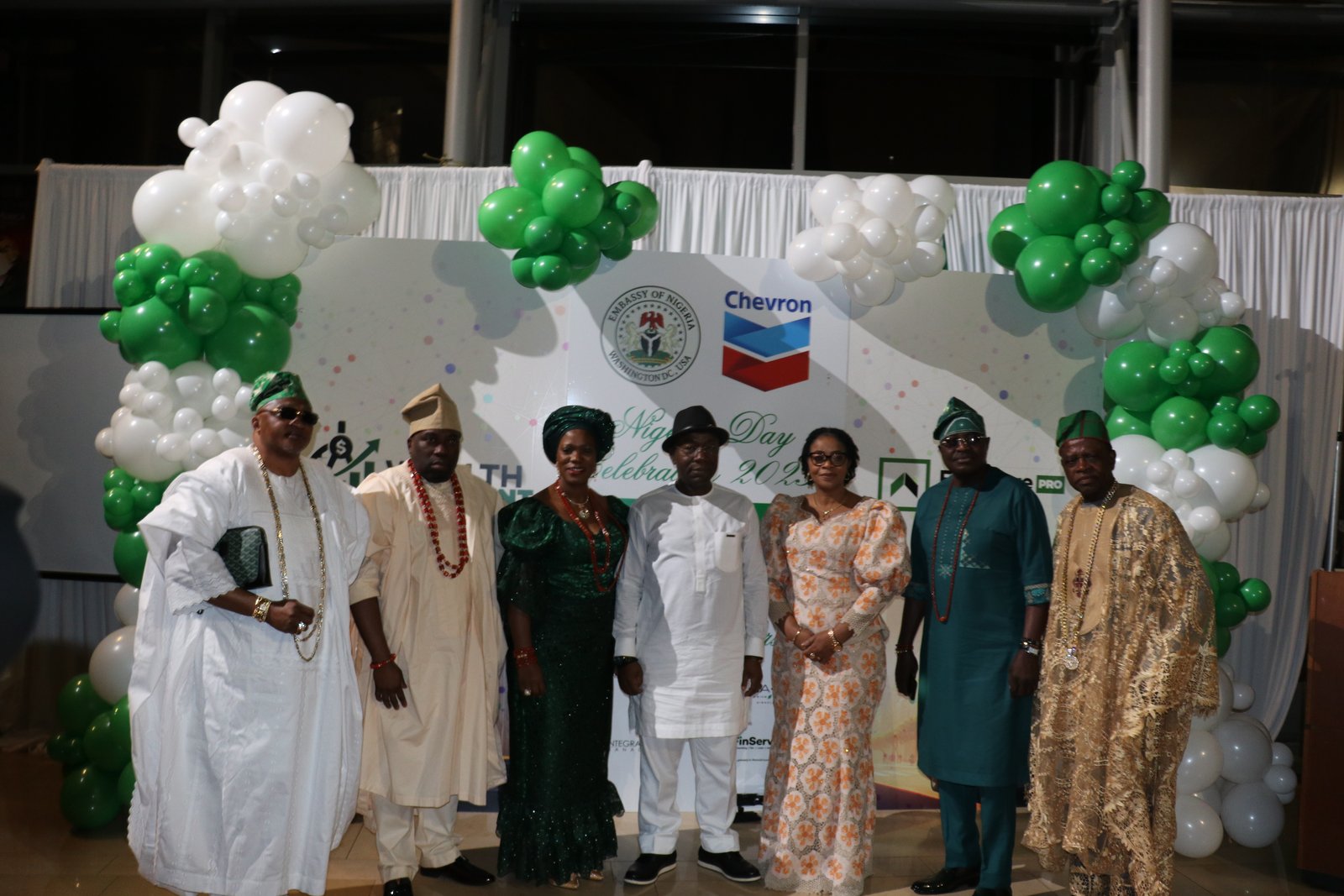
The celebration served as a platform to showcase not just cultural pride, but tangible Nigerian excellence abroad. The acting Ambassador of Nigeria to the U.S., Amb. Samson Itegboje, presented a compelling data-driven case for Nigerian-American achievement. He noted that Nigerian-Americans are the most educated immigrant group in the U.S., with Ph.D. holders at three times the rate of any other ethnic group. Furthermore, approximately 77% of all Black doctors in the U.S. are of Nigerian descent, and a remarkable 66% of Nigerian immigrants hold at least a bachelor’s degree.
“Nigeria produces the best and most powerful engineers in the U.S.,” Itegboje stated, citing the example of Prof. Margaret Itua, the first woman in the world to earn a Ph.D. in Cybernetics. This narrative of diaspora success is strategically important; it builds a reservoir of international goodwill and influence, which can be leveraged in diplomatic and economic negotiations.
On the diplomatic front, Mr. Paul Alabi of the Embassy’s Political and Economic Section confirmed that officers are working to navigate the current “diplomatic turbulence” with the U.S. As Secretariat of the U.S.-Nigeria Joint Working Group, Alabi emphasized that engagements continue through bilateral mechanisms focused on shared security challenges. “Nigeria views these engagements with the U.S. as opportunities to build trust, improve outcomes, and advance shared objectives,” he explained. This pragmatic approach suggests a strategy of constructive engagement rather than confrontation, aiming to quickly normalize the historically cordial relations.
The community’s response echoed the officials’ sentiments. Mr. Ayodele Ibrahim, a Nigerian-American community leader, affirmed a united resolve to support the homeland. Other leaders stressed the indispensable need for peace and security within Nigeria itself, pledging continued support to the government.
This event, therefore, transcended a simple cultural gathering. It functioned as a multifaceted political act: a rejection of external division, a celebration of diaspora capital, a display of diplomatic poise under pressure, and a reaffirmation of the social contract between a nation and its global citizens. The underlying message was clear: Nigeria’s strength lies in its ability to harness its internal diversity and external talent to define its own destiny, free from externally imposed narratives or solutions.
Edited by Ismail Abdulaziz
About Author