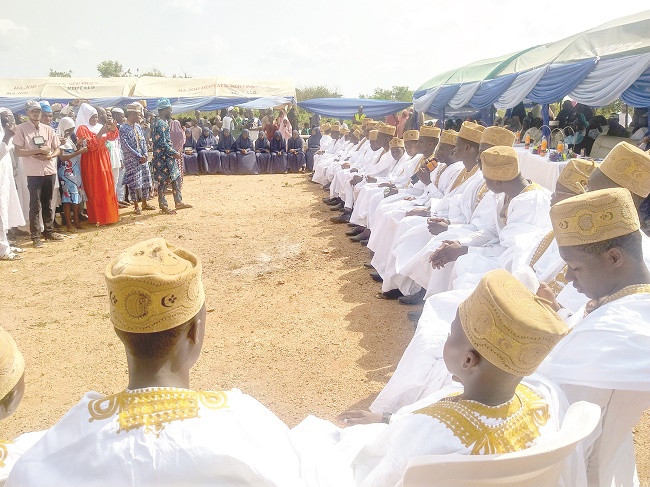
In a significant address at the 5th graduation ceremony of the Ali Institute for Quran Memorisation (AIQM) in Ibadan, Director Ustaz Ali Abdussalam issued a compelling call to action. He urged federal, state, and local governments to actively support Quranic and Islamic educational centers, framing this not merely as a religious matter, but as a strategic investment in the nation’s moral and civic future.
Abdussalam’s argument extends beyond traditional religious instruction. He posits that a deep, balanced engagement with the Quran—one that emphasizes its ethical teachings, morals, and values—creates individuals inherently resistant to the social vices plaguing modern Nigeria. “Any individual with a balanced knowledge of the Quran and Islamic morals and values would not engage in any social vice,” he stated, directly linking this form of education to the cultivation of patriotism and a rejection of tribalism, terrorism, and corruption.
This perspective arrives at a critical juncture. The director highlighted the dual challenges of a corrupting society and the unfiltered exposure of children to harmful influences via social media. In this context, he presented Islamic knowledge as a necessary counterweight—a framework for nurturing resilience and ethical fortitude. The AIQM’s methodology exemplifies this holistic approach. “We not only teach our students Quran memorisation, but also prepare them for life’s challenges morally, psychologically and spiritually,” Abdussalam explained. “We want to change the world with people of good character.”
The call for government support is multifaceted. It includes appeals for funding, resources, and the creation of an “enabling environment” where the teaching of virtues and morals is integrated alongside secular education. This vision suggests a complementary model, where character education rooted in religious tradition works in tandem with conventional curricula to produce well-rounded citizens.
The graduation of 160 huffaz (Quran memorisers)—bringing the institute’s total to 379 since 2019—served as a practical showcase of this philosophy. To illustrate the tangible outcomes, Abdussalam shared the story of alumnus Muqaddis Kolawole, an Artificial Intelligence Engineering student in Cyprus who returned a lost wallet containing $2,500. This anecdote was presented as emblematic of the institute’s output: individuals whose academic and professional pursuits are undergirded by unwavering integrity. “We produce the likes of Muqaddis each time our students graduate,” he affirmed.
Abdussalam also connected this educational mission to Nigeria’s pressing security crises. He called on the Federal Government to “unravel the mystery” in the fight against insurgency, banditry, and kidnapping, tackling these problems head-on. His implication is clear: long-term security relies not only on military strategy but on a foundational war against the moral decay that fuels criminality. Restoring public confidence, he argued, is contingent on demonstrating both effective security and a commitment to fostering a virtuous citizenry.
The event garnered endorsements from community leaders. The Chairman of the Day, Alhaji Kola Karim, the Agbaoye of Ibadanland, commended the parents and the institute for their role in moral impartation. Represented by an aide, Alhaji Yinka, he charged the graduands to be lifelong “ambassadors of Islam,” reflecting its teachings in their character consistently.
Sheikh Kamaldeen Abdulhamid, in a lecture to the graduates, emphasized that graduation marked a beginning, not an end, urging continual knowledge acquisition. This sentiment was echoed by Prof. Taofeek Yekini, a parent of a graduand, who praised the institute’s consistency in nurturing upright individuals. Yekini’s concluding advice distilled the event’s core thesis: a call for parents to “invest in both Islamic and Western education for their children to earn reward on earth and in the hereafter.”
This appeal from Ibadan transcends a single graduation ceremony. It presents a nuanced proposition: that supporting deep, value-based religious education could be a vital component in addressing Nigeria’s complex socio-political challenges, aiming to build a generation of leaders who are both pious and patriotic.
Edited by Victor Adeoti
About Author