By Dr. James Bwala
At about seven o’clock in the evening, the quiet of a farm in Magami village, within the Gusau Local Government Area of Zamfara State, was shattered by gunfire. The sun was disappearing beyond the horizon, and families were preparing for the evening meal. In a region where farming is central to survival, the day’s work should have been ending peacefully. Instead, a child watched his father die.
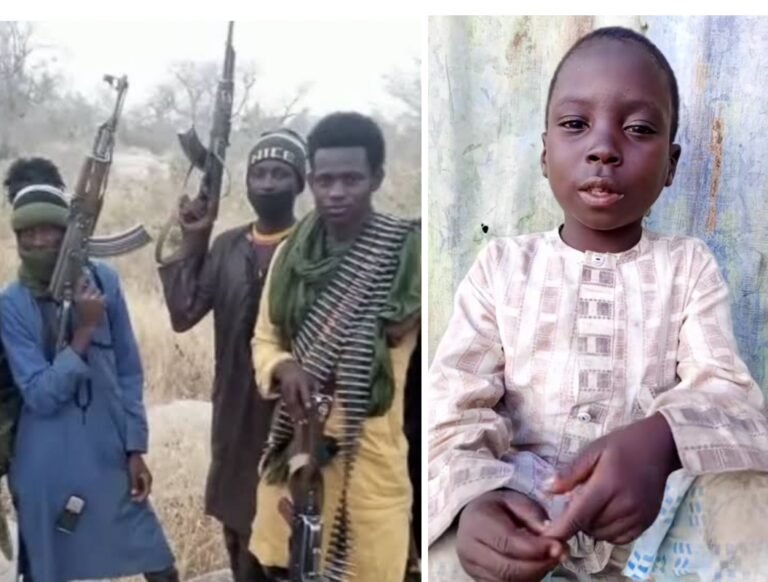
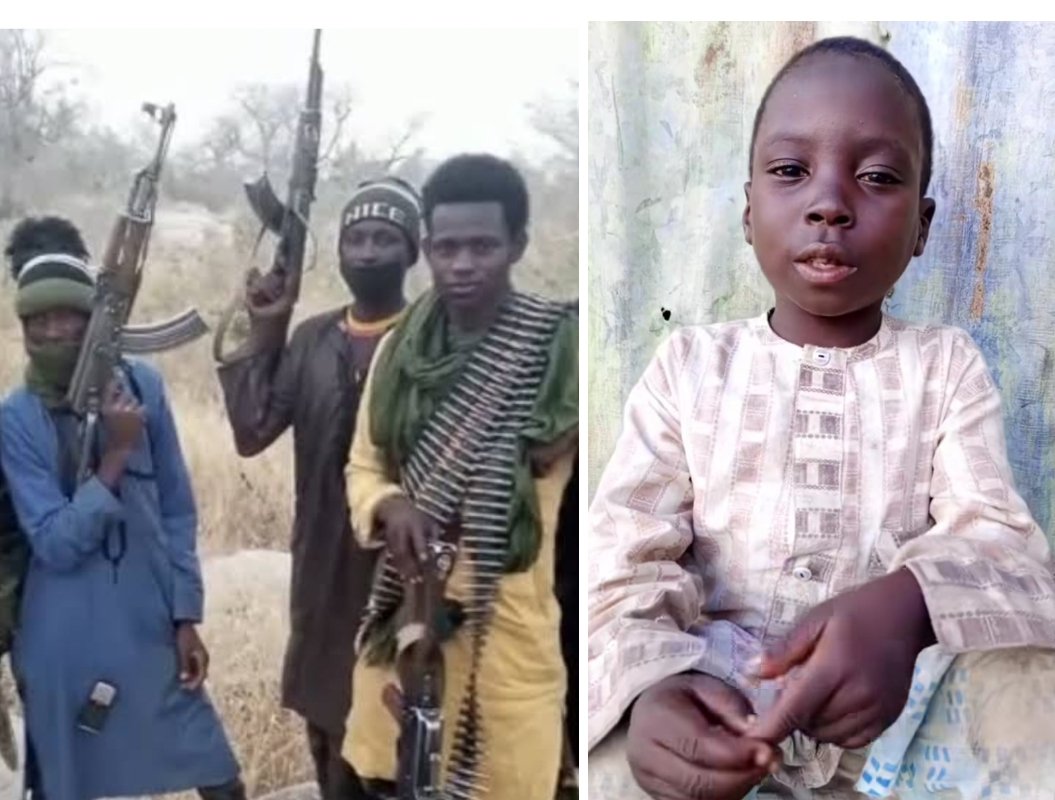
Umar Magami, an eleven-year-old boy from Magami village in northwestern Nigeria, remembers that evening with painful clarity. His father had gone to the farm to collect pepper for the family’s dinner. Earlier that day, he had harvested seven baskets of pepper, taken them to the market, sold them, and returned home with food items, including rice. After securing the family’s basic needs, he went back to the farm to bring pepper that would be used to prepare the evening meal.
According to Umar, bandits appeared at the farm and opened fire on his father. The bullets struck him before the boy’s eyes. In that terrible moment, Umar lost not only his father but also the sense of safety that every child should be allowed to enjoy. The farm, which had once represented food, work, and family survival, became the scene of a violent death.
Today, Umar is no longer living in Magami. He has fled the village and is taking refuge in Gusau, the capital of Zamfara State. Like thousands of other children affected by banditry in northwestern Nigeria, he has been uprooted from his home, separated from familiar surroundings, and forced to carry memories far too heavy for his age.
He has declared that when he grows up, he will join the Nigerian military and take revenge for the killing of his father. His words reveal the depth of his grief, but they also expose a disturbing danger. A child who should be thinking about school, friendship, games, and his future is instead thinking about weapons, military service, and revenge. His childhood has been shaped by violence, and his understanding of justice has become intertwined with retaliation.
Umar has reportedly prayed for the souls of the many people killed by bandits, including his father. He recognizes that death is part of human existence and says that he knows he will die one day. But, in his mind, that day must wait until he has avenged his father’s death. The statement is heartbreaking because it reflects both his love for his father and the psychological damage caused by exposure to violence.
Umar’s story is not an isolated one. Across Zamfara and other parts of northwestern Nigeria, countless children have witnessed killings, abductions, displacement, and the destruction of their communities. Some have lost parents. Others have been separated from siblings or forced to flee their homes. Many have stopped attending school because their villages are unsafe or because their families can no longer afford education after losing their livelihoods.
For these children, violence is not an abstract idea reported in newspapers. It is an everyday reality. It appears in the sound of gunshots, the sight of armed men, the absence of a parent, and the fear of travelling to a nearby market or farm. It is present in empty classrooms, abandoned villages, and refugee settlements where families wait for a return to normal life.
The conditions that produced Umar’s tragedy are complex. In many rural communities, farming is the main source of income and food. When bandits attack farmers, they destroy both economic stability and family security. People are prevented from cultivating their land, harvesting crops, or transporting produce to market. As a result, hunger and poverty deepen, while communities become increasingly dependent on emergency assistance.
The consequences extend beyond immediate physical suffering. Banditry damages trust between neighbors and weakens confidence in public institutions. When people believe that the government cannot protect them, they may be tempted to rely on self-defense groups, vigilantes, or other informal security arrangements. Although such groups may sometimes provide protection, they can also increase the cycle of violence and expose young people to further militarization.
Children are especially vulnerable in this environment. Their minds are still developing, and their understanding of violence is shaped by what they see around them. When a child watches a parent being killed, the experience can produce trauma, anger, guilt, fear, and a deep desire for revenge. Without counselling and support, these emotions may remain hidden or grow more intense over time.
A child like Umar may eventually become a soldier with a genuine desire to protect his country. Military service, when pursued through lawful and professional means, can be an honorable vocation. However, joining the military primarily to avenge a personal loss presents a serious concern. A professional soldier must be trained to defend citizens, obey the law, and exercise discipline. Revenge, by contrast, is driven by anger and a desire to punish. If grief is not addressed, the distinction between justice and retaliation may become difficult for a traumatized young person to understand.
This is why Umar’s story should not be viewed only as the account of one grieving child. It should be treated as a warning about Nigeria’s future. If thousands of children grow up believing that violence is the only language through which justice can be achieved, the country may face a new generation shaped by bitterness and conflict. The effects of today’s insecurity may therefore continue long after the current wave of banditry has ended.
The Nigerian government must respond to this crisis with urgency and compassion. Military operations remain necessary in areas controlled or threatened by armed groups, but force alone cannot heal the wounds left behind. Security measures must be combined with humanitarian assistance, education, trauma counselling, and economic recovery.
First, displaced children need access to safe and continuous education. Schools in affected areas should be protected, and temporary learning centers should be established in communities hosting displaced families. Education offers more than academic knowledge; it provides routine, hope, social connection, and an alternative to recruitment by criminal or extremist groups.
Second, children who have witnessed violence must receive professional psychological support. Counselors, social workers, religious leaders, teachers, and community elders can all play important roles in helping children process grief. Religious and cultural institutions, which command significant respect in many northern Nigerian communities, can support healing by promoting forgiveness, lawful justice, and reconciliation without denying the suffering of victims.
Third, displaced families need assistance to rebuild their livelihoods. Farmers must be able to return safely to their fields, and those who cannot return immediately should receive food, shelter, healthcare, and financial support. Economic recovery is essential because poverty and insecurity reinforce one another. A parent who cannot farm or trade is less able to educate and protect their children.
Fourth, the government must improve accountability. Communities lose faith in the state when attacks occur repeatedly without effective investigations or prosecutions. Security personnel must be adequately equipped, intelligence systems strengthened, and operations conducted with respect for civilian life. At the same time, abuses committed by any armed actor must be addressed through lawful processes. Justice must be visible, fair, and consistent.
Finally, young people affected by conflict must be included in national healing. Their experiences should not be ignored or reduced to statistics. The stories of children such as Umar should remind policymakers that insecurity is not only about territory or weapons; it is also about memory, identity, and the kind of citizens a country is producing.
Umar’s vow is a heartfelt plea from a wounded soul. It reflects the pain of a son who saw his father killed while trying to provide food for his family. It also reflects the danger of allowing violence to shape a child’s imagination. Umar should not have to plan revenge. He should be able to mourn, return to school, dream of a profession, and grow into adulthood without being imprisoned by the events of one evening.
The people of Magami and other affected communities deserve security, justice, and the opportunity to rebuild their lives. Nigeria’s children deserve even more: a future in which farms are places of work rather than killing fields, in which families can prepare meals without fear, and in which military service is chosen out of patriotism rather than personal vengeance.
Umar’s story should serve as a red alarm for Nigeria. His suffering is both personal and national. If the government fails to protect vulnerable communities and heal the emotional wounds of children exposed to conflict, the consequences may last for generations. But if effective action is taken now, grief can be transformed into resilience, and anger can be redirected toward rebuilding.
A child’s future should not be determined by the bullet that killed his father. It should be shaped by safety, education, justice, and hope.
Bwala, PhD, writes from Abuja
About the Author