Nigeria and Türkiye are moving to deepen their strategic partnership beyond traditional diplomatic relations, with security cooperation, defence technology, investment and a $5 billion trade ambition emerging as the major pillars of a renewed alliance following President Bola Tinubu’s state visit to Ankara in January.
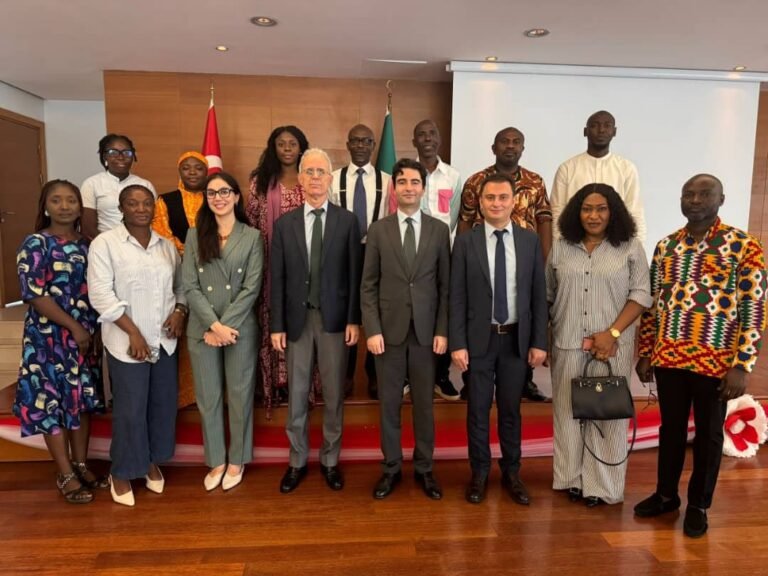
The Turkish Ambassador to Nigeria, Mr Mehmet Poroy, disclosed this on Monday, describing Tinubu’s engagement with Turkish President Recep Tayyip Erdoğan as a defining moment that had opened a new chapter in relations between the two countries.
At a time Nigeria is battling terrorism, banditry and other security threats while struggling to attract the investment required to diversify its economy, the emerging partnership with Türkiye presents fresh opportunities for defence capacity-building, technology transfer and expanded commercial relations.
Central to the renewed engagement are nine strategic agreements signed during Tinubu’s visit, alongside plans to increase bilateral trade from approximately $2 billion to $5 billion and expand Türkiye’s support for Nigeria’s counterterrorism operations.
Poroy said the two countries were determined to translate their longstanding diplomatic relationship into practical cooperation capable of delivering measurable benefits to their economies and populations.
He described Nigeria as a strategic partner and a major economic force in Africa, stressing that Türkiye was interested in a relationship built on mutual respect and benefits rather than one-sided commercial interests.
Perhaps the most consequential dimension of the renewed relationship is defence and security cooperation, particularly as Nigeria continues to confront multiple security threats across its geopolitical zones.
Poroy said Türkiye was committed to supporting Nigeria’s counterterrorism efforts through the provision of military equipment, specialised training and technical assistance.
The cooperation includes the supply of attack helicopters and unmanned aerial vehicles, popularly known as drones, as well as expanded training programmes for Nigerian Special Forces personnel.
More significantly, discussions are underway to establish military training facilities in Nigeria, a development that could strengthen local capacity to train specialised personnel and deepen institutional cooperation between the armed forces of both countries.
For Nigeria, which has invested heavily in military hardware and international security partnerships over the years, the prospect of more structured defence cooperation with Türkiye offers another avenue for strengthening operational capabilities.
Türkiye has developed a growing defence manufacturing industry, particularly in unmanned aerial systems, military aviation and other security technologies.
Its experience and growing defence industrial capacity could provide opportunities for Nigeria to strengthen its military capabilities, although the extent of the benefits will depend on the terms of procurement agreements, technology transfer and the development of indigenous technical expertise.
The renewed engagement also reflects the growing importance of international partnerships in Nigeria’s efforts to address insecurity, which has continued to undermine agriculture, commercial activities, investment and livelihoods in several parts of the country.
Beyond military cooperation, both countries are setting their sights on a substantial expansion of economic relations, with a $5 billion bilateral trade target representing one of the most ambitious outcomes of the renewed diplomatic engagement.
Poroy said the two governments were working towards increasing trade from its current level of approximately $2 billion, noting that Nigeria’s economic importance made it a critical partner in Türkiye’s engagement with Africa.
The trade ambition was also reaffirmed by Erdoğan during Tinubu’s January visit, when the Turkish president expressed his country’s determination to expand commercial exchanges with Nigeria.
To achieve the target, Poroy said Türkiye was facilitating visa processes for Nigerian business executives to encourage direct business engagements, investment partnerships and stronger private-sector participation.
The initiative is expected to improve access for Nigerian entrepreneurs seeking opportunities in the Turkish market while encouraging Turkish investors to explore opportunities in Nigeria.
The challenge, however, will be ensuring that the expansion of trade translates into greater Nigerian production, exports, employment and industrial development rather than merely increasing the volume of imported goods.
Nigeria’s vast market, natural resources, agricultural potential and strategic position in West Africa offer significant opportunities for Turkish businesses in manufacturing, construction, energy, infrastructure, agriculture and technology.
The establishment of a Joint Economic and Trade Committee is expected to provide an institutional framework for identifying opportunities, addressing commercial bottlenecks and monitoring progress towards the $5 billion target.
Tinubu’s state visit to Ankara in January marked a significant diplomatic milestone, with nine agreements signed to expand cooperation across several strategic sectors.
The agreements covered defence, trade, investment, media and communication, education, technology and other areas of institutional collaboration.
The significance of the agreements lies not merely in their number but in the breadth of sectors they seek to bring into the bilateral relationship.
They provide a framework for cooperation that extends beyond government-to-government engagements to include businesses, educational institutions, media organisations and other non-state actors.
For both countries, the next major test will be the implementation of the agreements and the establishment of practical mechanisms to ensure that the commitments produce measurable results.
While security and economic cooperation dominate the formal diplomatic agenda, Türkiye is also expanding its humanitarian footprint in Nigeria, particularly among communities affected by conflict, displacement and poverty.
Poroy disclosed that Turkish non-governmental organisations and official humanitarian institutions had provided more than $5 million in humanitarian assistance, food supplies and social interventions to vulnerable Nigerians over the past year.
Beneficiaries include internally displaced persons and vulnerable communities in Adamawa, Kano, Yobe and other parts of the country.
The Türkiye Religious Affairs Foundation and other Turkish civil society organisations have been involved in providing humanitarian support, complementing interventions by government agencies and international organisations.
The assistance is particularly significant for communities in the North-east, where prolonged insurgency has displaced millions of people, disrupted livelihoods and placed enormous pressure on humanitarian services.
The ambassador said humanitarian assistance remained an important component of Türkiye’s engagement with Nigeria, reflecting the importance of people-to-people relations alongside diplomatic and commercial interests.
Poroy traced formal diplomatic relations between both countries to November 9, 1960, barely a month after Nigeria attained independence.
He noted, however, that historical connections between Türkiye and territories in present-day Nigeria predated modern diplomatic relations, with links between the Ottoman Empire and the Kanem-Borno Sultanate dating back to the 16th century, alongside historical connections with Lagos in the late 19th century.
He said the relationship had evolved over the decades on the principles of friendship, mutual respect and mutually beneficial cooperation.
Türkiye subsequently established its embassy in Lagos in 1962 before relocating it to Abuja in 2001.
Cultural diplomacy has also become an important instrument for strengthening relations, with the Yunus Emre Institute in Abuja providing opportunities for cultural exchange, alongside joint art exhibitions and other collaborative initiatives.
The two countries are also strengthening media and strategic communication partnerships, particularly in promoting cultural understanding and addressing misinformation.
For Poroy, these engagements demonstrate that the relationship between Nigeria and Türkiye is no longer confined to conventional diplomatic exchanges but is increasingly developing into a broader partnership involving governments, businesses and citizens.
The renewed relationship comes at a critical moment for Nigeria, which is seeking to diversify its international partnerships, strengthen its military capabilities, attract foreign direct investment and expand economic opportunities.
Türkiye, on its part, is seeking to deepen its engagement with African economies, with Nigeria offering access to one of the continent’s largest consumer markets and a strategic gateway to West Africa.
But the real significance of the emerging alliance will ultimately be measured by what both countries are able to deliver.
For Nigeria, the priorities will include ensuring that defence cooperation strengthens operational capacity, that military training arrangements build local expertise, and that expanded trade creates opportunities for domestic manufacturers and exporters.
Equally important will be the implementation of investment commitments and the conversion of the nine agreements into projects capable of generating employment, technology transfer and sustainable economic growth.
Poroy expressed confidence that the foundation established by Tinubu and Erdoğan would deliver enduring prosperity, stronger security cooperation and closer relations between both countries.
With the $5 billion trade ambition, expanded defence collaboration and growing humanitarian engagement now defining the relationship, Nigeria and Türkiye appear set to move from decades of diplomatic friendship towards a more comprehensive strategic partnership.
Whether that ambition translates into tangible benefits for Nigerians will depend on how quickly the commitments made in Ankara move from diplomatic documents to concrete action.
About the Author