Bauchi State Ministry of Education,
Adolescent Girls Initiative for Learning and Empowerment [AGILE)
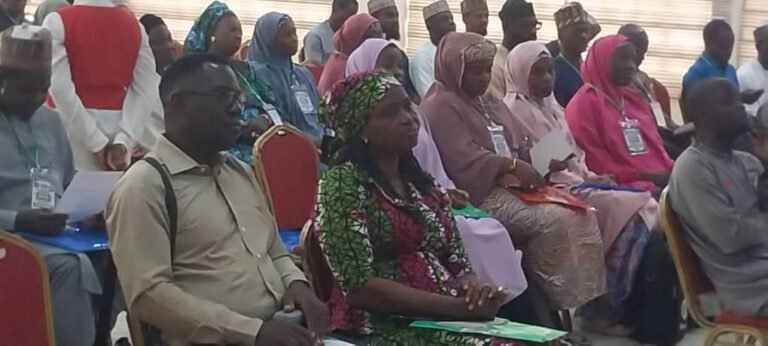
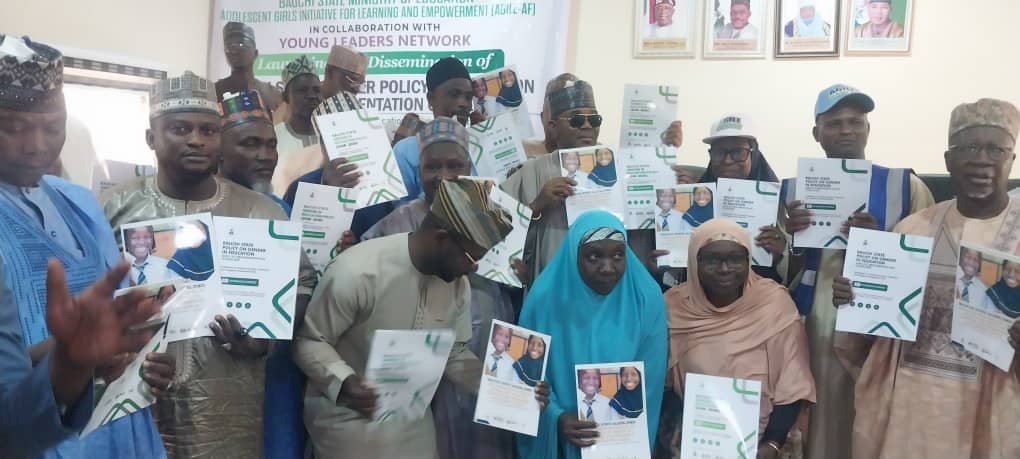
in collaboration with Young Leaders Network, on Tuesday, officially launched and disseminated Bauchi State Gender Policy in Education and its implementation Guideline.
In his keynote address at the Official launch and public dissemination of the Bauchi State Gender in Education Policy (2026-2030) and Guidelines for School Re-entry of Married and Pregnant Adolescent Girls, the Commissioner of Education, Abdulkadir Ibrahim, said,
“Today marks a significant milestone in our collective effort to build an education system in Bauchi State where every child, regardless of gender, background, disability or circumstance, has a fair opportunity to access, remain in and complete quality education.”
He explained that,”The Bauchi State Gender in Education Policy (2026-2030), together with the Guidelines for School Re-entry of Married and Pregnant Adolescent Girls, represents our commitment to addressing some of the longstanding barriers that prevent children, particularly girls, from achieving their educational aspirations.”
He added, “We recognise that poverty, early marriage, adolescent pregnancy, insecurity, inadequate school facilities and discriminatory practices continue to affect enrolment, retention and completion. These are challenges we must confront through deliberate policies, sustained investment and collective responsibility.”
According to him, “The significance of these policy documents lies not merely in their approval, but in the responsibility they place on us to act. As a Ministry, we are committed to translating their provisions into practical changes across our schools and communities.
“First, we will strengthen the dissemination and implementation of the policy across all 20 Local Government Areas, ensuring that education authorities, school administrators, teachers and communities understand their responsibilities,” he added.
The Commissioner further said, “Second, we will work towards ensuring that every public junior and senior secondary school adopts and publicises the School Re-entry Guidelines by 2027, with appropriate counselling. referral and protection mechanisms. No girl should be denied the opportunity to continue her education solely because she is married, pregnant or a young mother.”
He added, “Third, we recognise that policy implementation requires financing. The policy commits the State to progressively allocating resources for gender-responsive education, beginning with a minimum target of 2% of the education budget in 2026 and increasing to 5% by 2030. We will work with the relevant government institutions to advance this commitment and strengthen accountability for the use of education resources.
“Fourth, we will strengthen coordination, monitoring and reporting through the structures established in the implementation framework. Our progress must be measured not simply by activities conducted, but by improvements in school participation, learner safety, retention, re-entry and completion,” he added.
He emphasised that the policy is not a policy for girls alone as it is a commitment to an inclusive education system that serves every learner while responding to the particular disadvantages experienced by girls and other vulnerable groups.
He appreciated the Young Leaders Network, Malala Fund, the AGILE Project, UNICEF, our technical teams, civil society organisations and all stakeholders who contributed to the development and validation of these important documents.
“To our traditional and religious leaders, parents, school administrators and development partners, I invite you to take ownership of these commitments. Government leadership is essential, but lasting progress requires the participation of everyone. As we launch and disseminate these policies today, let us be guided by one principle,” he added.
He stressed, “Our success will not be measured by the number of policy documents we distribute, but by the number of children who remain in school, the girls who successfully return to learning, and the young people who complete their education because these policies were implemented. Together, let us build an inclusive Bauchi where every girl learns, thrives and completes her education.”
Project Coordinator, AGILE Bauchi State, Ladi Hamma Mohammed, said,”Today’s event represents more than the formal unveiling of a policy document. It signifies our collective commitment to building an inclusive, equitable, safe, and in which every girl and boy has the opportunity to enrol in school, remain in school, learn effectively, complete their education, and fulfil their potential without discrimination.”
She stressed that,”Education is a fundamental right and one of the most powerful instruments for individual development, social transformation, poverty reduction, and sustainable community development. However, gender-related barriers continue to affect access to education, participation, retention, completion, and learning outcomes, particularly for adolescent girls and other vulnerable learners.”
According to her, “These barriers may include poverty, early and child marriage, teenage pregnancy, harmful social and cultural practices, inadequate sanitation and menstrual hygiene facilities, gender-based violence, disability-related exclusion, and limited access to safe and supportive learning environments.”
Ladi stressed, “Addressing these challenges requires more than good intentions. It requires a clear policy direction, practical implementation guidelines, adequate resources, institutional accountability, and sustained collaboration among government institutions, schools, families, communities, development partners, and other relevant stakeholders.
“It is against this background that the Bauchi State Policy on Gender in Education and its Implementation Guidelines becomes particularly important. The policy provides a framework for addressing gender disparities and promoting fairness, inclusion, equal opportunities, and the protection of learners within our education system,” she said.
The AGILE PC stressed that,”The implementation guidelines are equally important because they are intended to translate the policy’s objectives into practical actions, responsibilities, and approaches that relevant institutions and stakeholders can apply in their respective areas of work.”
She further said that,”The AGILE Project recognises that empowering adolescent girls through education is essential to improving their life chances and strengthening the social and economic development of our communities. Our interventions support efforts to improve girls’ access to secondary education, enhance learning opportunities, provide life skills, strengthen safe spaces, and address barriers that prevent girls from achieving their educational aspirations.”
According to her, “The launch of this policy therefore provides an important opportunity to strengthen the alignment of relevant education interventions with the State’s commitment to gender-responsive and inclusive education.
Through AGILE, we recognise that keeping girls in school and supporting them to succeed requires the involvement of the entire community.”
She added,”Parents and caregivers must encourage girls’ education; teachers must provide supportive and inclusive learning environments; school administrators must promote safety and equal opportunities; traditional and religious leaders must help address harmful practices; and government institutions must ensure that appropriate systems, resources, and safeguards are in place.
“We must also recognise the needs of boys, learners with disabilities, and children from disadvantaged backgrounds, ensuring that gender-responsive education policies contribute to an education system that leaves no learner behind,” She added.
She added, “As we officially launch and disseminate this policy, I wish to emphasise that the success of any policy is measured not merely by its existence on paper, but by the difference it makes in the lives of the people it is designed to serve.”
The AGILE PC added,”Consequently, I wish to call on all Ministries, Departments and Agencies, Local Government Education Authorities, school administrators, teachers, School-Based Management Committees, Parent-Teacher Associations, traditional and religious institutions, civil society organisations, development partners, and community members to take ownership of this policy.”
She also urged all stakeholders to familiarise themselves with the policy and its implementation guidelines, understand their respective responsibilities, and integrate the relevant provisions into their plans, programmes, budgets, and daily practices.
“Furthermore, effective implementation will require sustained advocacy, capacity building, regular monitoring, reliable data, adequate funding, and transparent accountability mechanisms. We must collectively ensure that the policy moves beyond this launch to become a practical instrument for improving educational access, safety, participation, retention, completion, and learning outcomes across Bauchi State,” she said.
According to her, “The AGILE Project remains committed, within its mandate and in collaboration with the State Government and relevant stakeholders, to supporting efforts that advance adolescent girls’ education, promote safe learning environments, strengthen life skills, and remove barriers to educational empowerment.”
She encouraged everyone present at the event to become an advocate for the policy and a partner in its successful implementation saying, “Together, we can translate our shared commitment into meaningful and lasting improvements in the education sector.”
About the Author