By Sam Israel
When a road reaches a forgotten community, it does more than connect places; it connects people to opportunity, farmers to markets, children to education, patients to healthcare and rural economies to the wider world.
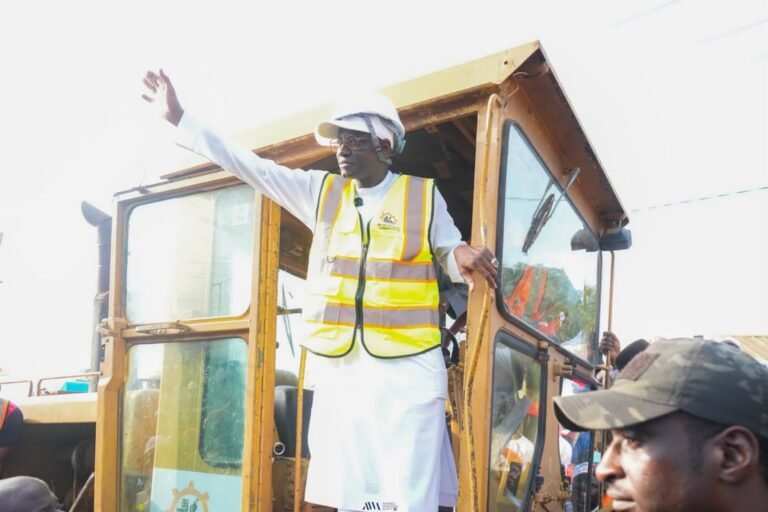
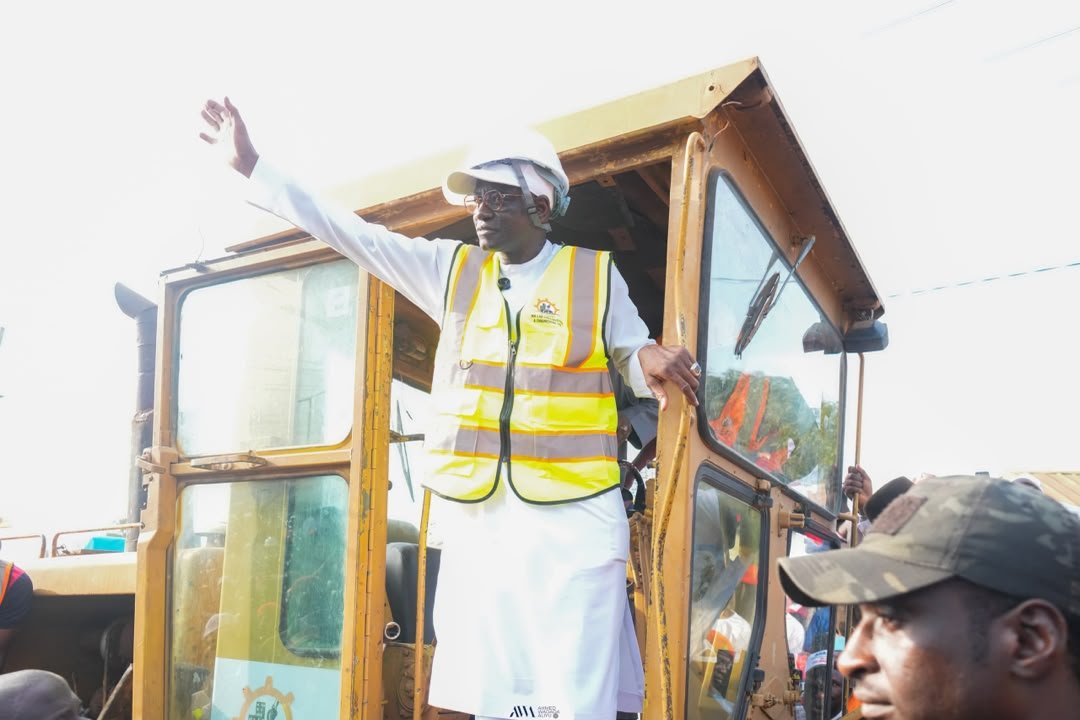
The flag-off of the 22-kilometre Kwarto Junction–Onda–Kana–Apawu Road in Nasarawa Local Government Area represents more than the commencement of another infrastructure project. It brings into sharp focus a fundamental question of governance in Nigeria: how can public leadership translate political representation, government policy and financial resources into tangible improvements in the everyday lives of ordinary citizens?
With a reported investment of more than ₦240 million, Senator Ahmed Aliyu Wadada’s intervention has placed rural infrastructure at the centre of a wider conversation about development, accountability and the future of Nasarawa State. The project, which the Senator says he is personally funding, has attracted commendations from political stakeholders and community representatives who regard improved road access as an important step towards unlocking the economic potential of the benefiting communities.
As Nasarawa State approaches the 2027 governorship election, the project also provides an opportunity to examine the relationship between political promises and measurable development outcomes. Beyond the celebrations, speeches and political declarations that accompany a project flag-off, the lasting significance of this initiative will ultimately depend on the quality of construction, the completion timeline, the effective use of resources and the benefits experienced by residents.
THE ROAD THAT COULD CHANGE THE ECONOMIC EQUATION
For the communities of Onda, Kana and Apawu, together with neighbouring settlements along the corridor, an improved road could be a decisive factor in their economic prospects.
Agriculture remains a critical source of livelihood across rural Nigeria. Yet farmers frequently encounter transportation difficulties that increase the cost of moving produce, restrict access to markets and weaken their bargaining position. Where roads are difficult to navigate, agricultural products may take longer to reach buyers, transport costs rise and the benefits of hard work are diminished.
The proposed improvement of the Kwarto Junction–Onda–Kana–Apawu corridor offers an opportunity to address some of these challenges. Better connectivity could facilitate the movement of yams, rice, cassava, sesame and other agricultural products to markets in Nasarawa, Keffi and surrounding commercial centres.
For traders, improved accessibility could expand commercial opportunities. For young people, it could create new possibilities in transportation, agricultural processing, distribution and other small businesses. For households, a more dependable road could reduce the difficulties associated with routine journeys.
The implications extend beyond commerce. Improved road access can make it easier for residents to reach schools, primary healthcare facilities and other essential services. It can also support the movement of emergency vehicles and improve the accessibility of communities to security personnel.
These are the wider development outcomes against which the project should be assessed. A road is not merely a strip of earth or concrete. It is an instrument of economic integration, social inclusion and access to essential services.
However, these benefits are not automatic. They depend on sound engineering, adequate drainage, appropriate construction standards and a maintenance programme capable of protecting the public investment over time.
REPRESENTATION MUST BE MEASURED BY RESULTS
Senator Wadada, who represents Nasarawa West Senatorial District in the National Assembly and is the APC’s governorship candidate for 2027, has presented the road intervention as part of his approach to public service.
At the flag-off ceremony, he described his ambition for the governorship as an opportunity to serve rather than an avenue to exercise personal authority.
His stated position raises an important principle in democratic governance: political office is a public trust, and its legitimacy is strengthened when citizens can identify the practical results of the mandate they have conferred on their representatives.
In a representative democracy, legislative performance cannot be measured exclusively by the number of motions moved, bills sponsored or political meetings attended. It must also be assessed through the effectiveness of advocacy, the quality of constituency interventions, the transparency of public expenditure and the extent to which citizens benefit from the decisions made in their name.
The Onda–Kana–Apawu project therefore invites attention to a broader model of representation—one that connects the needs of rural communities with infrastructure planning and the pursuit of economic opportunity.
The reported personal financing of the project is particularly noteworthy if properly documented. Nevertheless, the distinction between personal contributions, constituency allocations and government-funded projects should remain clear. Transparency about the funding source, contractual arrangements, scope of work and expenditure is essential to public confidence.
The ultimate test is not simply who announces a project, but whether the project is completed to the required standard and delivers the promised benefits.
THE VOICES OF NASARAWA: PRAISE, EXPECTATIONS AND ACCOUNTABILITY
The flag-off attracted several political and government figures, including Dr. Faisal Shuaib, the APC candidate for Nasarawa West Senatorial District; Dr. Aliyu Bello, the Nasarawa State APC chairman; Hon. Samuel Egya, Special Adviser to the Governor on Solid Minerals; and Hon. Sani Ottos, Commissioner for Commerce, Trade and Investment.
Their remarks reflected confidence in Senator Wadada’s approach to grassroots development and their expectation that the road intervention could form part of a wider development agenda.
Dr. Aliyu Bello described the project as an example of people-centred infrastructure, while Dr. Faisal Shuaib referred to the Senator’s record of humanitarian and constituency interventions. Other speakers linked the project to the prospect of sustaining infrastructure development under a future administration.
Such endorsements are significant as expressions of the views of political stakeholders. They are not, however, substitutes for independent assessment of project delivery. The people who live along the road will have the clearest evidence of whether the intervention meets their needs.
Their expectations are straightforward: a completed road, reliable access, improved mobility and an infrastructure asset that remains useful long after the political event has ended.
That is where the true public value of the project will be determined.
BUILDING ON GOVERNOR SULE’S DEVELOPMENT AGENDA
The road project also provides an opportunity to consider the continuity of infrastructure development in Nasarawa State.
Governor Abdullahi Sule’s administration has pursued infrastructure and investment initiatives intended to strengthen the state’s economic position. Wadada has publicly expressed his intention to build on those efforts if elected governor.
Continuity, when properly designed, can be beneficial. It can preserve useful projects, prevent the waste of public resources associated with abandoned initiatives and allow long-term development programmes to mature beyond a single administration.
But continuity should not mean the absence of fresh ideas or scrutiny. A new administration must be prepared to assess existing programmes, identify implementation gaps, establish priorities and improve service delivery where necessary.
For Nasarawa, the challenge is to translate infrastructure spending into a coordinated development strategy that connects rural roads with agricultural markets, industrial investment, education, healthcare and employment.
This requires more than isolated construction projects. It requires integrated planning, transparent procurement, predictable funding and measurable targets.
The Kwarto Junction–Onda–Kana–Apawu corridor could contribute to such a strategy if its completion is followed by complementary investments in agricultural value chains, rural services and local enterprise.
The road should therefore be seen not as an end in itself, but as a possible foundation for broader economic activity.
FROM THE LOCAL ROAD TO THE KEFFI–NASARAWA–TOTO–ABAJI CORRIDOR
Nasarawa’s development prospects must also be considered within the wider network of federal and interstate infrastructure.
The Federal Government has pursued the extension and rehabilitation of the Keffi–Nasarawa–Toto–Abaji road corridor, a strategic route connecting communities in Nasarawa State with the Federal Capital Territory and neighbouring economic areas.
The Ministry of Information and National Orientation reported in March 2026 that the federal project had been restructured into phases, with approximately 129.3 kilometres approved for the second phase at a reported cost of about ₦203 billion. Earlier federal statements and media reports have described different project scopes and overall corridor lengths, making it important to distinguish the specific phase under implementation from the full route.
The significance of the corridor lies in its potential to improve the movement of people and goods, support commerce and strengthen links between rural communities, urban markets and industrial locations.
For farmers and traders, better interstate connectivity can expand access to buyers. For businesses, improved roads can reduce logistical constraints. For investors, reliable transport infrastructure is an important consideration when evaluating locations for production, processing and distribution.
Nasarawa’s strategic proximity to Abuja, combined with its agricultural and mineral resources, presents opportunities for economic expansion. Realising those opportunities, however, requires complementary investment in electricity, logistics, skills, security and a predictable business environment.
Senator Wadada has associated himself with advocacy for infrastructure and economic development in the state. The broader responsibility of public officials is to ensure that federal and state initiatives complement local projects rather than operate as disconnected interventions.
EDUCATION, MINERAL RESOURCES AND THE NEXT FRONTIER OF DEVELOPMENT
Infrastructure alone cannot deliver sustainable prosperity. Roads must be accompanied by the knowledge, skills and productive capacity needed to turn economic opportunities into lasting improvements in living standards.
In July 2026, the Presidency announced President Bola Ahmed Tinubu’s approval to upgrade Federal Polytechnic, Nasarawa, into the Federal University of Mining, Engineering and Technology, Nasarawa. According to the official announcement, the approval followed a proposal by Senator Wadada and is intended to strengthen technical education and support the development of Nigeria’s solid-minerals sector. The relevant education authorities were directed to begin the implementation processes.
The proposed specialised university could become an important part of Nasarawa’s long-term development if the necessary academic, regulatory, infrastructure and staffing requirements are fulfilled.
With appropriate programmes in mining engineering, geology, mineral processing, metallurgy and related disciplines, the institution could help develop the skilled workforce required to support responsible mineral exploitation and domestic value addition.
The opportunity is substantial, but it must be approached responsibly. Mineral development should produce benefits beyond extraction revenues. Those benefits should include skilled employment, local enterprise, technology transfer, environmental protection and stronger community participation.
A road connecting agricultural settlements to markets and a specialised institution developing technical skills may appear to be different projects. In a comprehensive development framework, however, both contribute to the same objective: enabling people and businesses to participate more effectively in the economy.
The task before policymakers is to connect these investments to practical opportunities for young people and local communities.
THE HUMAN CAPITAL QUESTION: WHO BENEFITS?
The ultimate purpose of infrastructure is not the infrastructure itself. It is the improvement of human welfare.
For that reason, the success of rural development must be evaluated through its effects on households, livelihoods and access to services.
Will farmers spend less time and money transporting their produce? Will traders reach new customers? Will children have more reliable access to school? Will residents be able to reach healthcare facilities more easily? Will new businesses emerge along the improved corridor?
These are the questions that should guide project monitoring and public reporting.
A credible evaluation should establish the road’s baseline conditions, document the quality and extent of completed work, and assess changes in travel time, transport costs, market access and the use of essential services.
It should also consider the needs of women, young people, persons with disabilities and residents of smaller settlements who may otherwise be overlooked in development planning.
This is how a construction project can become a measurable public-development intervention rather than a temporary political spectacle.
The same principle applies to employment claims, humanitarian programmes and other constituency initiatives. Figures should be properly documented, beneficiaries should be identifiable through appropriate records, and the results should be open to reasonable scrutiny.
Accountability does not diminish a development achievement. It makes that achievement more credible.
LEADERSHIP, PEACE AND THE RESPONSIBILITY OF POLITICS
With the 2027 governorship election approaching, the project will inevitably form part of the wider political discussion about the future direction of Nasarawa State.
Senator Wadada has called for peaceful political engagement and criticised violence and confrontation. Such appeals are important because political competition should never undermine the safety, dignity or rights of citizens.
A democratic contest should provide space for candidates to explain their records, publish their plans, answer questions and demonstrate how their proposals would be funded and implemented.
The people of Nasarawa deserve a political environment in which development is discussed through evidence and policy rather than intimidation, personal attacks or destruction of property.
They also deserve the freedom to assess every candidate independently. Support for a project should not require unquestioning allegiance to a political party, just as political disagreement should not be a reason to deny communities access to legitimate development.
The strongest foundation for public confidence is a system in which projects are selected according to need, resources are used transparently and benefits reach citizens regardless of political affiliation.
That standard is particularly important for a road serving multiple communities whose livelihoods and daily activities depend on its successful completion.
FROM FLAG-OFF TO COMPLETION: THE REAL TEST BEGINS
The excitement surrounding the Onda–Kana–Apawu road flag-off is understandable. For communities that have experienced transportation difficulties, the commencement of a long-awaited infrastructure intervention can represent renewed hope.
Yet the history of development in Nigeria offers an enduring lesson: a groundbreaking ceremony is the beginning of a responsibility, not the conclusion of an achievement.
The project must now proceed through clearly defined stages of implementation. Its reported ₦240 million-plus cost should be supported by appropriate documentation; the 22-kilometre scope should be clearly established; engineering standards should be observed; and progress should be communicated to the public.
Drainage, erosion control, road safety and maintenance arrangements must receive adequate attention. Where changes to the original scope become necessary, they should be properly explained and documented.
Community representatives should also have a practical means of reporting concerns and receiving information about progress.
These measures are not obstacles to development. They are the safeguards that protect public investment and help ensure that the road continues to serve its intended purpose.
For Senator Wadada, the project’s lasting significance will depend on whether the intervention moves from announcement to completion and produces benefits that residents can identify in their daily lives.
For Nasarawa State, it offers a timely reminder that development must be judged by the durability of its results rather than the volume of applause at its commencement.
A ROAD, A RESPONSIBILITY AND A WIDER VISION
The Kwarto Junction–Onda–Kana–Apawu Road brings together several questions central to Nasarawa’s future: the quality of political representation, the economic importance of rural connectivity, the value of infrastructure investment and the need to make development measurable.
Senator Ahmed Aliyu Wadada has presented the project as an expression of his commitment to service and as part of a broader intention to build on the infrastructure initiatives of Governor Abdullahi Sule and the Federal Government under President Bola Ahmed Tinubu.
That stated ambition can be assessed through its practical implications. The relevant benchmarks are clear: completed infrastructure, responsible use of funds, better access to markets and essential services, opportunities for local enterprise and an approach to governance that is transparent and accountable.
For Onda, Kana, Apawu and neighbouring communities, the immediate expectation is a dependable road that improves everyday life. For Nasarawa West and the wider state, the larger question is how individual interventions can be integrated into a sustainable programme of rural and economic transformation.
The road’s greatest achievement will not be the size of the crowd at the flag-off, the prominence of the political figures present or the strength of the speeches delivered. It will be the difference the completed project makes to the people who depend on it.
The ultimate measure of development is not the promise made at the beginning of a project, but the public value delivered at its end.
For the people of Onda, Kana, Apawu and the wider Nasarawa community, that is the promise they will expect this road to fulfil.
Israel JP is a media practitioner and political commentator.
About the Author