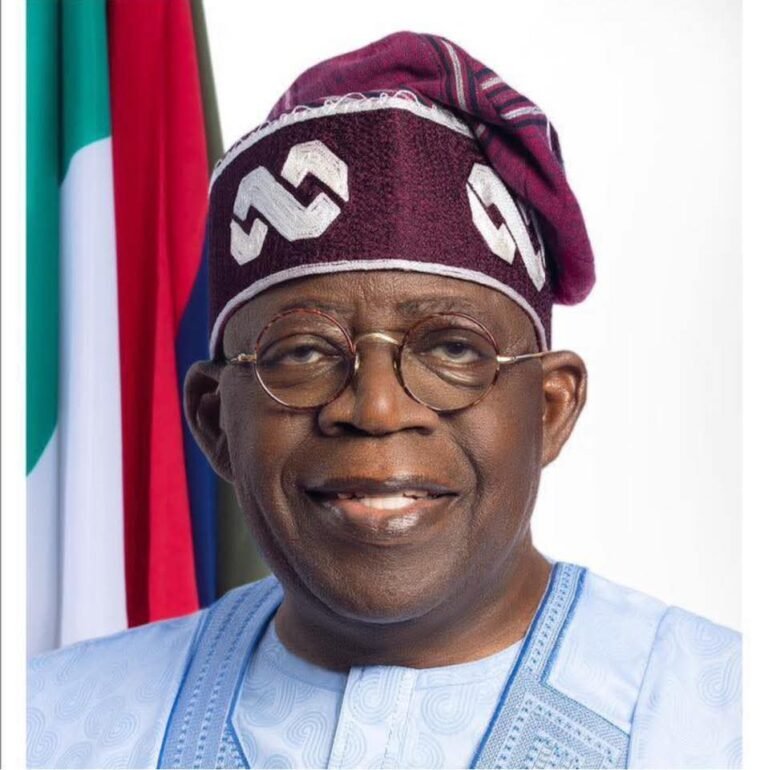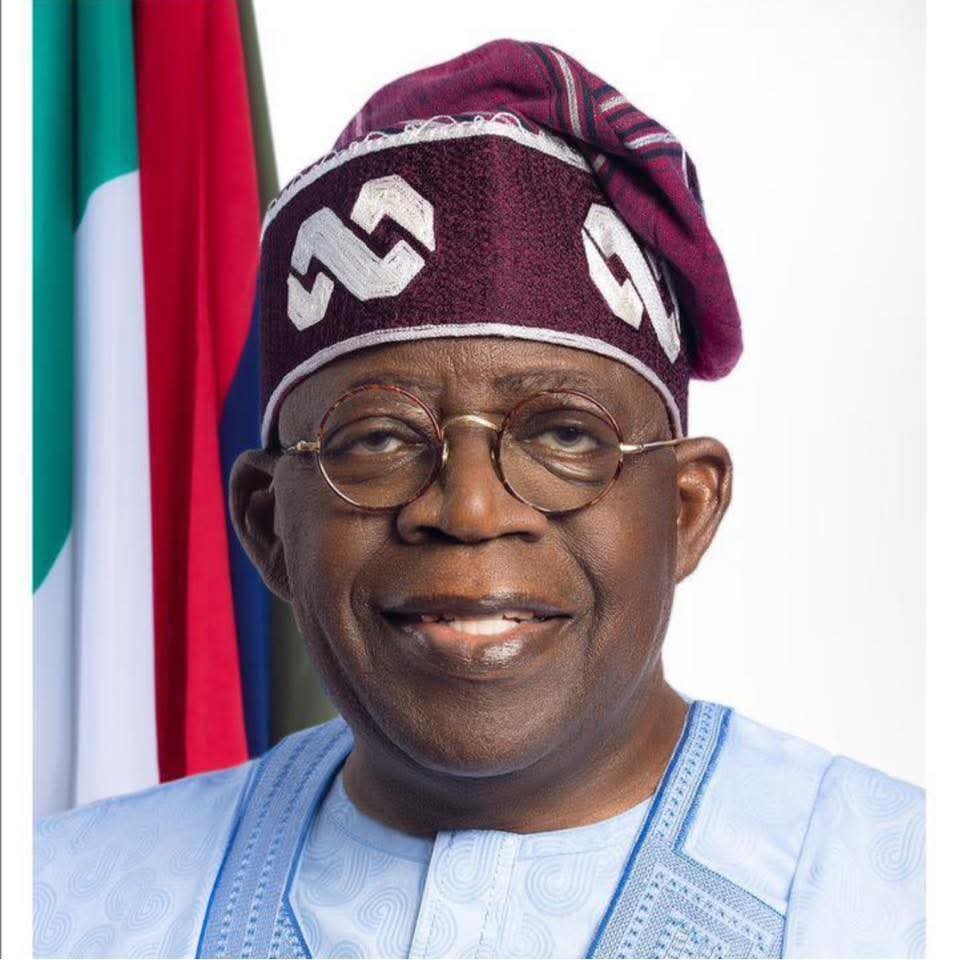
President Bola Ahmed Tinubu
By Pam Ayuba
The question is straightforward: Who wins Plateau State when the presidential votes are counted in 2027? It is a question that cannot be answered merely by looking at party colours or the loud claims being made at political rallies. Having followed Plateau politics closely and watched the movement of political actors across the state, one believes the answer lies somewhere between the voting pattern of 2023 and the remarkable political realignment that has taken place since then.
The Plateau political equation ahead of 2027 revolves principally around three familiar names – President Bola Ahmed Tinubu of the All Progressives Congress (APC), former Vice President Atiku Abubakar of the African Democratic Congress (ADC), and former Anambra State governor Peter Obi of the Nigeria Democratic Congress (NDC). Barring any change in the electoral process or the final list of candidates, these are the three names around which the presidential contest in Plateau is presently taking shape.
The starting point must be 2023. Peter Obi, then flying the Labour Party flag, won Plateau convincingly with 466,272 votes, representing 42.85 per cent of the 1,088,170 valid votes cast. He won 11 of the state’s 17 local government areas. Tinubu came second with 307,195 votes, or 28.23 per cent, winning three LGAs, while Atiku polled 243,808 votes, or 22.41 per cent, winning three LGAs. The margin between Obi and Tinubu was 159,077 votes.
But the 2023 figures tell only one part of the story. Obi’s Plateau vote was not simply a personal vote. It rode on a particular political mood. There was widespread resentment among sections of the predominantly Christian electorate over the APC’s Muslim-Muslim presidential ticket, and Obi became the most attractive alternative for many voters who wanted to register that protest. The question now is whether that political emotion still has the same force in 2027.
Four years in politics can be a very long time. Obi has left the Labour Party and emerged as the presidential candidate of the NDC. The party has since zoned its 2027 presidential ticket to the South for a single four-year term, with the ticket expected to return to the North in 2031. More importantly for Plateau, the political machinery that helped produce Obi’s remarkable 2023 showing has suffered serious attrition. The former Labour governorship candidate in the state, Prof. Patrick Dakum, is now in the APC camp. Dakum and other former Labour figures have openly participated in the ruling party’s mobilisation for 2027. That does not automatically mean that every former Obi voter has changed sides, but it is a warning that the 2023 Labour structure cannot simply be carried forward into 2027.
Atiku faces a different difficulty. He won three LGAs for the PDP in 2023 – Langtang South, Mikang and Qua’an Pan – and finished with 243,808 votes. He is now seeking the presidency on the ADC platform. The PDP in Plateau has meanwhile been weakened by the movement of several of its prominent figures and by its continuing internal disputes. Even the ADC platform has not been free of controversy, with a faction publicly challenging Atiku’s presidential bid. My reading of the field is that Atiku will have to rebuild almost from the ground up if he is to reproduce his 2023 performance. At present, I see him struggling to do so.
Tinubu’s case is different. He entered the 2023 election as a candidate whose support in Plateau was heavily concentrated in three LGAs – Kanam, Kanke and Wase – yet still finished second in the state with 307,195 votes. In the three-LGA contest, APC recorded 41,186 votes in Kanam, 13,438 in Kanke and 28,675 in Wase. Wase remains an important APC stronghold, while Kanam has a substantial Muslim and Christian electorate and a strong local political factor in Hon. Yusuf Adamu Gagdi. The point is that the APC did not begin 2027 from zero. It already had a presidential base from which to expand.
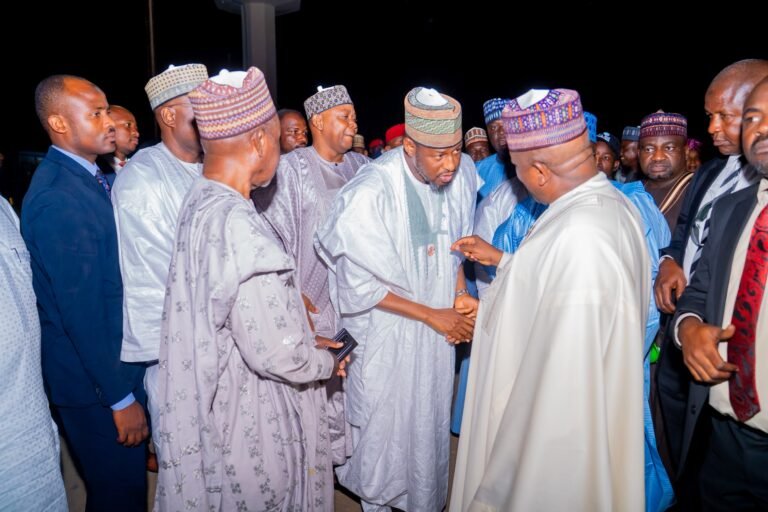
Then came the realignment. The APC now has something in addition to 2023-a sitting governor who won and election under PDP who has crossed into the party. Again, a national chairman from Plateau and a growing list of former PDP, Labour and other political actors who have entered its fold. Governor Caleb Mutfwang formally moved from the PDP to the APC in January 2026, while Nentawe Yilwatda, who contested the 2023 governorship election against Mutfwang, is now the APC National Chairman. Their political cooperation has become one of the most consequential developments in the state’s politics.
Nentawe has gone further than making a political forecast. He has publicly set the APC a target of more than one million votes for Tinubu in Plateau. He argues that the forces which stood against the party in 2023 have substantially changed, pointing specifically to Mutfwang, commissioners, local government chairmen and political appointees who have moved into the APC. That is a formidable political claim. But as a reporter, I would add one qualification: politicians can move overnight; voters do not always move at the same speed.
This is where the real investigation begins. When political leaders change their alliances, do their followers change their votes with them? That, to many pundits, is the question that will determine the presidential result in Plateau more than the number of defections announced at political rallies. The answer will be found in the wards and polling units, not merely in the photographs of politicians crossing party lines.
There are, however, strong indications that the APC has substantially widened its reach. The entry of Prof. Patrick Dakum and other Labour figures is significant because Labour was the vehicle through which Obi made his biggest breakthrough in 2023. The movement of serving and former legislators from Labour and PDP into APC has also altered the political geography of Jos North, Bassa, Barkin Ladi, Riyom, Jos South and Jos East. These are not insignificant territories. They formed part of the heartland of Obi’s 2023 victory.
There is also the Oluremi Tinubu factor, which many would not dismiss as ceremonial. The First Lady has made repeated humanitarian interventions in Plateau. In July 2025 she announced a ₦1 billion intervention for victims of violent attacks in the state. In September 2026, that intervention formed part of the ₦1.5 billion distributed to 1,571 verified households in Bassa, Riyom, Barkin Ladi, Bokkos and Mangu, with the Plateau Government adding ₦500 million.
This matters politically because the religious question was one of the important ingredients in Plateau’s 2023 presidential voting. Mrs Tinubu’s personal engagement with communities affected by violence, coupled with her public identification with the Christian faith, provides the APC with a different narrative going into 2027. It would be premature to claim that humanitarian assistance automatically translates into votes. It does not. But it would equally be a mistake for anyone studying Plateau politics to pretend that such gestures have no political consequences in a state where the Church, religious identity and the memory of violent attacks are deeply woven into electoral behaviour.
Then there is Jonah Jang. Whatever one’s political assessment of the former governor, it is difficult to write Plateau politics without accounting for his influence. Jang remains one of the state’s most recognisable political figures, particularly within the Berom political space. Many of those who know Plateau politics closely still associate his political network with Jos North, Jos South, Barkin Ladi and Riyom, while his wider relationships extend far beyond those areas. His influence was also widely discussed in connection with the political forces that produced Mutfwang’s 2023 governorship victory.
The signals around Jang have therefore attracted attention. He remains associated with the PDP, but the political environment around him has changed considerably. At his 80th birthday celebration in Jos in August, Vice President Kashim Shettima represented President Tinubu and announced the appointment of Jang’s son, Yakubu Jang, as Senior Special Assistant to the President. The event brought together Mutfwang, Nentawe, former President Goodluck Jonathan and a wide range of Plateau political actors. One would not read the appointment as proof that Jang has transferred his political support to Tinubu. That would go beyond the evidence. But politically, it was certainly a significant signal and one that will be watched closely as the election approaches.
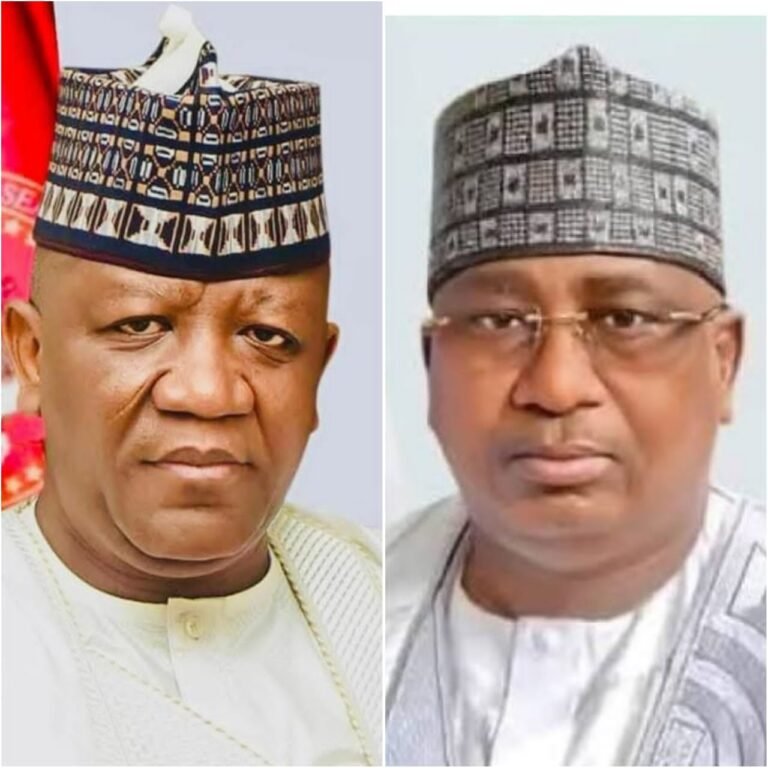
Joshua Dariye is another factor worth watching. The former governor remains an influential figure in parts of Plateau, particularly in Bokkos and among sections of the Mupun in Pankshin political constituency. His inclusion in the APC’s 2027 Presidential Campaign Council gives him a formal place in the Tinubu campaign structure. His actual capacity to translate that position into votes, however, will depend on the extent to which his old political networks remain intact.
Rufus Bature, the APC state chairman, is another part of this equation. He may not be the loudest political operator in the state, but his position gives him access to the party structure across the 17 LGAs. His strength will ultimately be judged by what the APC structure produces at ward and polling-unit level. The same applies to Yusuf Adamu Gagdi, whose political reach in Pankshin, Kanke and Kanam is increasingly difficult to ignore. Gagdi has also been appointed Deputy Director of Security and Intelligence in the 2027 APC Presidential Campaign Council.
The 2023 figures provide an interesting map against which this new politics can be tested. Obi won Jos South with 112,874 votes, Jos North with 70,345, Mangu with 39,387, Bokkos with 32,581 and Barkin Ladi with 32,489. He also carried Bassa, Riyom, Jos East, Pankshin, Shendam and Langtang North. Tinubu’s strongest showings came in Kanam with 41,186, Wase with 28,675 and Kanke with 13,438. Atiku’s strongest territory was Qua’an Pan with 20,964, Langtang South with 12,467 and Mikang with 7,212.
On the political scale, LGA-by-LGA reading of the emerging 2027 map is therefore this: the APC is likely to retain Kanam, Wase and Kanke and has a serious opportunity to make gains in Bassa, Jos North, Jos East, Jos South, Barkin Ladi, Riyom, Bokkos, Mangu, Pankshin, Shendam and parts of the Langtang axis. Qua’an Pan, Mikang and Langtang South remain areas where the opposition could still mount serious resistance. One would, therefore, put the realistic APC target within the 14-to-15 LGA range, but would rather describe that as a projection, not a result already written on the ballot.
The arithmetic also needs some caution. Plateau recorded 1,088,170 valid votes in 2023. For Tinubu to reach one million votes in 2027, as Nentawe has projected, the APC would need not merely to take votes from Obi and Atiku but also to push turnout and mobilisation substantially higher. One million votes would represent about 91.9 per cent of the entire 2023 valid-vote pool. If Plateau records 1.25 million valid votes in 2027, one million would be 80 per cent; at 1.43 million valid votes, it would be about 70 per cent. The target is therefore mathematically possible, but politically enormous.
On the final analysis, after looking at the 2023 numbers, the present political realignment and the actors now standing on the APC side, is that Bola Tinubu enters the 2027 presidential contest in Plateau as the candidate with the clearest advantage. Peter Obi’s 2023 coalition has been weakened by the loss of key Labour figures and by the change of platform. Atiku has the difficult task of rebuilding a PDP-era structure from an ADC platform amid opposition fragmentation. Tinubu, on the other hand, now has the federal incumbency, the APC machinery, the national chairman from Plateau, a sitting governor who has joined the party and a growing collection of political actors who were on the other side in 2023.
So, the question today is- who wins Plateau in 2027? A substantial number believes
Bola Ahmed Tinubu, will. To them, the APC is positioned to win substantially more LGAs than it did in 2023 and potentially redraw the presidential voting map of the state. The real question is no longer whether the APC has gained political ground. It plainly has. The question is whether the political heavyweights who have moved into the APC can carry their followers along. If they do, the one-million-vote projection will no longer look like political rhetoric. If they do not, the old Plateau electoral map could still surprise us.
Until then, that is the story we will be watching between now and election day – not the number of defections announced at rallies, but what happens when those new alliances reach the ward, the polling unit and finally the ballot box.
Ayuba, a journalist, Peace Ambassador and Public Affairs analyst, writes from Jos
About the Author