By Dr. James Bwala
The inauguration of the 2027 Presidential Campaign Council on October 14, 2026, has introduced a new dimension into Nigeria’s political communications. Beyond the ceremony itself, the composition of the council and the public statements made by some of its leading figures have generated significant debate about the direction of the 2027 presidential contest. The presence of Nyesome Wike, Charles Soludo, and Ademola Adeleke—three politicians with distinct political identities, regional influence, and public appeal—has made the council more than an ordinary campaign structure. It has become a political statement.
At the center of this development is President Bola Ahmed Tinubu’s apparent determination to secure a second term. His supporters believe that his administration deserves the opportunity to consolidate its reforms, while his opponents are attempting to construct a coalition capable of defeating him. Yet, based on the current political alignments, the president appears to hold a commanding advantage. The endorsement and participation of influential figures such as Governor Charles Soludo, Minister Nyesome Wike, and Governor Ademola Adeleke suggest that the political terrain is already tilting in Tinubu’s favor.
Governor Soludo’s speech at the inauguration was particularly significant. He stated, “There is no time in the history of Nigeria, to my knowledge, that there is a consensus in the political arena that one man—President Tinubu—deserves to be reelected in this country.” He added that although the path Tinubu had chosen might be difficult, it was necessary, and assured the president: “We are with you, and we are a partner, and we will remain your partner.”
These were not casual remarks. Soludo is an economist, a former central bank governor, and a governor who understands the implications of political language. He chose his words carefully. His statement was not merely an expression of personal admiration. It was an attempt to frame the 2027 election as a national consensus rather than a narrow partisan contest. His endorsement is strategically important, whether you agree with his conclusion or not.
The most important message from Soludo’s speech is that Tinubu’s reelection campaign is being presented as a project of continuity. The administration’s economic policies, including the removal of fuel subsidies, the unification of foreign exchange markets, and efforts to attract investment, have imposed serious short-term difficulties on Nigerians. Inflation, rising living expenses, unemployment, and declining purchasing power have created widespread anxiety. However, Tinubu’s supporters argue that these painful measures are necessary corrections to long-standing structural problems. Soludo’s intervention reinforces this argument: the reforms may be difficult, but abandoning them, in his view, would be more damaging.
Candidates often win political campaigns not just by presenting policies but also by crafting compelling narratives. Tinubu’s camp is attempting to establish the narrative that the president is a reformer confronting problems that previous administrations avoided. If this narrative becomes widely accepted, the 2027 election may be framed as a choice between continuing a difficult but necessary transformation and returning to what supporters describe as an era of indecision. Soludo’s speech contributes powerfully to that narrative.
The participation of Nyesome Wike adds another layer to the campaign council’s significance. Wike is one of Nigeria’s most influential and unpredictable political actors. Although he belongs to the opposition Peoples Democratic Party, his political relationship with the Tinubu administration has become increasingly visible. His decision to serve as a minister in the federal government placed him in a position that transcends traditional party loyalty. Wike has demonstrated that he is prepared to pursue political influence through strategic alliances rather than rigid adherence to party expectations.
His role in the 2027 campaign is therefore important for two reasons. First, Wike commands substantial influence in Rivers State and the wider South-South region. Second, his political style attracts attention because he is willing to make bold statements and take positions that many politicians would avoid. His involvement suggests that Tinubu’s campaign is not depending solely on the structures of the All Progressives Congress. Instead, it is assembling a broader coalition that includes influential figures from outside the ruling party.
Wike’s political movement has also exposed the weakness of the opposition’s internal coordination. Rather than presenting a unified alternative, the opposition has been affected by personal ambitions, factional disputes, and disagreements over leadership. The PDP remains divided, while other opposition platforms appear more focused on negotiating alliances than developing a clear national strategy. In such an environment, Wike’s alignment with Tinubu becomes even more consequential. It deprives the opposition of a major political operator while strengthening the president’s coalition.
Governor Ademola Adeleke’s presence and public support add a different but equally important dimension. As a prominent figure in the PDP, the Accord Party, and the governor of Osun State, Adeleke possesses significant appeal among grassroots voters. His popularity, personal style, and connection with the people have made him an important political figure beyond his immediate state. His participation in a campaign council supporting Tinubu suggests that the president’s coalition is capable of attracting politicians whose political identities are not traditionally associated with the ruling party.
Adeleke is known for his energetic public persona and his ability to communicate with ordinary voters. His political appeal is less ideological and more emotional and popular. In a country where voters often respond to personal connection, visibility, and cultural familiarity, his role could help broaden Tinubu’s reach. His presence may also weaken the opposition’s claim that the 2027 contest will be a simple battle between the ruling party and a unified alternative.
The combination of Soludo, Wike, and Adeleke is significant because each represents a different political constituency. Soludo brings intellectual credibility, economic arguments, and influence in the Southeast. Wike brings strategic calculation, administrative experience, and influence in the South-South. Adeleke brings popular appeal, grassroots energy, and influence in the Southwest. Together, they create the image of a coalition that cuts across regions, parties, and political styles.
This is why the campaign council has become a major topic in political communication. Its power lies not simply in the names of the individuals involved but in the message they collectively communicate. The message is that Tinubu is not politically isolated. He is building alliances across party lines and positioning himself as the central figure around whom Nigeria’s political future may revolve.
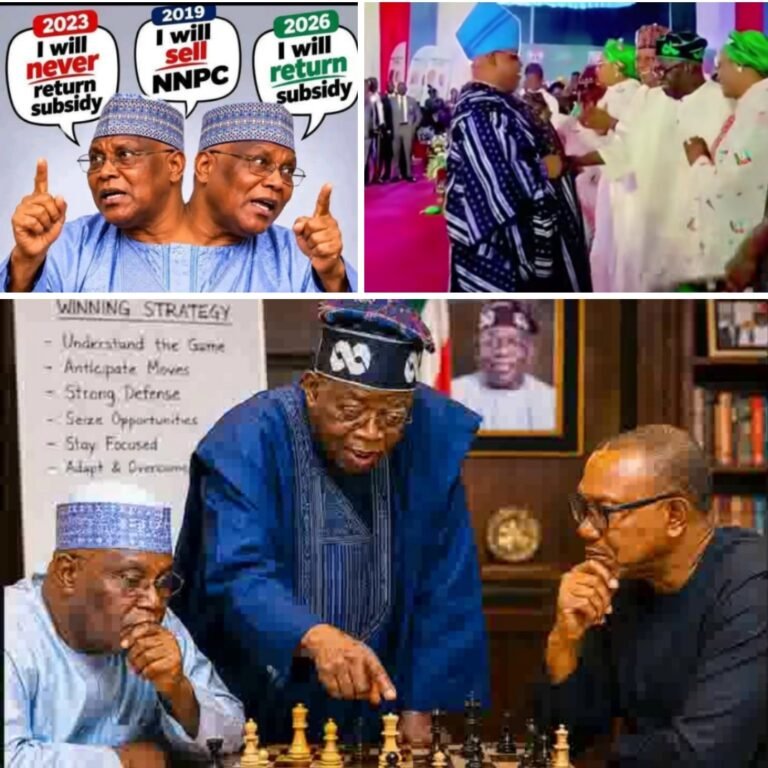
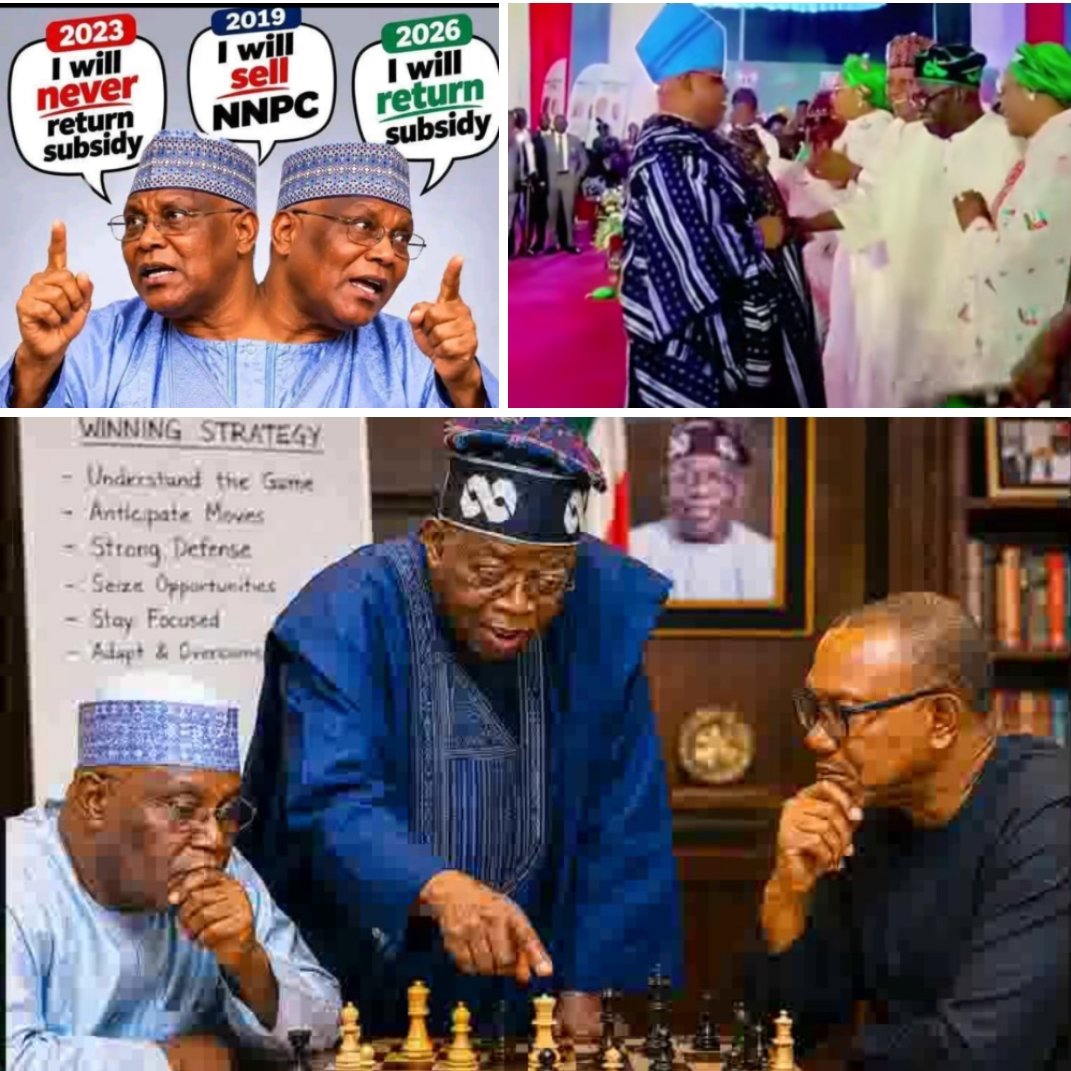
This development should concern former Vice President Atiku Abubakar. Atiku remains one of Nigeria’s most experienced politicians and has a loyal national following. However, experience alone may not be enough to overcome the challenges before him. His repeated presidential contests have made him a familiar figure, but they have also raised questions about whether the country is ready to embrace another campaign centered on his candidacy. The emergence of new alliances and the continued movement of influential politicians toward Tinubu make Atiku’s political calculations increasingly difficult.
For his own political benefit, Atiku should carefully reconsider whether contesting in 2027 is the most strategic decision. A presidential contest requires more than personal ambition. It requires favorable political conditions, a united platform, credible allies, financial strength, a compelling message, and the ability to connect with voters across generations. If these conditions are not available, another contest could weaken rather than strengthen his historical legacy.
Atiku might serve Nigeria more effectively by helping to build a younger and more unified opposition capable of presenting a credible alternative in the future. His experience could be used to mentor emerging leaders, negotiate unity among opposition parties, and promote a national program based on economic growth, institutional reform, and social stability. Such a decision would not represent political surrender. It could demonstrate statesmanship.
Peter Obi also faces a difficult political environment. His performance in the 2023 election created a powerful movement, particularly among young Nigerians and urban voters. The Labour Party’s message of competence, accountability, and national renewal resonated with many citizens. However, turning a popular movement into a winning national political structure requires more than enthusiasm. It demands organization across all local governments, durable alliances, credible candidates, disciplined communication, and a strategy for winning outside the movement’s strongest regions.
Currently in NDC, Obi’s supporters remain energetic, but energy must be converted into electoral machinery. Meanwhile, Tinubu is demonstrating the advantages of incumbency, access to state institutions, political experience, and coalition-building. If the opposition remains fragmented, it may spend the period before 2027 debating personalities while the ruling coalition consolidates its structure.
Tinubu’s strength also comes from his understanding of political power. He has shown himself to be patient, strategic, and willing to make unexpected alliances. His administration may face criticism over economic hardship, but political victories are not determined only by public frustration. They are also shaped by organization, timing, negotiation, and the ability to prevent opponents from uniting. In this regard, Tinubu has demonstrated considerable skill.
However, the president and his supporters must not mistake political advantage for guaranteed victory. Nigerians are experiencing genuine hardship. No campaign structure, endorsement, or political alliance can permanently substitute for improved living conditions. If inflation remains high, unemployment continues to rise, and citizens feel excluded from the benefits of government policies, public dissatisfaction may eventually overcome the advantages of incumbency.
Therefore, Soludo’s argument for continuity must be accompanied by measurable results. Nigerians may accept difficult reforms when they believe those reforms will produce a better future. But patience has limits. The administration must communicate honestly, protect vulnerable citizens, reduce waste, strengthen security, and ensure that economic recovery is felt beyond official statistics. The success of the 2027 campaign will depend not only on political alliances but also on whether the government can convince citizens that its policies are working.
Nevertheless, the current political picture clearly favors Tinubu. The emergence of a broad campaign council, the involvement of powerful figures across party lines, and the absence of a united opposition have placed the president in a strong position.
Bwala, PhD, writes from Abuja
About the Author