By Adamu Lawal Toro
Hunger has a way of reminding a community who it is. Across northern Nigeria and beyond, Muslims are rediscovering something their faith taught them fourteen centuries ago. Islam was never meant to end at the prayer mat or the fast of Ramadan. It was meant to reach the widow who cannot feed her children, the orphan out of school, the sick man who cannot afford a prescription. In these hard times, that fuller understanding of the faith is returning through an institution many had almost forgotten: the waqf.
A waqf is a charitable endowment. A person sets aside an asset, a farm, a shop, a borehole, a building or a sum of money, and dedicates it permanently to the service of others. The asset is never sold, inherited or consumed. Only its yield is spent. The shop pays rent, and the rent pays school fees. The principal stays; the benefit flows, long after the giver has died.
This is not a modern invention dressed in religious clothing. It is as old as the Muslim community itself.
When Umar ibn al-Khattab acquired valuable land at Khaybar, the Prophet Muhammad (SAW) advised him to hold on to the land and give away its fruits. That counsel became the template for the waqf. Uthman ibn Affan bought a well in Madinah whose owner was charging for water and made it free for all. Centuries later, endowments across the Muslim world funded hospitals, schools and water systems. In our own region, the scholars of the Sokoto Caliphate understood that a just society is measured by how it treats its weakest members.
That is the heritage Nigerian Muslims are now reclaiming.
The pressure behind this revival is not hard to see. The removal of the fuel subsidy, the collapse of the naira and food inflation that has outrun every salary have pushed millions of families to the edge. Widows who survived on petty trading have watched their small capital vanish. Parents are choosing which child stays in school.
And where has government been?
Where are the social safety nets we were promised? Where are the cash transfers meant for the poorest households?
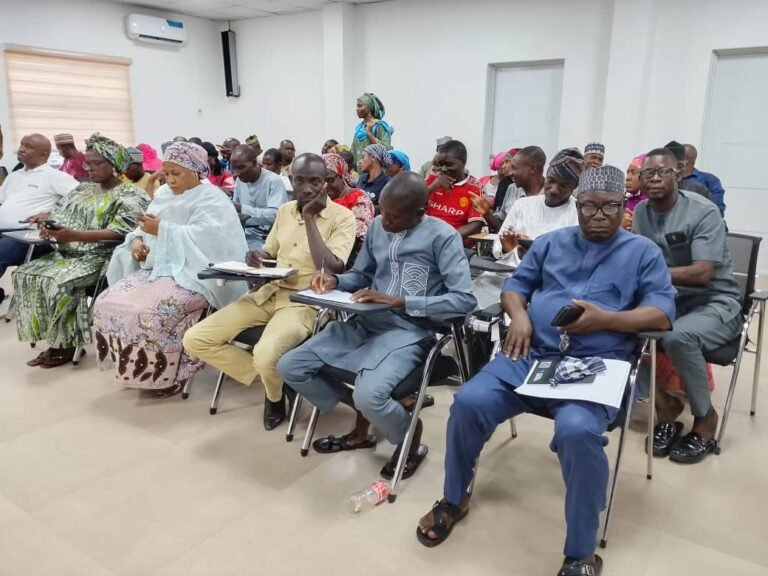
In many communities, the honest answer is that the mosque has arrived before the government. Congregations are raising funds to support widows every month. Mosque committees are paying school fees for children from poor homes. Some are sinking boreholes and repairing classrooms. Wealthy individuals, rather than spending on yet another lavish wedding, are setting up endowments to tackle hunger and out-of-school children.
This is the Islam of the Prophet’s Madinah. A faith that prays together and also eats together.
But revival must not become romance. If the waqf is to outlast this crisis, it needs more than good intentions.
It needs structure. Many endowments in Nigeria are run informally, held in the name of an individual or a committee. When the founder dies, the asset can quietly become private property. Every waqf should be registered, with clear trustees and written terms, and should publish its accounts. Transparency is not an insult to piety. It is an expression of it.
It also needs the backing of law. India and Pakistan have long had legislation recognising endowments and protecting their assets, allowing them to keep their non-profit status within a modern state. States such as Kano and Sokoto already have commissions for zakat and endowments. They should provide legal protection and oversight without seizing control of what communities have built.
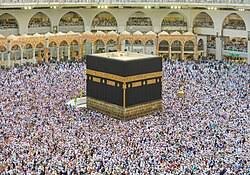
Above all, it needs modern financial tools. In Makkah, the towering Abraj Al Bait complex beside the Haram was built on endowment land, financed through sukuk, Islamic investment certificates that gave investors the right to use and earn from the property for a fixed period before it reverted to the endowment. Indonesia has gone further, issuing cash waqf-linked sukuk that pool small endowments from ordinary citizens to fund clinics and community projects.
Nigeria is not starting from zero. The Federal Government has used sukuk since 2017 to build and rehabilitate roads across the country. What is missing is the will among wealthy Muslims to put their money where their faith is. Too many still keep their wealth in interest-bearing deposits and conventional investments.
Part of the problem is a narrow understanding of Shari’a compliance. Many believe it ends at avoiding alcohol, gambling and vice. It is far wider. Islamic finance standards, including those of the Bahrain-based AAOIFI on which Nigerian regulators draw, also screen out enterprises that cause harm, such as the manufacture of weapons of war. Our ulama must now develop guidance suited to an economy not run on Islamic lines.
There is a lesson here for government too. The waqf revival is not a sign that the state can retire from its duties. It is an indictment of how far it has retreated from them. Mosques cannot replace ministries. When citizens are forced to build their own safety nets, the message to those in power is clear: the people have not given up on one another, but they are giving up on you.
In the end, the true test of this revival will not be the size of the endowments or the names engraved on the buildings.
It will be the widow in a small town in Bauchi who no longer has to beg to pay her son’s school fees. It will be the child who stays in class because someone, somewhere, set aside a shop so that he could learn.
That is what faith looks like when it leaves the mosque and walks into the street.
Toro is a journalist based in Bauchi
About the Author