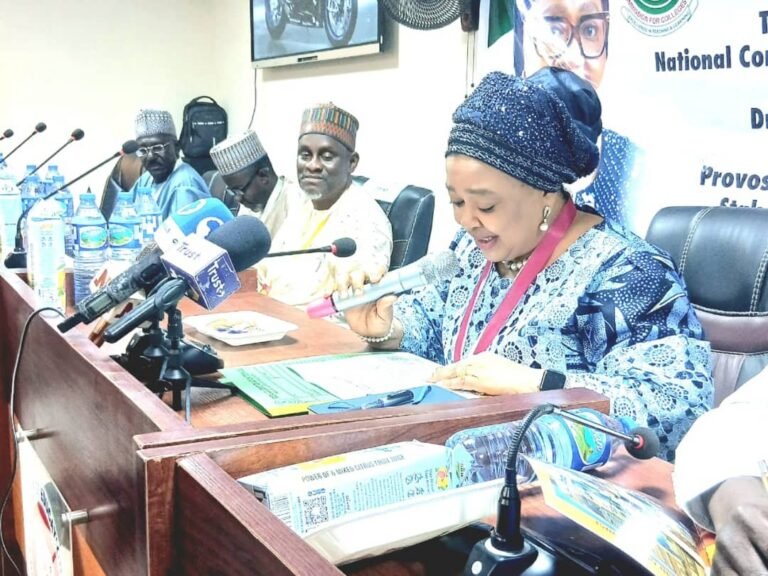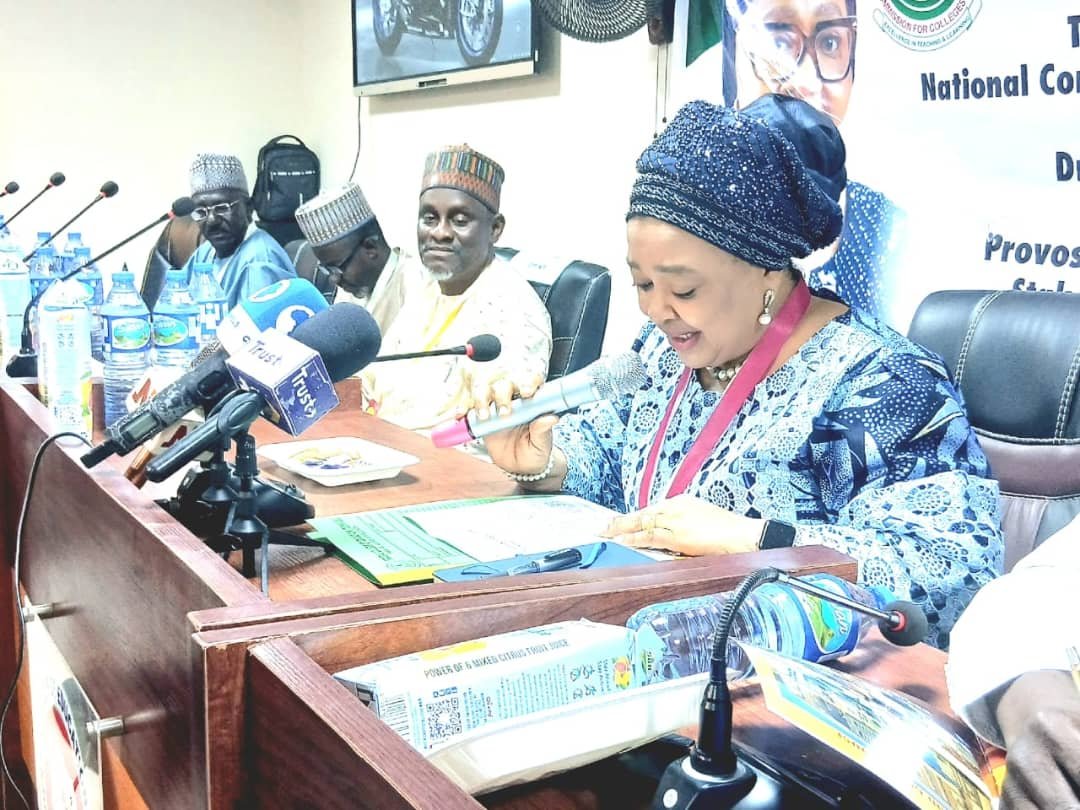
The National Commission for Colleges of Education (NCCE) has engaged Provosts and other stakeholders in the Northeast to address challenges that could affect the implementation of the Dual Mandate Policy for Colleges of Education.
The policy, which takes effect in September 2026, empowers qualified Colleges of Education to award both the Nigeria Certificate in Education (NCE) and Bachelor’s Degrees in Education.
Speaking at a stakeholder engagement in Gombe on Thursday, the Executive Secretary of NCCE, Dr Angela Ajala, said the commission was consulting institutions across the country to identify regional challenges and develop practical solutions before full implementation.
Ajala said the new policy would strengthen teacher education by equipping graduates with professional qualifications and practical skills needed to contribute to national development.
“When you enter a College of Education now, you get three certificates: the NCE, Bachelor of Education certificate and a skill certificate,” she said.
She explained that the engagement focused on implementation guidelines and new approaches introduced under the policy, stressing that successful implementation required collaboration among colleges, NCCE, government and development partners.
“We are here to know their challenges and how they can be solved. If it is what the colleges can solve on their own, what NCCE can solve or what the government needs to intervene,” Ajala said.
She added that issues requiring government intervention would be escalated to the Minister of Education, Dr Tunji Alausa, while relevant partners would also be approached for support.
Ajala said the skills component of the policy would enable graduates to become self-reliant and contribute solutions to challenges in their communities.
Earlier, a former Provost of the Federal College of Education (Technical), Gombe, Dr Ali Adamu, identified inadequate funding, shortage of qualified personnel and infrastructure deficits as major challenges facing the policy.
Presenting a paper titled “Dual Mandate of Colleges of Education: Challenges, Opportunities and Expectations,” Adamu said the policy could promote career progression, institutional revitalisation, teacher quality and human capital development.
He called for increased investment in infrastructure and continuous staff development to ensure the policy achieves its objectives.
The Provost of FCE (Technical), Gombe, Dr Mohammed Abdulhamid, commended the Federal Government and NCCE for their commitment to repositioning teacher education in Nigeria.
About the Author