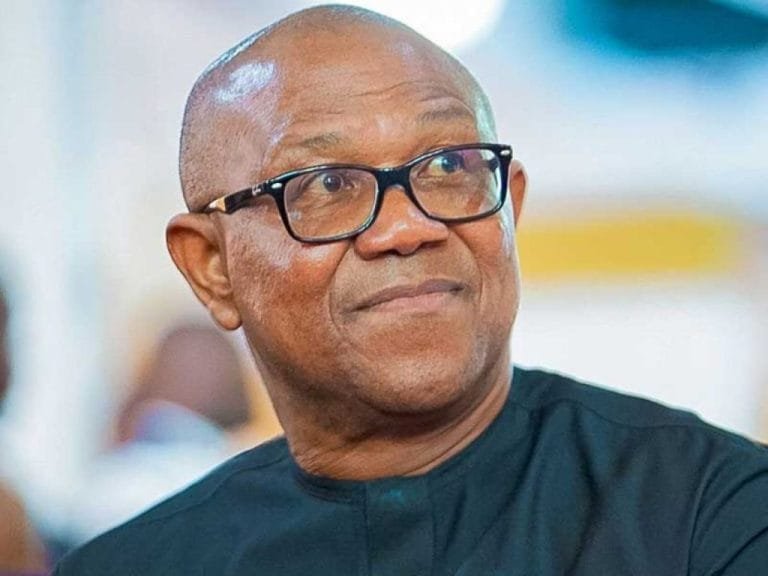
The Anambra State Government has released records detailing loans and other financial obligations it said were incurred during the administration of former Governor Peter Obi, alleging that his government left outstanding external debts as well as unpaid salaries, pensions and gratuities.
The government’s position was contained in a statement issued by the Commissioner for Information and Value Reorientation, Dr Law Mefor, titled, “Gov Peter Obi and Record of Public Debt in Anambra: Facts Beyond Propaganda and Lies.”
The statement was issued in response to comments attributed to Obi concerning what he described as “phantom debts” and an “ecological loan fallacy.”
According to the state government, Obi’s administration contracted about $123.77 million in external loans during his tenure, which ended on March 17, 2014.
It further claimed that eight external loan facilities associated with the former administration remained outstanding, with the balance standing at N127.4 billion as of June 30, 2026, based on figures it said were contained in the latest report of the Debt Management Office.
The government said the loans were obtained for projects and programmes covering areas such as malaria control, erosion management, education and healthcare.
It added that the current administration had continued to make debt-service payments on the facilities.
The statement also said the audited expenditures of the Obi administration over its eight years in office amounted to about $4.05 billion when converted using the average official exchange rates applicable during the period.
At the current exchange rate, the government estimated the equivalent value at about N5.4 trillion.
The state government, however, acknowledged that borrowing was not necessarily undesirable when used for viable development projects.
It said: “Debt, especially for bankable projects and human capital development, is justifiable,” while arguing that the issue should be examined in the context of the projects for which the funds were obtained.
Beyond the external debt, the government alleged that Obi left behind outstanding salary, pension and gratuity obligations involving retired teachers and workers of the Water Corporation.
It described claims that all inherited arrears had been cleared before Obi left office as inaccurate, while declining to enter into the separate debate over which arrears were inherited and which were subsequently settled during his administration.
The government also criticised the condition of public infrastructure and social services at the end of Obi’s tenure, alleging deficiencies in public water schemes, education, healthcare, security and other areas.
It claimed that 78 out of the 179 communities in the state, representing about 44 per cent, had no public primary school and said the present administration was working to address the gap.
On healthcare, the government alleged that only about 27 per cent of Anambra residents patronised public health institutions because of what it described as poor quality and inadequate functionality.
It further referred to comments reportedly made by Obi at a recent Nigerian Bar Association conference concerning the state’s public healthcare system.
The state government said it was not opposed to the scrutiny of public borrowing but maintained that claims concerning Anambra’s debt profile should be assessed against official records.
It said the response was necessary in the interest of transparency and accountability, particularly because the current administration continues to service debts inherited from previous governments.
The latest exchange is part of an ongoing public debate between the Anambra State Government and Obi over the state’s finances, borrowing and the records of successive administrations.
About the Author