By Sam Israel
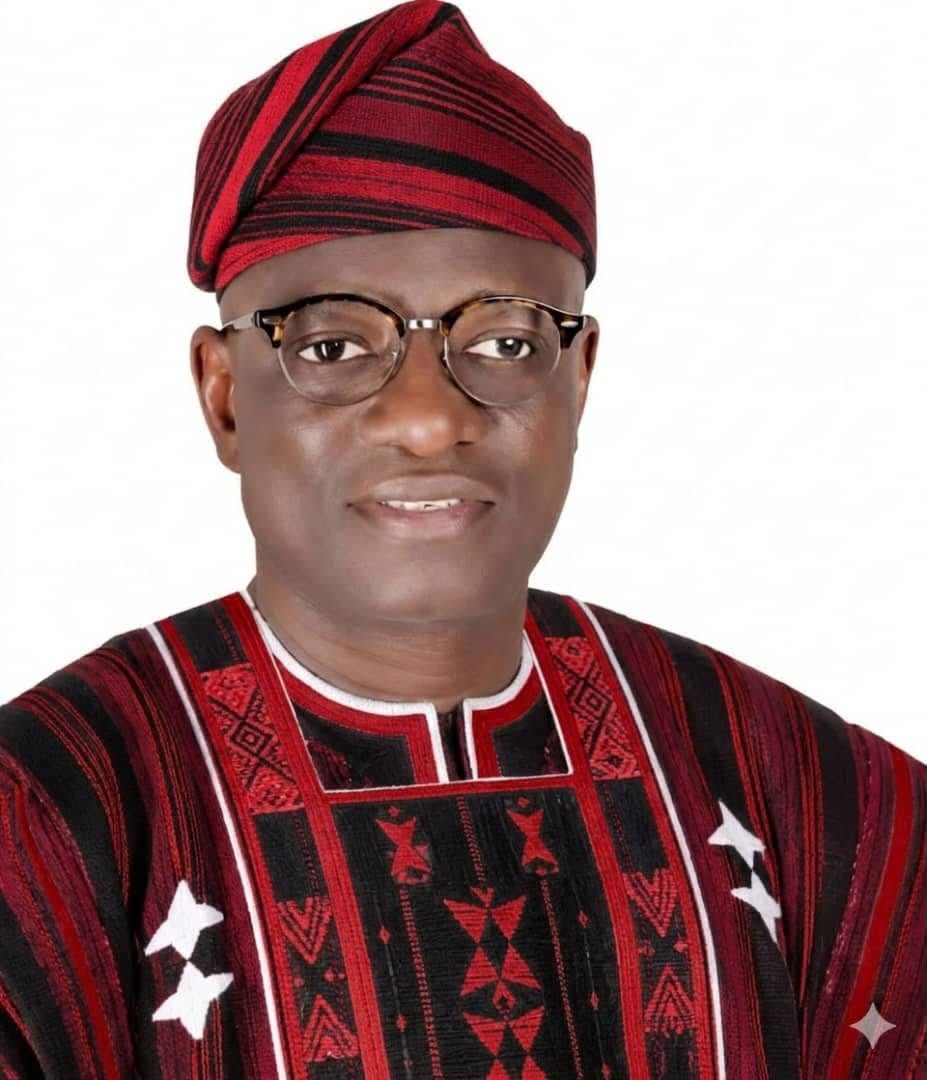
There are moments in the history of every society when leadership becomes more than a contest for political office. It becomes a question of direction, capacity, character and the ability to translate public trust into measurable development. As Nasarawa State approaches the 2027 governorship election, the emergence of Senator Ahmed Wadada Aliyu, as a major political figure has inevitably placed his experience, philosophy and development agenda at the centre of public conversation. His political journey provides a substantial basis for examining what he represents and what his proposed leadership could mean for the state.
Senator Wadada is not a newcomer to public administration or legislative responsibility. His journey through the National Assembly spans many years, beginning with his service in the House of Representatives, where he represented the Keffi, Karu and Kokona federal constituency for two terms, before returning to the National Assembly as Senator representing Nasarawa West. The official National Assembly profile records his professional and legislative background, including his earlier experience in the private sector and his years of parliamentary service. (National Assembly of Nigeria)
That breadth of experience matters because governing a state is fundamentally different from merely winning an election. A governor must understand budgets, institutions, public procurement, legislation, intergovernmental relations, security, infrastructure, human capital and the complex relationship between government and citizens. Wadada’s years within the legislative environment have exposed him to many of these dimensions of governance. His supporters therefore see in him not simply a politician seeking higher office, but a politician whose career has progressively prepared him for executive responsibility.
Perhaps one of the most significant aspects of Wadada’s political identity is his emphasis on accountability. His association with the Senate Public Accounts Committee placed him within one of the National Assembly’s most important oversight structures. His own public profile describes his work in terms of transparency, accountability and fiscal responsibility. (Sen. Ahmed Wadada Aliyu) Whatever one’s political persuasion, the principle behind such an emphasis is important: public resources belong to the people, and government must be answerable for how those resources are deployed.
For Nasarawa, this conversation is particularly important because the state stands at an interesting point in its development. It possesses agricultural potential, mineral resources, proximity to the Federal Capital Territory and a rapidly expanding population. Yet resources alone do not produce prosperity. They require competent institutions, strategic investment, infrastructure, human capital and a leadership philosophy capable of connecting the state’s opportunities to the needs of ordinary citizens.
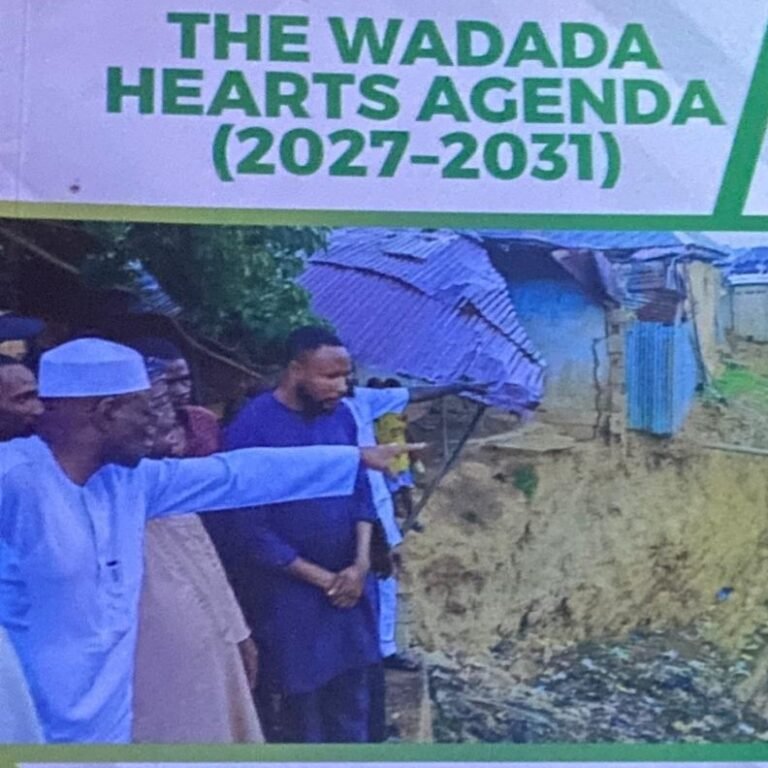
This is where Wadada’s HEARTS Agenda becomes central to understanding his political proposition. The blueprint he has presented for the state places emphasis on human capital development, economic advancement, accountability, rural transformation, technological development and security, while subsequent presentations have also highlighted agriculture, energy and mineral resources, infrastructure, trade and investment. Recent reports on the unveiling of the agenda show that it is designed around areas such as education, healthcare, agriculture, solid minerals, rural and urban development, investment and security. (Guardian Nigeria)
The significance of HEARTS is not merely in the acronym. Its importance lies in the attempt to connect government policy with the everyday realities of the people. Human capital means investing in people. Agriculture means looking beyond subsistence farming toward productive value chains. Rural transformation means ensuring that development does not stop at major urban centres. Technology means preparing young people for an economy increasingly shaped by digital innovation. Security means creating the conditions under which businesses, farmers, families and communities can prosper.
The proposed emphasis on agriculture deserves particular attention. Nasarawa is blessed with fertile land and an agricultural population, yet the greatest opportunity is not simply producing crops. The larger challenge is building an agricultural economy that connects farmers to processing, storage, transportation, finance and markets. The HEARTS proposal has spoken of agricultural hubs across the three senatorial districts, an approach that, if carefully designed and transparently implemented, could move agriculture from subsistence activity toward a more integrated economic system. (Guardian Nigeria)
The same thinking applies to Nasarawa’s mineral resources. The state possesses considerable solid-mineral potential, and recent reporting on Wadada’s blueprint has specifically identified energy and mineral resources as an important component of his development vision. The real test, however, will be whether mineral wealth can be converted into jobs, infrastructure, local industrial capacity and sustainable revenue rather than simply extracted and transported elsewhere. (Guardian Nigeria)
Another compelling dimension of Wadada’s political profile is his stated commitment to continuity and unity. After emerging as the APC governorship candidate, he publicly called on party members to close ranks, declaring that there should be “no victor and no vanquished.” That message is important in a political environment where primary elections can leave divisions that later affect governance. His stated position suggests an understanding that the real challenge begins after political contests end: bringing people together around a common development programme. (The Sun Nigeria)
Leadership, however, must ultimately be judged not by slogans but by delivery. This is where the 2027 conversation should become more mature. The people of Nasarawa deserve to ask every candidate difficult questions: How will jobs be created? How will education be improved? How will healthcare reach rural communities? How will agricultural productivity be increased? How will mineral resources benefit local communities? How will security be strengthened? How will public funds be protected? How will young people participate meaningfully in the economy? These are the questions against which every political promise should be measured.
Wadada’s long exposure to legislative politics gives him a perspective that could be valuable in answering those questions. He has operated within the federal legislative system, interacted with national institutions and participated in policy processes that connect Abuja with the states. His career profile also records experience in private-sector administration and public-sector responsibilities, giving his supporters grounds to argue that he understands both governmental structures and economic activity. (Sen. Ahmed Wadada Aliyu)
But perhaps the strongest argument surrounding his candidacy is the question of preparedness. Nasarawa does not merely require somebody who wants to occupy the Government House. It requires someone prepared to accept the enormous responsibility of managing a state, balancing competing interests, protecting public resources and building institutions that can survive beyond individual personalities. Wadada’s supporters believe his decades of political and administrative exposure have positioned him for that responsibility.
There is also a broader question of generational development. Nasarawa’s young population needs more than political appointments. It needs quality education, vocational opportunities, entrepreneurship, technology, agriculture, industrialisation and access to markets. Any serious administration must therefore treat young people not as campaign crowds but as economic assets and future leaders. The human-capital component of the HEARTS Agenda speaks directly to this challenge. (Guardian Nigeria)
The case for Wadada, therefore, should not rest solely on his political popularity, party platform or endorsements. It should be examined through the harder lens of competence, experience, policy coherence, accountability and capacity to execute. Elections may be won through political organisation, but governments are judged by roads built, schools improved, hospitals strengthened, businesses created, communities secured and opportunities expanded.
Ultimately, the 2027 conversation presents Nasarawa with an opportunity to examine competing visions for its future. Senator Ahmed Wadada Aliyu has placed before the public a vision anchored around HEARTS, drawing attention to human capital, economic opportunity, accountability, rural transformation, technology, security and the productive use of the state’s resources. Whether that vision achieves its full potential will depend on the quality of implementation, the strength of institutions and the willingness to place public interest above political expediency.
For those studying Wadada’s political journey, one conclusion is difficult to ignore: his emergence as a 2027 governorship contender represents the culmination of a long political career rather than an overnight ambition. From the National Assembly to the Senate, from legislative oversight to policy advocacy, his career has given him considerable exposure to the machinery of government. (National Assembly of Nigeria)
The real challenge before Ahmed Wadada, therefore, is not simply to convince people that he can govern. It is to demonstrate, through policy, conduct and measurable commitments, that he understands the enormous responsibility that comes with governing Nasarawa State. The people deserve nothing less.
And that is ultimately what the 2027 debate should be about: not merely who wants power, but who has the experience, vision, discipline and development framework capable of turning Nasarawa’s enormous potential into tangible prosperity for its people. Wadada has placed his experience and HEARTS Agenda before the public. The next chapter belongs to the people and to the evidence of what leadership can deliver.
Israel JP is the Senior Special Assistant SSA on media to Senator Ahmed Wadada Aliyu.
About the Author