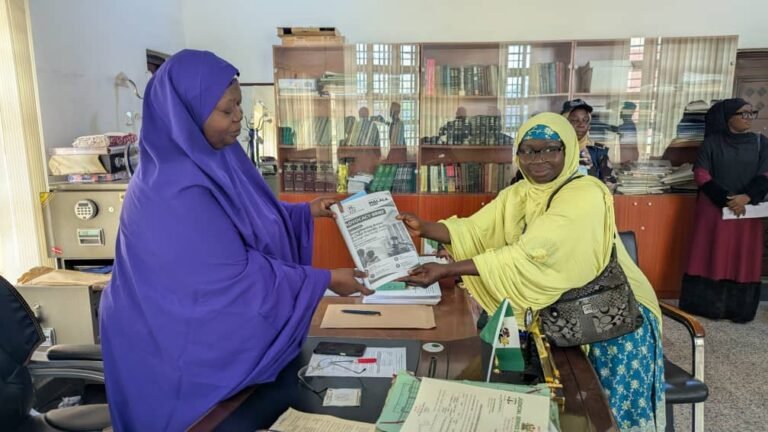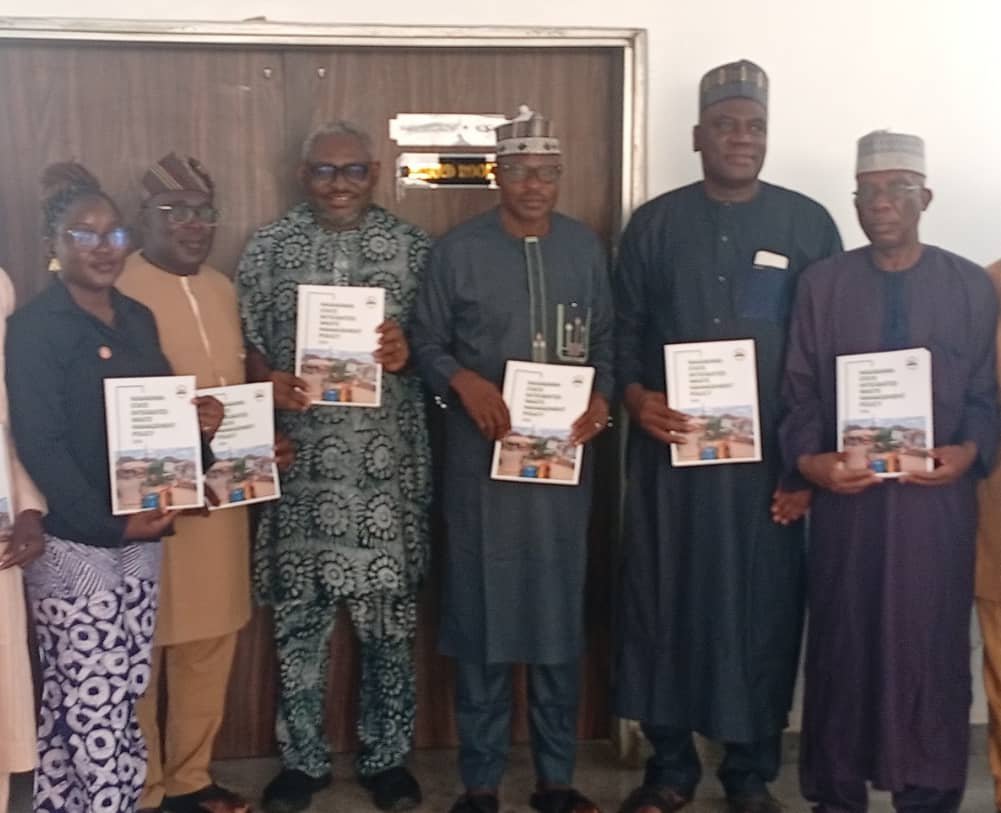
The Global Initiative for Food Security and Ecosystem Preservation (GIFSEP) has presented an Integrated Waste Management Policy to the Nasarawa State Government to address waste management challenges in the state.
Dr Michael David, GIFSEP Executive Director, while presenting the document on Thursday in Lafia, said the policy was developed after extensive consultations, technical work and stakeholder engagement.
He noted that the policy reflects Nasarawa’s environmental realities while also identifying opportunities to turn waste into an economic resource.
David said the policy proposes a shift from the traditional collect, transport and dump approach to an integrated and circular economy model.
He explained that the model was based on waste prevention, segregation, recycling, composting, resource recovery, responsible disposal and waste-to-wealth initiatives.
“The policy addresses critical waste streams including municipal solid waste, faecal sludge, industrial and mining waste, agricultural and biomass waste, and healthcare and biohazardous waste,” he stated.
He added that it provides a framework for stronger regulation, private-sector participation, improved infrastructure, environmental safeguards, enforcement and community participation.
David stressed that the success of the policy would depend on political will, financing, institutional coordination and public participation.
“For GIFSEP, this assignment is not simply about producing a policy document. It is about creating a practical roadmap for a cleaner, healthier and more economically productive Nasarawa State.
“We recognise that the success of this policy will depend on what happens after today. Without adoption and implementation, this policy will remain a piece of paper.
He commended the Ministry of Environment, Nasarawa State Waste Management Authority, the Ministry of Justice, Local Government Areas, Civil Society Organisations, traditional institutions and private sector actors for their contributions.
GIFSEP executive director also acknowledged support from the United Nations Development Programme -GEF Small Grants Programme for funding the initiative.
He called on Gov. Abdullahi Sule to assent to the Nasarawa State Climate Change Bill passed by the State House of Assembly in October 2025, citing the flash floods experienced in Lafia on Thursday as enough reason to urgently assent to the bill.
“We hope this policy will become one of Gov. Sule’s legacy projects. The passage of the climate bill will be another legacy project by His Excellency,” he said.
He said that the policy should serve as a foundation for job creation, cleaner communities, improved public health and a vibrant circular economy in Nasarawa State.
Mr Ede Yakubu, Permanent Secretary, Ministry of Environment and Natural Resources, while
Receiving the document on behalf of the Commissioner, Magareth Elayo, said the policy marks the beginning of a new approach to waste management in the state.
He called on 13 Local Government Areas to domesticate the policy, the private sector to invest in facilities, citizens to segregate waste at source, and the media and Civil Society Organisations to sustain advocacy.
On the Nasarawa State Climate Change Bill passed in October 2025, he said that government was committed to reviewing the bill and assenting to it for implementation.
Mr Joseph Anzaku, Director of Public Health, Ministry of Environment and Natural Resources, described the policy as a historic milestone for the state’s environment, health and economy.
“For the first time since the creation of Nasarawa State in 1996, we are convening to review our state’s first-ever waste management policy as stakeholders.
“A policy is only as strong as the consensus behind it. Our critical scrutiny, practical insights and commitment to turn this draft into a sustainable strategy depend on what we do here,” he said.
About the Author