By Abubakar Tukur Ibrahim
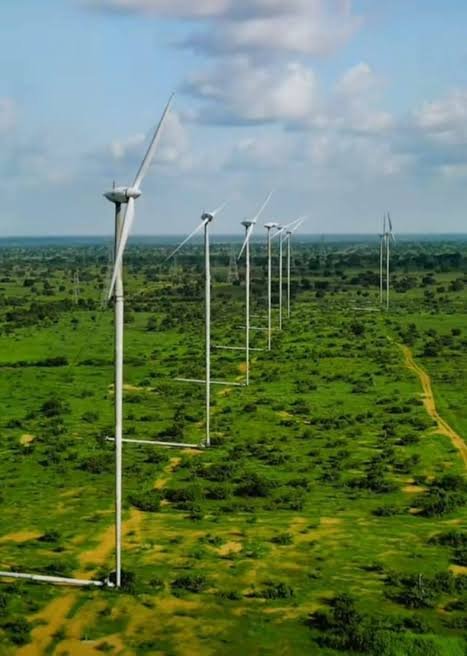
The concerns expressed regarding the Lambar Rimi Wind Farm are legitimate. Every Katsina citizen wants to see the turbines turning and electricity flowing into homes, businesses, industries, and communities. However, while it is easy to recount the history of the project, it is equally important to honestly acknowledge what has happened under the administration of His Excellency, Malam Dikko Umaru Radda, PhD, CON, to rescue the project from years of uncertainty and place it firmly on the path to completion.
When Governor Radda assumed office in 2023, he inherited a project that had become a symbol of unrealized potential. The Wind Farm was not under the ownership or control of Katsina State Government. It remained a Federal Government asset plagued by years of technical deterioration, vandalism, incomplete commissioning, ownership uncertainties, and the absence of a viable operational framework.
Many before him spoke about the project. Governor Radda chose to act.
Recognizing the strategic importance of the Wind Farm to the future of Katsina State, His Excellency immediately directed that a comprehensive engagement strategy be developed. This led to high-level discussions with the Federal Ministry of Power, the Bureau of Public Enterprises (BPE), the Infrastructure Concession Regulatory Commission (ICRC), Kano Electricity Distribution Company (KEDCO), and the Original Equipment Manufacturer (OEM), Vergnet of France.
In a demonstration of uncommon leadership and commitment, Governor Radda personally travelled to France to meet with the OEM. Rather than relying solely on reports and presentations, he visited the manufacturing facility, inspected the technology firsthand, engaged technical experts, and sought practical solutions for the rehabilitation and completion of the project.
This was not a ceremonial visit. It was a working mission aimed at unlocking a project that had remained dormant for years.
As a direct outcome of that engagement, Vergnet was invited to conduct a comprehensive technical assessment of the Wind Farm. The assessment meticulously evaluated all 37 turbines, identified the extent of degradation, categorized rehabilitation requirements, and provided detailed cost estimates and implementation pathways for restoring the facility to full operational capacity.
Beyond the technical work, the administration took a step that no previous government had successfully accomplished: developing and submitting an Outline Business Case (OBC) to the Infrastructure Concession Regulatory Commission for the handover, completion, and commercialization of the Wind Farm.
The quality and strength of the submission earned positive recommendations from the Federal Ministry of Power, the ICRC, and the Bureau of Public Enterprises. Consequently, a Joint Committee comprising these institutions formally recommended the transfer of the Wind Farm to the Katsina State Government, recognizing the State’s seriousness, preparedness, and commitment to completing the project.
This is a significant milestone that cannot be overlooked.
Governor Radda understands that merely rehabilitating the Wind Farm is not enough. The global energy landscape has evolved, and sustainable energy systems now require diversified generation sources. This is why the administration has gone further by developing plans to hybridize the Wind Farm through the integration of utility-scale solar power and battery energy storage systems.
The objective is clear: to transform Lambar Rimi from a standalone wind project into a modern renewable energy hub capable of delivering more reliable, affordable, and sustainable electricity to the people of Katsina State.
It is also important to state that the administration has not limited its energy agenda to the Wind Farm alone. Under Governor Radda’s leadership, Katsina State has developed a comprehensive Energy Policy, prepared an Integrated Resource Plan with international partners, facilitated the deployment of solar mini-grids and standalone solar systems across hospitals, schools, government institutions, and communities, approved the deployment of 20.1MW of solar infrastructure across critical facilities, initiated electric mobility programmes, expanded rural electrification, and partnered with strategic investors in hydro, gas, and renewable energy projects.
These are not promises. These are measurable actions.
Those asking for timelines deserve transparency. However, responsible leadership requires that timelines be based on technical realities, regulatory approvals, financing arrangements, and ownership transfer processes rather than political declarations designed to generate headlines.
What Katsina people should know is this: for the first time since the project was conceived, there is a clear technical assessment, a defined rehabilitation plan, institutional support for handover, a commercialization framework, and a pathway for hybridization.
That did not happen by accident. It happened because Governor Dikko Umaru Radda made a deliberate decision that the Wind Farm would no longer remain a monument to missed opportunities.
His administration remains unwavering in its commitment to ensuring that the Lambar Rimi Wind Farm becomes operational and serves as a catalyst for industrialization, energy security, economic growth, and job creation in Katsina State.
The people of Katsina are right to demand results. Governor Radda agrees. That is precisely why he has focused on solving the problem rather than merely discussing it.
The journey is not yet complete, but for the first time in many years, the destination is clearly in sight.
Governor Dikko Umaru Radda did not inherit the problem, but he has accepted the responsibility of solving it. That is leadership. That is commitment. And that is the difference Katsina people can already see.
Ibrahim, a concerned citizen can be reached at sadiqti14@gmail.com,+2347038992545
About the Author