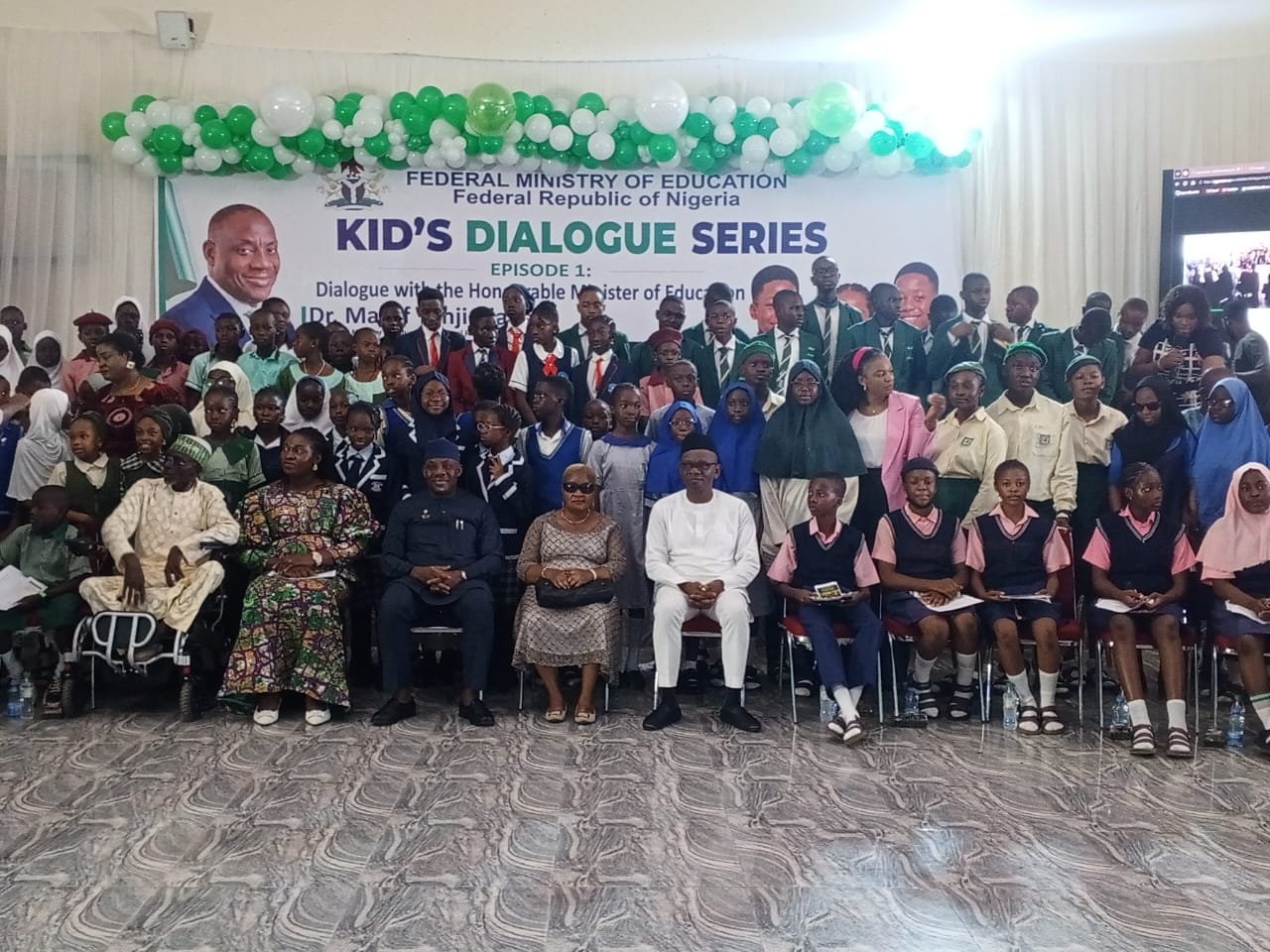
The Minister of Education, Dr Tunji Alausa, has urged Nigerian students to take personal responsibility for their health, saying good health remains the foundation for learning, productivity and leadership.
Alausa made the call on Wednesday in Abuja during the maiden edition of the Kid’s Dialogue Series, organised by the Federal Ministry of Education in partnership with the National Primary Health Care Development Agency, NPHCDA, and the Centre for Well-being and Integrated Nutritious Solutions, C-WINS.
The event, held at Government Science Secondary School, Pyakasa, had the theme: “Empowering Young Voices to Shape Health, Learning and Well-being in Nigeria.”
Speaking during an interactive session with students drawn from various schools across the Federal Capital Territory, the minister said, “If you don’t have health, you don’t have a life. You are the future of this nation and we have to start right by keeping you healthy. The most important person in keeping you healthy is you.”
He described vaccination as one of the most effective ways of preventing dangerous and life-threatening diseases, and urged students to confirm from their parents and teachers that they were up to date with their immunisation schedules.
“You should ask your parents and teachers, am I up to date with my vaccination?” he said.
According to him, advances in healthcare have made vaccines like HPV effective in preventing certain cancers, while those for measles and polio continue to protect millions of children from serious diseases.
He stressed that keeping children healthy was essential to achieving national development goals and building future generations of productive citizens.
The dialogue also featured direct questions from students. David Johnson of Junior Secondary School, Tudun Wada, asked if people suffering from trauma and depression could recover.
Another student, Adewumi Temiloluwa, asked what children should do if their parents were unwilling to allow them to receive vaccinations.
Responding, Alausa said recovery was possible through talking to trusted persons and seeking professional help, noting that speaking out and seeing a psychologist could help manage depression and trauma.
On immunisation, he said parents were expected to encourage it, but children should explain its importance to them and seek help from teachers if necessary, adding that vaccines protect against life-threatening diseases.
Also speaking, the Executive Director, NPHCDA, Dr Muyi Aina, encouraged students to become “health champions” by promoting healthy behaviours among their peers and communities.
“As you learn, it is important that you also practise healthy behaviours, get your vaccinations, maintain good hygiene and eat nutritious food,” he said.
Aina said the theme of the dialogue highlighted the importance of engaging young people early in discussions on health and well-being. “We need to catch them young and set them on the path of health. For you to become healthy, productive adults, you need both education and good health,” he added.
The minister commended teachers and parents for their roles in nurturing children and helping them realise their potential.
About the Author