By every visible and measurable indicator, the FCT under the leadership of the Minister, Barr. Ezenwo Nyesom Wike, is undergoing one of the most ambitious transformations in its history.
In less than three years, Abuja has witnessed a scale of infrastructural development, governance reforms, urban renewal, and institutional expansion that many residents and stakeholders say is unmatched since the creation of the Federal Capital Territory in 1976.
From the city centre to satellite towns and Area Councils, the evidence of transformation is impossible to ignore. Roads once abandoned have been reconstructed, bridges completed, public infrastructure revitalized, healthcare strengthened, security enhanced, and new institutional frameworks introduced to reposition the FCT for sustainable growth.
As Nigeria marks the third anniversary of the administration of President Bola Tinubu, and the historic celebration of 50 years of the creation of the FCT, the Wike-led administration has unveiled thirty-one landmark projects for commissioning and flag-off ceremonies across Abuja — a development many observers have described as unprecedented.
The projects include the commissioning of the Outer Southern Expressway (OSEX), the Airport–Kuje Highway, Arterial Road N5 (Obafemi Awolowo Way), newly constructed Court of Appeal Complex in Dakibiyu, multiple Judges’ Quarters, water supply networks to Karu and Bwari, the Kuje–Gwagwalada Dual Carriageway, Transit Way N2 connecting Central Area to Wuse, and the remodelled Abuja City Gate.
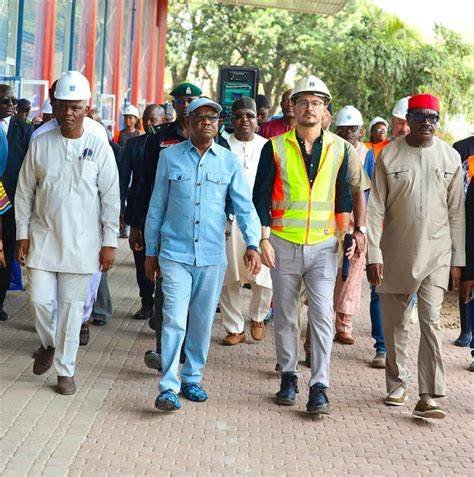
Across Katampe, Mabushi, Wuye, Guzape, Jahi, Gaduwa, Karsana, Dakibiyu, and Wasa districts, new roads, bridges, interchanges, and engineering infrastructure are redefining urban mobility and opening up new corridors for economic growth and residential development.
Perhaps for the first time in many years, Area Councils are also witnessing massive government presence. Roads in Kwali, Gwagwalada, Kuje, Bwari, Abaji, and AMAC are either completed or under construction, bringing development closer to communities that previously suffered years of neglect.
Beyond roads and bridges, the Administration has introduced significant governance reforms. The exemption of the FCT Administration from the Treasury Single Account (TSA) improved financial flexibility and accelerated project delivery.
The creation of the FCT Civil Service Commission equally marked a major turning point in the administrative history of the FCTA. The reform ended the routine posting of Federal Permanent Secretaries to the FCT and created career progression opportunities for FCTA civil servants to rise to the positions of Head of Service and Permanent Secretaries.
The Women Affairs Secretariat and Youth Secretariat further expanded governance inclusion and institutional coordination.
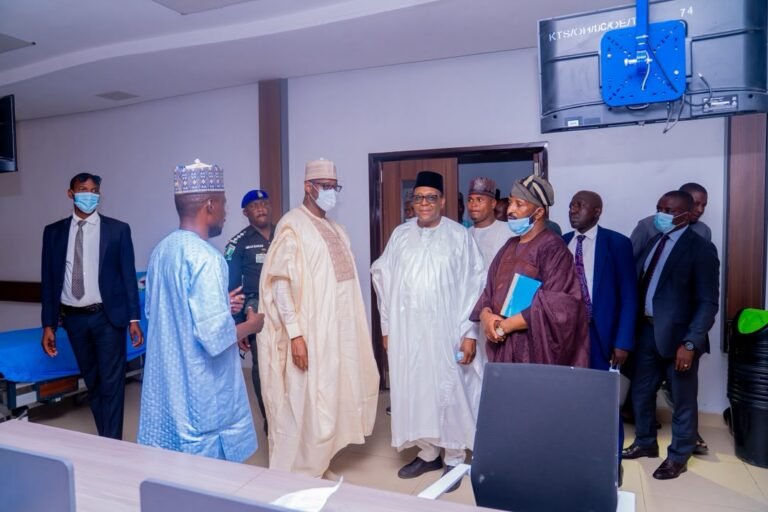
The health sector has also experienced a remarkable transformation. Functional oxygen plants were established at Maitama, Asokoro, Bwari, and Abaji Hospitals. The Administration commissioned a 20-bed Vesico-Vaginal Fistula Centre at Gwarimpa Hospital and carried out free medical missions in Kuje and Bwari, where over 10,000 residents received treatment and more than 225 surgeries were conducted free of charge.
Healthcare access expanded significantly through the enrolment of vulnerable residents into the FCT Health Insurance Scheme, while major investments were made in emergency response systems, ambulances, medical equipment, residency training, and healthcare infrastructure upgrades.
Security agencies operating within the FCT also received operational vehicles and logistics support to strengthen security coordination and response capacity across the Territory.
One of the most symbolic achievements of the current administration is the massive investment in judicial infrastructure. The construction of Judges’ Quarters for Supreme Court, Court of Appeal, Federal High Court, and FCT High Court Judges, alongside the new Court of Appeal Complex and Body of Benchers Office Annex, reflects a deliberate effort to strengthen the justice sector and uphold institutional dignity.
As Abuja celebrates fifty years of existence, the official presentation of the “Abuja @50 Compendium” is expected to document the city’s evolution, indigenous heritage, governance journey, infrastructural growth, and future aspirations.
Today, across the Federal Capital Territory, the signs of transformation are visible in newly paved roads, illuminated streets, expanding water networks, transportation systems, modern public facilities, and ongoing mega-projects.
For many residents and observers, the current pace of development has not only changed the physical landscape of Abuja but has also restored confidence in governance, project execution, and public leadership.
As the commissioning activities continue, one message appears increasingly clear across the nation’s capital — Abuja is experiencing a new era of accelerated growth, and the impact of the current Administration will remain visible for many years to come.
Dr. Jumai, President of Helpline Social Support Initiative, is the Ag. Director Reform Coordination and Service Improvement Department FCTA
About the Author