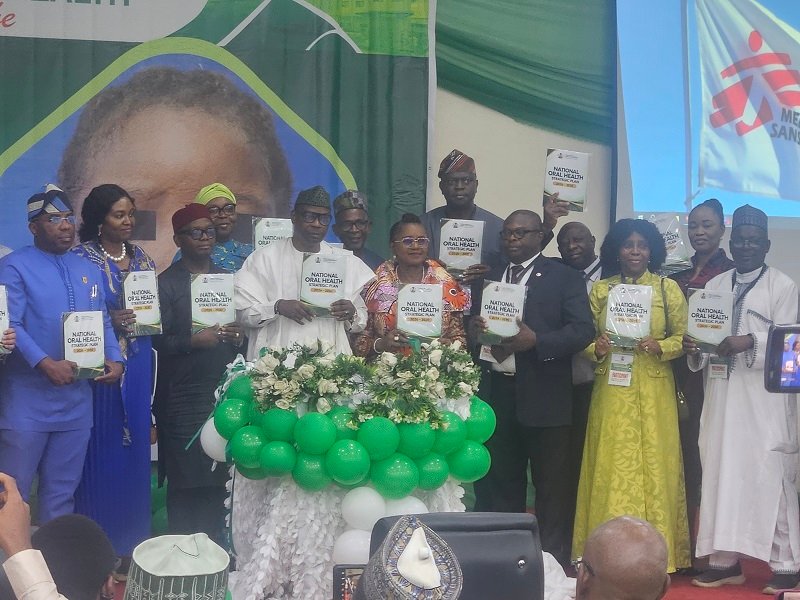
Minister of State for Health, Dr. Iziaq Salako, fifth from right, leads other dignitaries to unveil the National Oral Health Strategic Plan 2026-2030 in Abuja on Monday
By Anthony Maliki, Abuja
Medecins San Frontieres, (MSF), Medical Coordinator in Nigeria, Dr. Bukola Oluyide, on Monday in Abuja, expressed dismay over low awareness among communities and health workers leading to delay in diagnosis of noma disease in the country.
She was giving an overview of MSF’s intervention at the Noma Children Hospital, Sokoto, from 2014 to 2016 at the commemoration of the 2026 Oral Health Week, Noma Day and scientific conference.
According to her, late presentation means children arrive with advanced disease or after the acute phase has already caused major damage.
She said a total of 1,721 children were admitted in the facility in the last 12 years with boys accounting for 868 and girls, 853. Sokoto, Zamfara and Kebbi states lead in the highest number of noma cases.
Dr. Oluyide stressed that poverty, transport costs, insecurity, and distance to services can interrupt referral and follow-up while reliable surveillance and burden estimates remain difficult because noma is underdiagnosed and underreported.
On societal integration, she pointed out that stigma and social exclusion affect survivors and caregivers.
MSF Country Representative, Dr. Ahmed Aldikhari, congratulated the Federal Ministry of Health and Social Welfare for the launch of the National Strategic Plan on Oral Health 2026–2030 which will provide timely opportunity to place noma firmly within Nigeria’s broader oral health priorities.
He said the strategic plan will translate national commitments into coordinated action at federal, state, local government and community levels.
Dr. Aldikhari noted that since 2014, MSF have worked together to provide comprehensive care from inpatient treatment for acute noma and major facial reconstructive surgery to oral physiotherapy, health promotion, community engagement, nutritional support, and mental health and psychosocial services.
The Minister of State for Health, Dr. Iziaq Salako, who later unveiled the National Oral Health Strategic Plan 2026 to 2030, noted that oral health is fundamental to human health.
He pointed out that no child should die or suffer permanent disfigure in Nigeria again.
The minister expressed concern that more than 80% of Nigerians have never visited the dentist and few who do, only because they have severe pains.
Dr. Salako commended MSF, World Health Organisation and Noma Aid National Initiative (NANI) for the good they have been doing on noma.
About the Author