The German Ambassador to Nigeria, Stefan Roessel, has reaffirmed Germany’s commitment to supporting Nigeria in addressing insecurity, saying the challenges confronting the country, particularly in the North-East and Lake Chad Basin, require regional and international cooperation.
Roessel spoke on Monday in Chikun Local Government Area of Kaduna State during a visit to beneficiaries of a nine-month project on Strengthening Women Interfaith Leadership for Human Rights, Transitional Justice and Democratic Stability, implemented by the Interfaith Mediation Centre (IMC) with funding from the German Embassy in Abuja.
The visit marked the conclusion of the project, which brought Christian and Muslim women together to promote human rights, interfaith understanding, peaceful coexistence and democratic stability in conflict-affected communities.
Speaking at the Sa-Gbagyi Palace in Boro, Sabon Tasha, the ambassador said he was impressed by the impact of the initiative, particularly its efforts to strengthen women’s participation in peacebuilding and promote mutual understanding among religious communities.
He said he would communicate his observations to the German Embassy in Abuja and the government in Berlin, expressing hope that the programme would be sustained and expanded.
On Nigeria’s security situation, including terrorism and banditry, Roessel said peace and security remained fundamental to development, noting that insecurity in the Lake Chad Basin and other parts of northern Nigeria had implications beyond the country.
He explained that Germany had continued to support Nigeria through development and humanitarian programmes implemented by organisations such as the German Agency for International Cooperation (GIZ) and the United Nations Development Programme (UNDP), alongside security cooperation with the Nigerian government.
According to him, the security challenges affecting the region were not exclusively Nigeria’s concern but a shared responsibility requiring sustained international attention.
The ambassador also stressed the importance of engaging directly with communities to understand their experiences, concerns and expectations, rather than relying solely on reports.
He described the Kaduna initiative as significant because it provides a platform for Christian and Muslim women to work together in promoting human rights, transitional justice and peaceful coexistence.
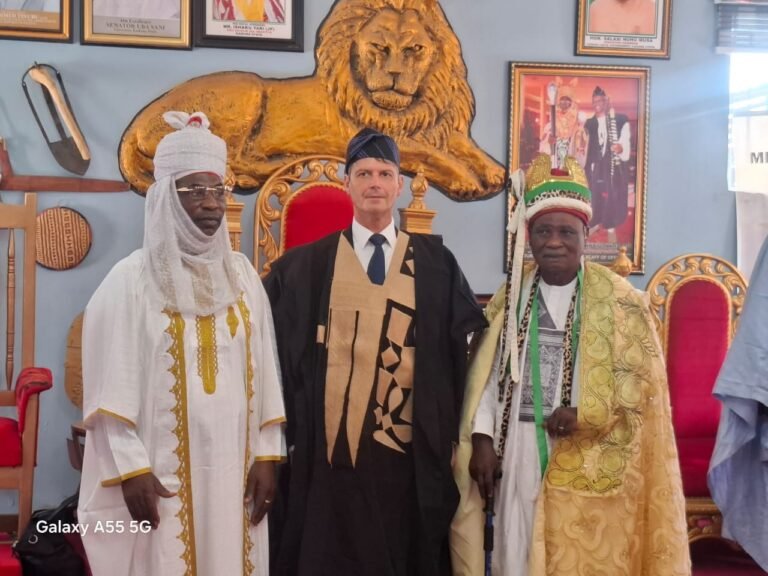
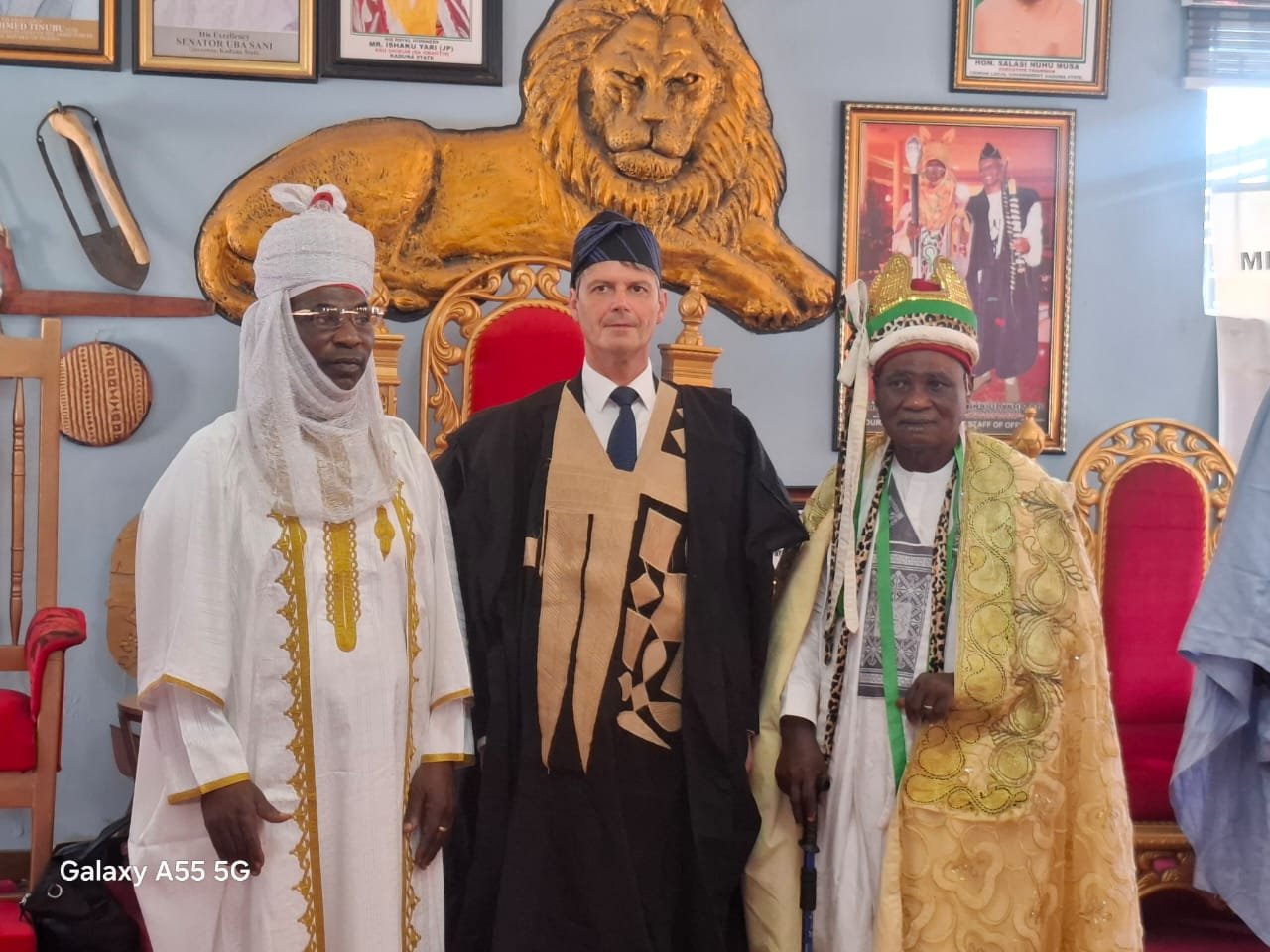
Earlier, the traditional ruler of Chikun Chiefdom, His Royal Highness, Ishaku Yari, the Esu Chikun II (Sa-Gbagyi II), conferred on Roessel the traditional title of Ambassador of Peace in recognition of his country’s support for peacebuilding initiatives.
The ceremony, held at the traditional ruler’s palace, featured cultural performances by members of the Gbagyi Traditional Council and goodwill messages from religious leaders, including Pastor Yohanna Buru and Imam Sani Isah, as well as representatives of the Kaduna State Government.
The ambassador also interacted with beneficiaries of the project, who shared their experiences and described how the initiative had strengthened interfaith relations, women’s leadership and community-based peacebuilding.
The nine-month intervention was implemented by the Interfaith Mediation Centre with support from the German Embassy as part of efforts to strengthen women’s leadership in promoting human rights, justice and democratic stability in Kaduna State.
About the Author