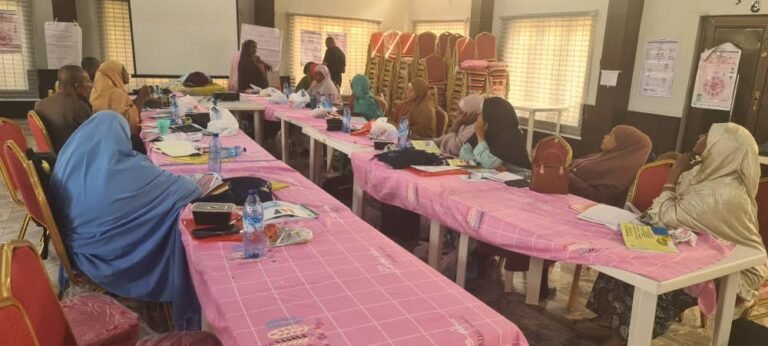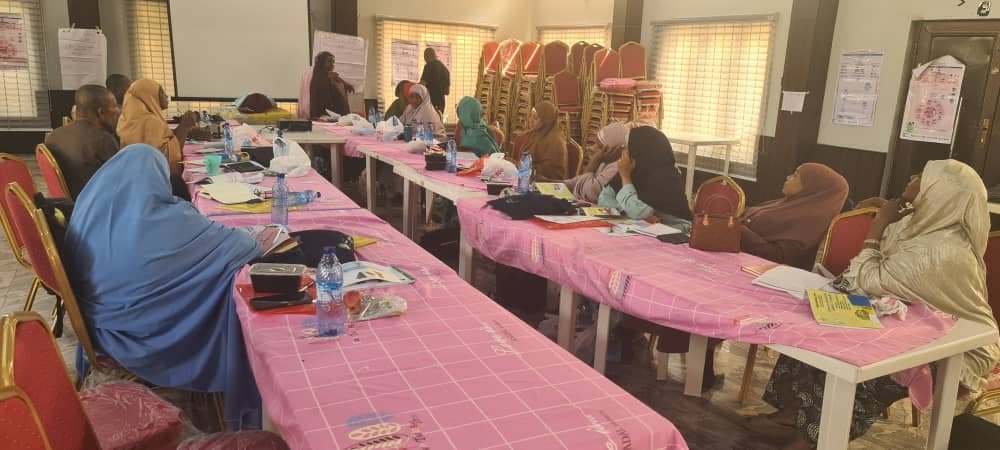
Bauchi Government through the State Primary Healthcare Board (BSPHCB), with support from United Nations Children’s Fund (UNICEF) and Global Affairs Canada (GAC), has organized a refresher workshop for refresher training on the Postpartum hemorrhage (PPH) Bundle of Care under the Bleeding after birth PPH treatment project.
The training was aimed at updating Caregivers on how to detect Postpartum Haemorrhage complications early during labour and delivery in order to avoid its negative impact on maternal mortality indices in the State.
Speaking at the training, Amina Balali, Deputy Programme Manager for Reproductive, Maternal, Newborn and Child Health at the Bauchi State Primary Health Care Board, as well as the Gender Focal Person, said the intervention is designed to equip healthcare workers with the knowledge and skills required to prevent, recognise and promptly manage bleeding after childbirth.
According to her, 24 participants attending the training are drawn from Secondary and Tertiary healthcare facilities, including the teaching hospital, as well as the Bauchi State Primary Health Care Board and the State Ministry of Health and Hospital Management Board.
She stressed that,”Our plan is to extend the training to two or three healthcare workers from each targeted facility, covering 268 facilities under the initial implementation plan. The objective is to ensure that healthcare workers across our primary, secondary and tertiary healthcare facilities can recognise postpartum haemorrhage early and provide the appropriate first-line care.”
Amina added, “At the primary healthcare level, providers should be able to initiate prompt management and stabilise patients where possible before making an urgent referral when the condition requires care beyond the facility’s capacity. Ultimately, we want to strengthen the ability of healthcare workers across the state to respond effectively to postpartum haemorrhage and prevent avoidable maternal deaths.”
On the situation before the intervention, she disclosed that, only 55 health facilities had received training on the prevention and management of postpartum haemorrhage through an intervention supported by Jhpiego.
However, with support from UNICEF, there are plans to expand the training to more health facilities across the state targeting is to reach all 323 primary healthcare centres in Bauchi State.
However, with support from UNICEF, there are plans to expand the training to more health facilities across the state targeting is to reach all 323 primary healthcare centres in Bauchi State.
She stressed that,”Postpartum haemorrhage remains a significant concern because it is difficult to predict with certainty which delivery may be complicated by excessive bleeding. This makes preparedness, early recognition and prompt treatment essential. That is why we consider this intervention very important.
“We want to ensure that at least two healthcare workers in each targeted facility are equipped to recognise postpartum haemorrhage, initiate appropriate treatment and make timely referrals when necessary. By expanding the number of trained healthcare workers and strengthening the availability of essential knowledge and skills at the grassroots level, we hope to improve maternal health outcomes and reduce preventable deaths among women during childbirth,” she said.
Also speaking, the Lead Facilitator, Dr. Emmanuel Agbogo, an Obstetrician at the Federal University of Health Sciences Teaching Hospital, Azare, said, “The training is designed to equip healthcare workers with the knowledge and skills required to prevent, detect early, and properly manage postpartum haemorrhage (PPH). Postpartum haemorrhage is one of the leading causes of maternal mortality worldwide, particularly in our environment, the Northeast region of Nigeria.”
He added that,”The training focuses on implementing the World Health Organization’s first-response bundle protocol for managing postpartum haemorrhage. The objective is to ensure that healthcare workers acquire the necessary knowledge and skills to prevent PPH. Where prevention is not possible, they should be able to recognise it promptly and provide appropriate treatment in line with established standards. This will help reduce complications and maternal deaths among women who deliver in health facilities.”
He explained that the training was timely because Maternal mortality remains a significant concern, and postpartum haemorrhage continues to be an important contributing factor, saying, “Although this is not the first time such training has been organised, some areas in the Northeast remain unreached, particularly certain primary healthcare centres across the states in the region.
Through this Training of Trainers programme, participants are expected to return to their respective communities and cascade the knowledge and skills acquired to other healthcare workers who attend to women during childbirth.”
He believes the approach will help extend the reach of the training and improve the quality of maternal healthcare at the grassroots level, assuring that,”There are also plans to conduct follow-up activities to obtain feedback and assess the impact of the training.”
On the introduction of multiple micronutrient supplementation (MMS), to pregnancy, he said, “it has contributed to reducing one of the risk factors associated with postpartum haemorrhage. One of the important risk factors is anaemia during pregnancy. Factors such as limited health literacy and poverty can make it difficult for some pregnant women to access adequate and nutritious food, even though their nutritional requirements increase during pregnancy.”
“The introduction of multiple micronutrient supplementation has helped some women improve their nutritional status and reduce the risk or severity of anaemia during pregnancy.
By addressing anaemia, we can help reduce the risk of complications associated with postpartum haemorrhage. However, MMS is only one component of maternal healthcare and should complement other preventive measures and appropriate clinical management.”
One of the participants, Yadi Mohammed of the General Hospital, Azare said, “We are participating in a state-level Training of Trainers (ToT) workshop on the World Health Organization’s postpartum haemorrhage dles of care. Since the training began this morning, we have covered several important topics relating to the prevention, early detection and management of postpartum haemorrhage.”
According to her, “After the training, we are expected to cascade the knowledge and skills acquired to other healthcare workers in our respective facilities and other health institutions to ensure that more healthcare providers can effectively manage PPH cases.”
Yadi Muhammad Bello said that Postpartum haemorrhage is one of the leading causes of maternal mortality with its major causes is uterine atony, which occurs when the uterus fails to contract adequately after childbirth.
She said, “This is why the Bauchi State Primary Health Care Development Agency, in collaboration with UNICEF, is organising this Training of Trainers workshop to strengthen healthcare workers’ capacity to prevent and manage postpartum haemorrhage and reduce maternal deaths.”
According to her, “Previously, we experienced maternal deaths associated with postpartum haemorrhage in our facility. However, following the introduction of the WHO’s four-component first-response bundle for managing PPH, we have observed a significant reduction in maternal deaths associated with the condition.”
“At present, we have not recorded any maternal deaths from PPH in our facility. This is an encouraging development and highlights the importance of timely intervention and the proper application of recommended treatment protocols After this training, we intend to cascade the knowledge and skills acquired to other healthcare workers, including colleagues in our facility, even though many of them have already received similar training,” She said.
She stressed that, “More importantly, I will ensure that all essential commodities and supplies required for the treatment of postpartum haemorrhage are consistently available. Whenever these commodities are used, they must be replenished immediately to ensure that we are always prepared to respond effectively to emergencies.”
Yadi Muhammad Bello concluded, “Our priority is to ensure that every woman who comes to our facility to give birth receives prompt and appropriate care, thereby reducing preventable maternal deaths.”
About the Author