By Dr. James Bwala
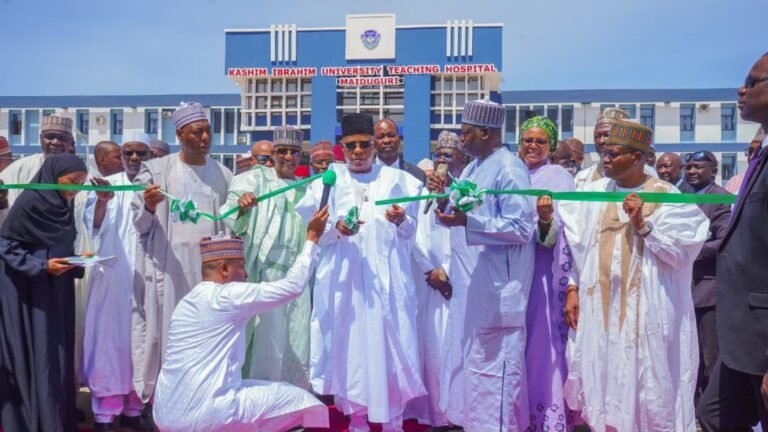
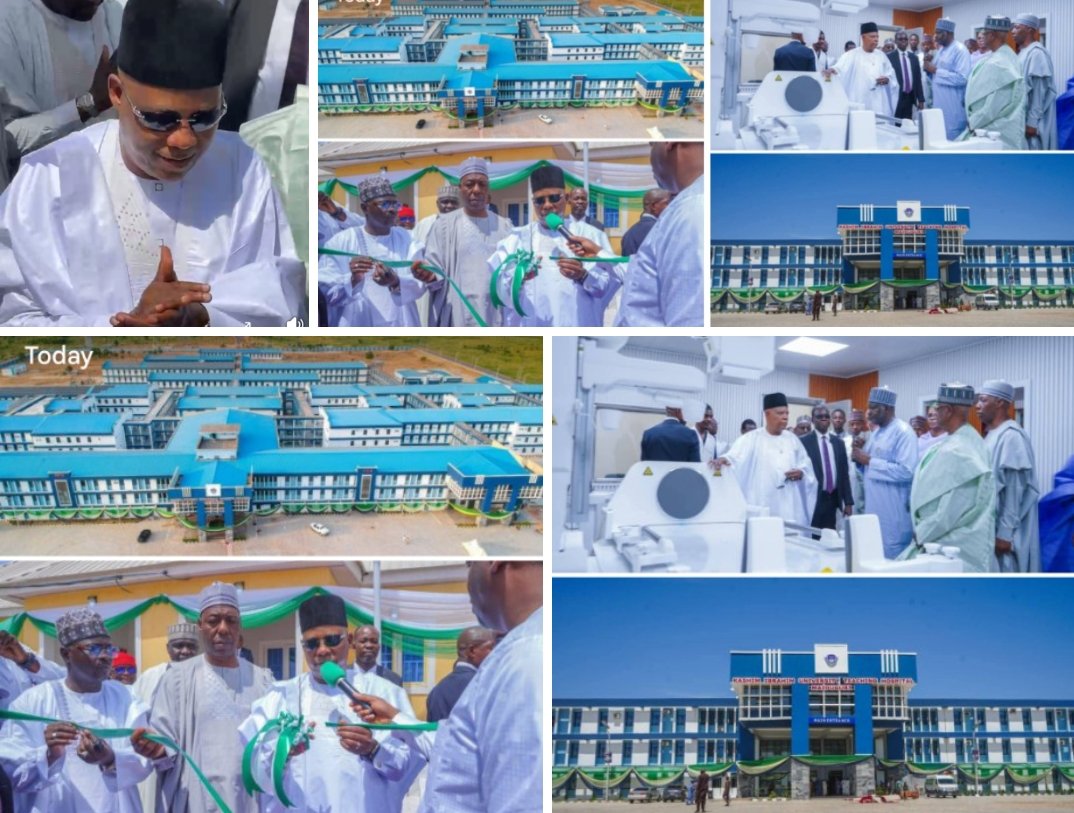
Vice-President Kashim Shettima’s commissioning of the Kashim Ibrahim University Teaching Hospital represents more than just the opening of another public facility. It is a significant investment in the health, education and long-term recovery of Borno State. That this development is coming in a region that has experienced years of insecurity, displacement and weakened public services, the hospital offers an opportunity to rebuild not only infrastructure but also confidence in government institutions.
Speaking on Governor Zulum’s vision, the VP said combining specialist healthcare with the training of medical professionals, the governor has seen beyond this generation, as the facility has the potential to transform the delivery of healthcare in Borno and across the North-east for years to come.
According to Shettima, the importance of the teaching hospital cannot be measured solely by the size of its buildings or the sophistication of its equipment. Its real value lies in its capacity to save lives, reduce medical inequality, retain healthcare workers, improve medical education and support the wider development of the Lake Chad region. The project is therefore not merely a state government achievement; it is a practical expression of the principle that public office should be judged by the institutions established and the lives improved.
For many years, residents of Borno requiring advanced medical care have had to travel to other states or even outside the country. Such journeys are expensive, stressful and often impossible for poor families, people living in remote communities and patients requiring urgent treatment. The absence of specialised services has placed a heavy burden on households already affected by poverty, displacement and insecurity. The new teaching hospital can reduce this burden by making advanced diagnosis and treatment available closer to the people who need them.
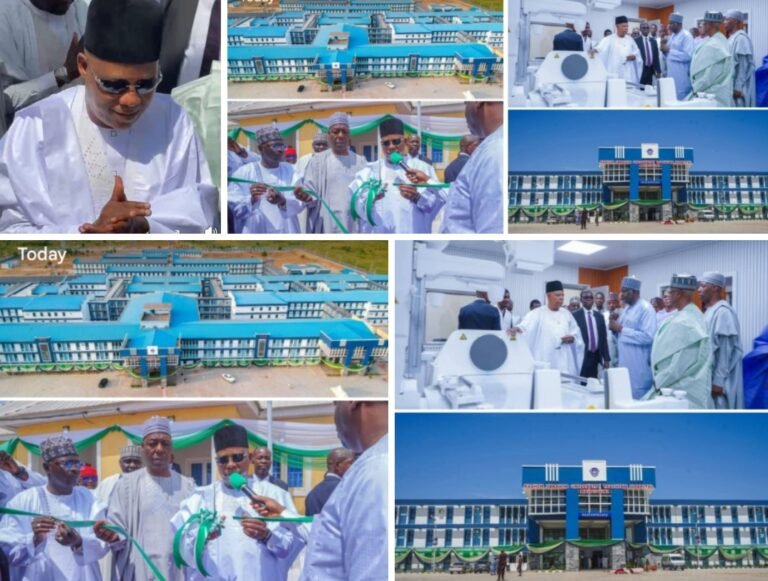
The facility’s medical equipment demonstrates the seriousness of its intended role. A 1.5-tesla magnetic resonance imaging scanner, a 160-slice computed tomography scanner, conventional and mobile X-ray machines, 4D ultrasound machines, a fluoroscopy system and digital mammography equipment will expand the state’s diagnostic capacity. These services are essential in the detection and management of cancer, stroke, internal injuries, cardiovascular conditions, neurological disorders, pregnancy-related complications and many other illnesses.
Access to accurate diagnosis is one of the foundations of effective healthcare. Without the appropriate equipment, doctors may be forced to rely on incomplete information, resulting in delayed treatment or incorrect decisions. In emergencies, such delays can determine whether a patient survives or dies. A modern diagnostic unit in a teaching hospital will help specialists look into complicated cases more quickly and come up with the best treatment plans. It will also improve the quality of medical education by exposing students and trainee professionals to technologies used in contemporary healthcare.
The hospital’s 13 specialist departments further strengthen its potential. Covering diagnostic, medical, surgical, emergency, paediatric, internal medicine and physiotherapy services, the facility is structured to provide comprehensive care. Patients will not need to move between several disconnected facilities to receive treatment. Instead, they can benefit from a more coordinated system in which specialists collaborate and medical records, diagnostic results and treatment plans are integrated.
This integrated approach is especially important for patients with complicated or long-term conditions. A child with a chronic illness, a pregnant woman with complications, a road accident victim or an elderly person requiring surgery may need the attention of several professionals. A teaching hospital can bring these professionals together in one institution, improving efficiency and reducing avoidable delays. It can also provide referral services for smaller hospitals and primary healthcare centres across the state.
However, the hospital’s greatest long-term contribution may be its role in training healthcare workers. Buildings and machines are essential, but they cannot provide care without qualified doctors, nurses, radiographers, laboratory scientists, physiotherapists, pharmacists and other professionals. Nigeria’s health sector continues to experience shortages and unequal distribution of medical personnel. The North-east has been particularly affected by insecurity, limited economic opportunities and the movement of professionals to larger cities or other regions.
The medical college complex attached to the hospital can help address this challenge. By providing students with access to clinical training in their own region, it can strengthen the pipeline of healthcare workers who understand the particular needs of Borno and neighbouring communities. Students trained in the region may be more likely to remain there, especially if the state provides opportunities for employment, postgraduate education and professional development.
Medical training must be connected to the realities of the population being served. Borno faces specific challenges linked to conflict, displacement, malnutrition, infectious diseases, maternal and child health, trauma and mental health.
The supporting infrastructure accompanying the hospital is equally important. The students’ hostel will provide accommodation for trainees, while the 200-unit staff estate can help attract and retain healthcare professionals. Housing is often overlooked in public-sector planning, yet it is a major factor in the ability of institutions to recruit qualified personnel. Doctors and other specialists are unlikely to remain in an area where accommodation, security and basic living conditions are inadequate. The staff estate therefore represents an investment in the stability and continuity of healthcare delivery.
The oxygen plant complex is another critical component. Oxygen is indispensable in emergency medicine, surgery, intensive care, neonatal care and the treatment of respiratory illnesses. During the COVID-19 pandemic, many hospitals across Nigeria experienced the consequences of inadequate oxygen supply. A reliable oxygen plant can improve the hospital’s ability to respond to emergencies and reduce dependence on distant or irregular sources. It may also support other healthcare facilities in the state if a coordinated supply system is established.
The benefits of the hospital should not be restricted to Maiduguri. Although the facility is located in the state capital, its planned impact extends to neighbouring communities and the wider Lake Chad region. Patients from areas with limited medical services may be referred there for specialist care. This could make the hospital a regional centre of excellence and strengthen cooperation among healthcare institutions in the North-east.
For this vision to become reality, accessibility must remain a priority. The government should ensure that referral systems are functional, transportation networks are improved and patients from low-income backgrounds are not excluded by high fees. A facility equipped with advanced technology can only fulfil its public purpose if ordinary citizens can afford to use it. The hospital should therefore operate with a clear policy on subsidised care, health insurance coverage and emergency treatment for vulnerable populations.
The commissioning also carries wider significance because it links healthcare recovery to educational development. Vice-President Shettima commissioned Yerwa Practice Mega Primary School and another mega primary school built under the Kashim Shettima Free Education Programme, which supports orphans and vulnerable children. These projects reflect an important understanding: recovery from conflict cannot be achieved through physical reconstruction alone. People must also regain access to the basic services that enable them to build secure and productive lives.
Healthcare and education are closely connected. A child who is frequently ill is less likely to attend school or perform well academically. Likewise, families overwhelmed by medical expenses may be forced to withdraw children from school. Investment in hospitals and schools can therefore reinforce itself. Better healthcare improves educational participation, while better education produces citizens who are more capable of making informed health decisions and contributing to the economy.
The focus on orphans and vulnerable children is particularly relevant in Borno, where years of insurgency have disrupted family structures and displaced communities. Free education can give children who have lost parents, homes or economic support a pathway to stability. It can also prevent vulnerable children from becoming victims of exploitation, child labour, early marriage or recruitment by criminal and extremist groups. In this sense, schools are not simply centres of learning; they are instruments of protection, inclusion and peacebuilding.
Vice-President Shettima’s remarks about the lasting value of institutions are therefore appropriate. Political positions, convoys and official privileges are temporary. Institutions, when properly established and maintained, can serve generations. A hospital that continues to treat patients, train professionals and conduct research long after its founders leave office is a more meaningful legacy than any temporary political achievement.
Nevertheless, commissioning a major project is only the beginning. The success of the Kashim Ibrahim University Teaching Hospital will depend on its management, funding, maintenance and accountability. Medical equipment requires regular servicing, calibration and replacement. Buildings need proper maintenance. Staff must receive competitive salaries and opportunities for career advancement. Patients must be treated with dignity, and the institution must operate transparently.
There is also a need for strong partnerships. The state government should collaborate with the federal government, universities, international health organisations, private-sector providers and development agencies. Such partnerships can support research, specialist training, telemedicine, public health programmes and continuing professional education. The hospital should also develop outreach services that connect it with primary healthcare centres in rural areas. Specialist care in Maiduguri will have limited impact if people in remote communities cannot reach the referral system or obtain early treatment.
Accountability will be equally important. The public deserves regular information about the hospital’s performance, including patient numbers, available services, staffing levels, equipment functionality and financial management. Independent oversight can help prevent the deterioration that has affected many public projects after commissioning. Citizens should be able to see that the facility remains operational and that public funds are being used responsibly.
The hospital also provides an opportunity to promote local employment and economic development. Construction, maintenance, administration, healthcare provision and supply chains can create jobs for residents. Medical training can generate a pool of professionals who contribute to the state’s economy. Over time, the presence of a major teaching hospital may attract research institutions, pharmaceutical suppliers and other health-related businesses.
Borno’s recovery requires precisely this kind of long-term thinking. Rebuilding after conflict is not limited to repairing roads or erecting buildings. It involves restoring essential institutions and creating conditions in which people can live with dignity. A functioning teaching hospital can become a symbol of that recovery because it addresses immediate suffering while also preparing the state for the future.
The Kashim Ibrahim University Teaching Hospital should therefore be viewed as a strategic investment rather than a single project.
Bwala, PhD, writes from Abuja
About the Author